

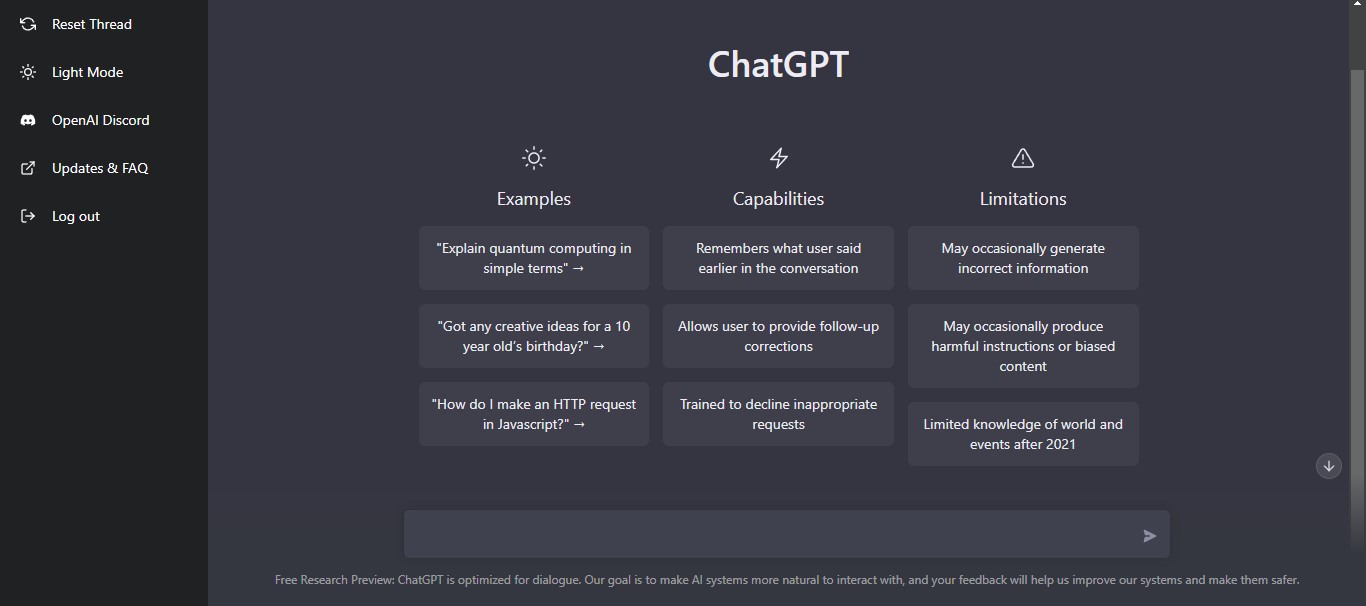
Chatbots have been around the digital landscape for a while now, but the tool gained more popularity when artificial intelligence (AI) was added to the mix. With the birth of conversational AI, followed by the release of OpenAI‘s ChatGPT in late 2022, AI chatbots came to light.
Since then, AI chatbots have been gaining more popularity, with more and more chatbots popping up on the market, offering a variety of ways to help people in various industries achieve their goals.
Despite these tools’ huge advantages, the technology remains confined to specific use cases. That’s why knowing your different AI chatbots and their uses can help elevate your digital experience even more.
What are AI chatbots?
IBM describes chatbots as computer program that mimics human conversations and enables users to find information by asking or requesting it without human intervention or manual research.
Meanwhile, AI chatbots utilise various AI technologies, including machine learning, natural language processing (NLP), and natural language understanding (NLU), to optimise responses and interpret user questions. Deep learning capabilities make these chatbots more accurate over time, allowing humans to interact with them naturally and freely without being misunderstood.
AI chatbots and how to use them
- ChatGPT
ChatGPT is a large language model-based chatbot that enables users to engage in conversations, gain insights, and automate tasks. The bot features writing, coding, research, and analysing capabilities, among other use cases.
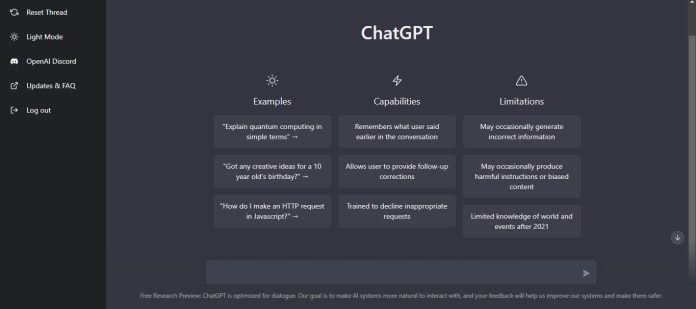
Image credit: ChatGPT
- Bard
Bard is a conversational generative AI chatbot developed by Google. Bard currently has various use cases, such as writing code, generating images from the web, and reading responses aloud.
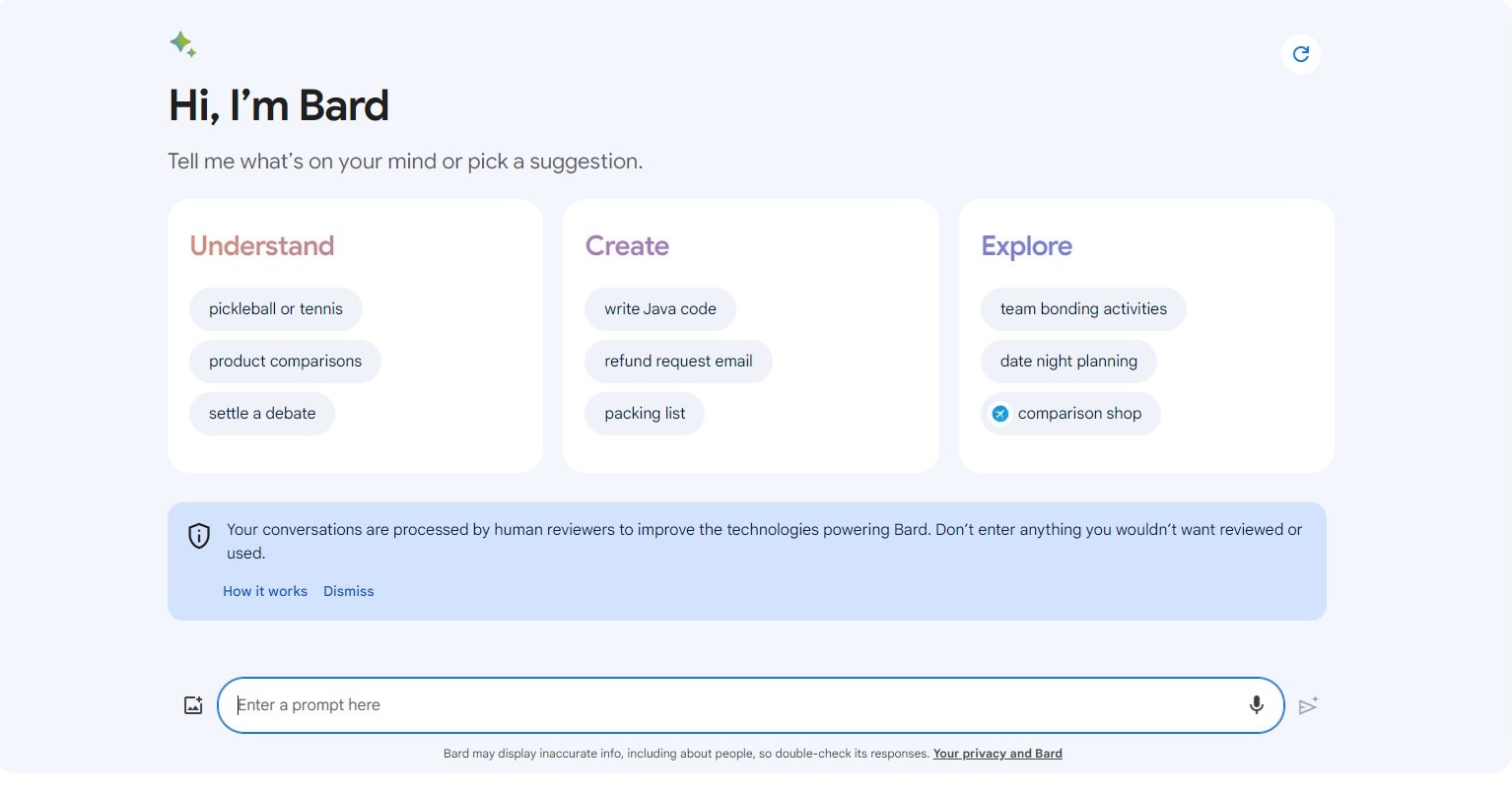
Image credit: Bard
- Bing
Developed in partnership with OpenAI, Microsoft’s Bing is an AI-powered ‘research assistant’ that delivers a single, detailed response to user prompts.
Additionally, Bing has an image creator tool where users can prompt it to create an image of anything they want.
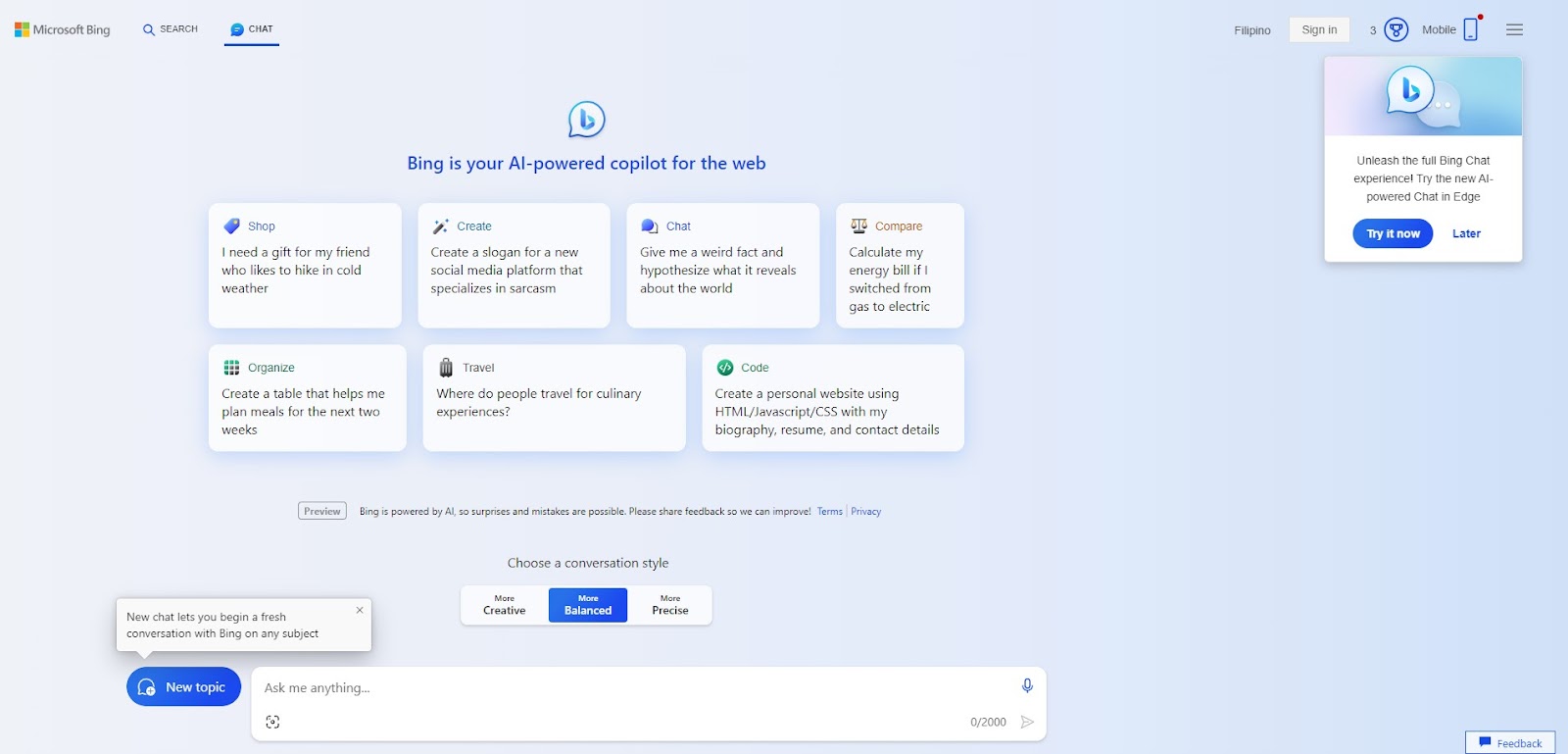
Image source: Bing
- Perplexity AI
Perplexity AI is an AI-powered search engine and chatbot that uses natural language processing and machine learning to provide accurate and comprehensive answers to user queries. It is designed to search the web in real-time and offer up-to-date information on various topics with sources.
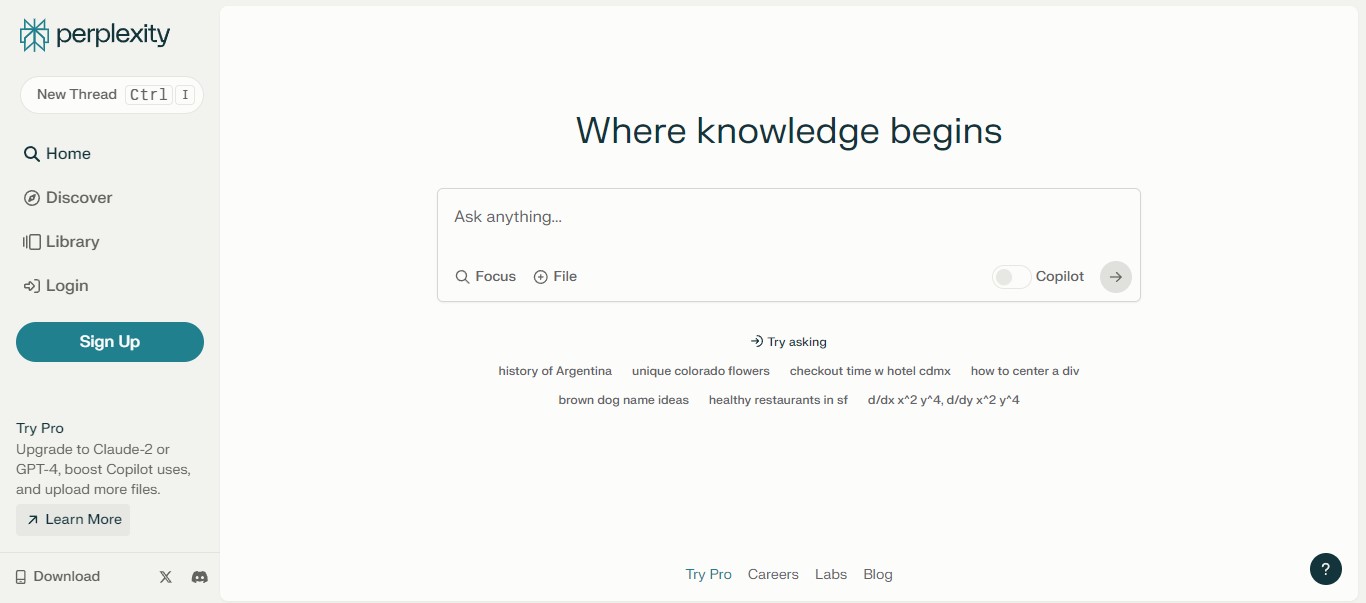
Image credit: Perplexity AI
- Jasper Chat
Jasper Chat is a content creation powerhouse with features such as summarising texts, generating paragraphs and product descriptions, as well as checks for plagiarism and grammar. Jasper also offers AI templates for various content types, such as YouTube video scripts, blog posts, LinkedIn profiles, and many more.
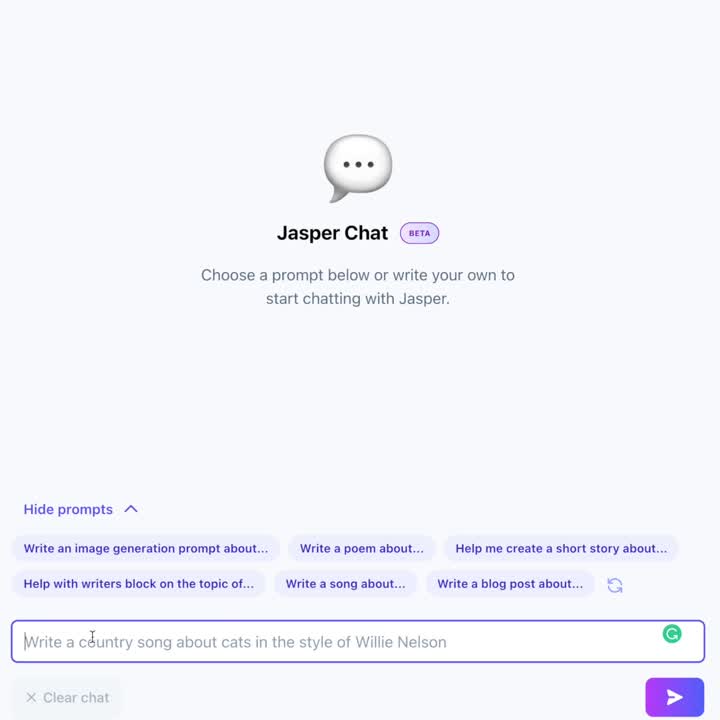
Image credit: Jasper Chat
- YouChat
You.com is an AI-powered search engine with a chatbot, YouChat, that uses powerful search algorithms to understand user queries, provide accurate, context-aware answers, and interact with prompters to surface web results and create custom answers.
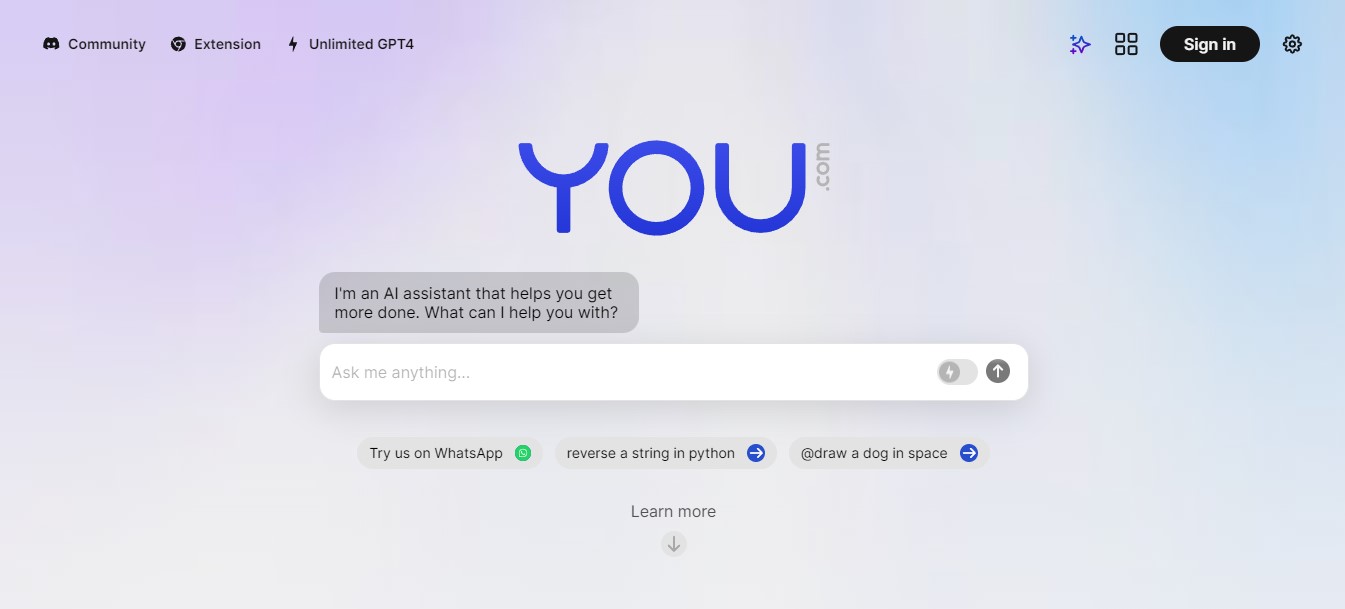
Image credit: YouChat
- Chatsonic
Chatsonic is a reliable AI chatbot that provides up-to-date information on current events, thanks to its Google support. It offers answers and stories related to current news, unlike ChatGPT’s limited database. Chatsonic also includes footnotes with source links, a significant difference from ChatGPT. It is powered by GPT-4, OpenAI’s latest model. Other features include voice dictation and AI image generation.
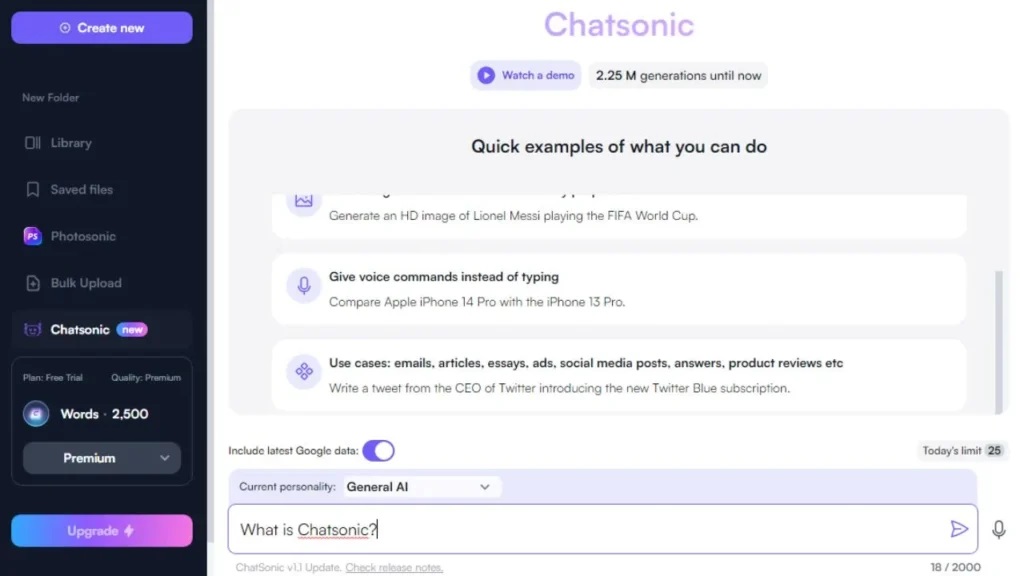
Image credit: Chatsonic