

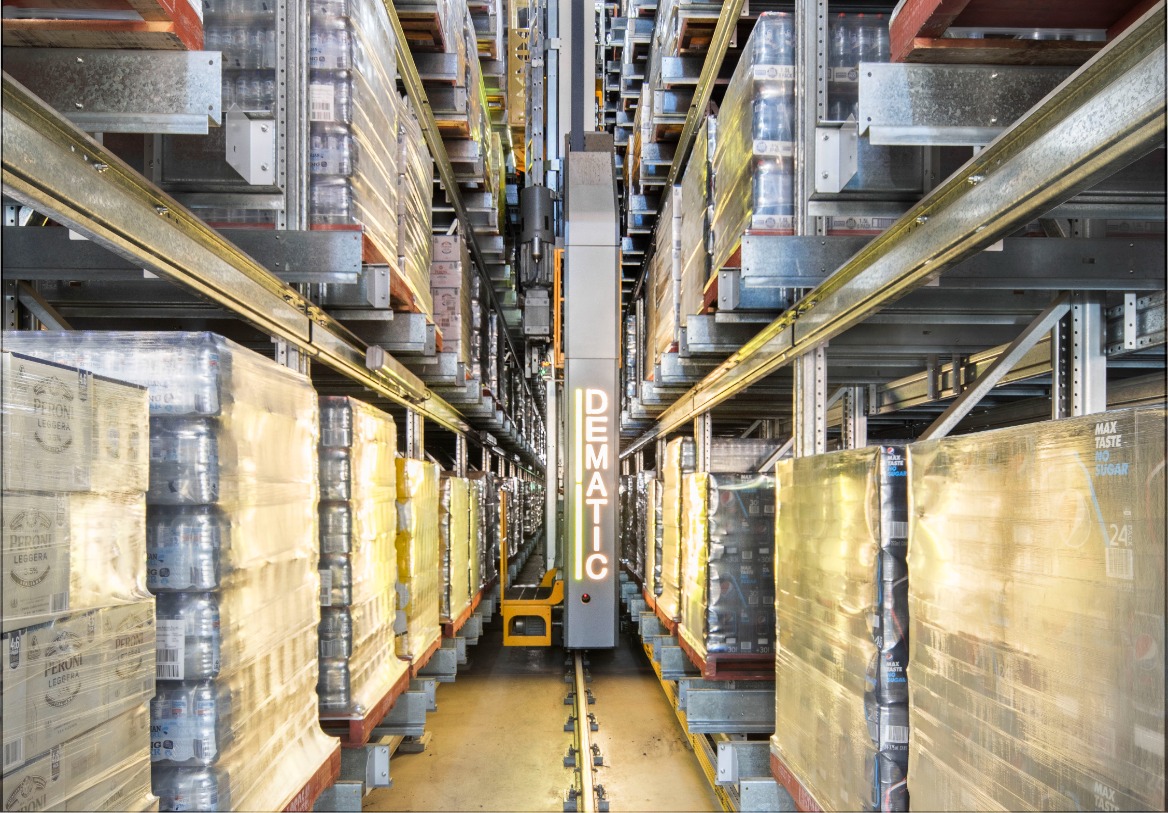
Supply chain automation company Dematic has argued that Australia’s productivity challenge extends beyond office-based work, with manufacturing, logistics and other industries handling physical goods facing opportunities to improve productivity through warehouse automation.
The comments follow the Productivity Commission’s June 2026 quarterly bulletin, which found labour productivity fell 0.6 per cent in the March quarter and increased just 0.3 per cent over the year. In the market sector, which includes manufacturing, wholesale, retail, transport and warehousing, productivity fell 0.7 per cent while hours worked increased 2.2 per cent.
“We talk about productivity as though it is something that happens at a desk. In reality, close to a quarter of every hour worked in Australia is worked in an industry that makes, stores, moves or sells physical product,” said Phillip Makowski, Marketing Director at Dematic Australia.
Dematic said manufacturing, wholesale, retail, and transport, postal and warehousing generated about $493 billion in industry value added in 2024/25 and accounted for 1.44 billion of the 6.10 billion hours worked in the March quarter.
“The most telling detail in the latest data is where the weakness sits. It is not evenly spread. It is concentrated in the sectors that handle the physical movement and distribution of goods,” Makowski said.
The company also pointed to changes in retail demand, citing Australia Post’s 2026 eCommerce Report, which found Australians spent a record $82.6 billion online in 2025, up 14 per cent year on year. Online spending accounted for about 24 per cent of total retail spending, while the average online basket fell to $90.
According to Dematic, the combination of more individual transactions and smaller average baskets is increasing the amount of physical handling required across warehouse and distribution operations.
“A business can be growing revenue while its cost to serve quietly climbs, because the number of individual transactions it has to physically handle is rising faster than the money coming in,” Makowski said.
Dematic said order picking can account for up to 65 per cent of labour in a typical manual warehouse, with workers spending significant time moving around facilities.
“Australian businesses are not short on effort. They are short on capacity,” Makowski said. “Automation gives operators a fourth option, which is getting more out of the footprint and the workforce they already have.”
The company also cited CBRE data showing Australia’s national industrial vacancy rate stood at 3.2 per cent in the first half of 2026, alongside what CBRE described as a structural shortage of serviced and appropriately zoned industrial land.
“Space is scarce and slow to deliver. Labour is expensive and hard to find. Neither of those constraints is going to loosen quickly, so the productivity gain has to come from the operation itself,” Makowski said.
Dematic said warehouse automation could provide businesses with a measurable way to increase output from existing facilities and workforces, while acknowledging that factors including artificial intelligence, skills and regulation also form part of the broader productivity debate.