


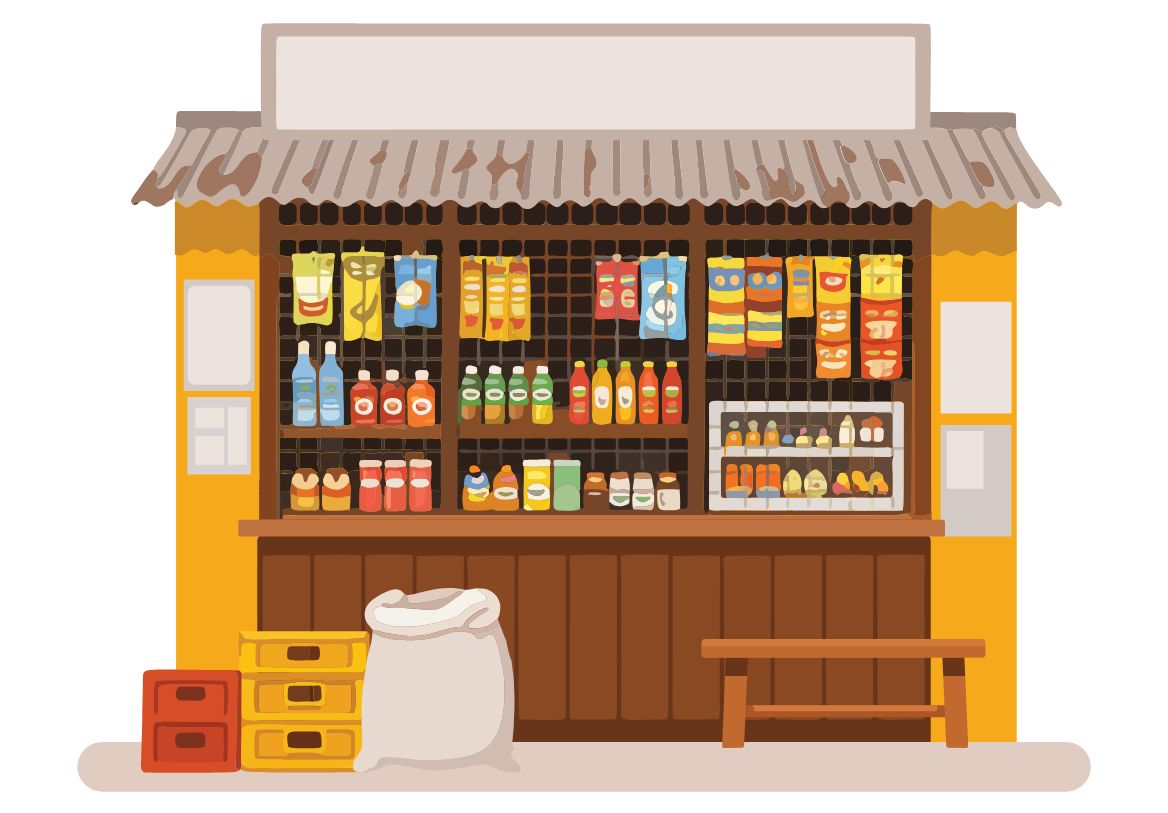
For Filipinos, sari-sari stores form the backbone of daily commerce within the community. These small neighbourhood shops sell general merchandise in small quantities, or ‘tingi’ – from single sachets of shampoo to even soda in tiny plastic bag containers. These allow consumers to buy goods in the smallest possible quantities that match the day’s budget and needs.
For decades, these micro-retailers have operated on a system built entirely on cash and community trust. Today, the same stores have put up new displays alongside their candy jars – QR codes. The digital revolution that continues to sweep global finance has inevitably found a home in these grassroots enterprises, transforming the humble sari-sari store into digital financial hubs.
When tradition meets technology: The friction points
Just as with any significant transformation, bridging digital with traditional comes with hurdles.
Connectivity in the country brings substantial challenges. Many urban neighbourhoods all over the archipelago experience inconsistent network coverage. Signal strength varies widely depending on provider and location, creating unpredictable service. Since cashless transactions depend entirely on reliable internet connections, even a momentary signal drop can leave a payment incomplete, frustrating both the customer and the store owner.
Trust is also a major factor when it comes to getting traditional business owners to adapt. For generations, sari-sari store vendors have managed their businesses through physical cash handling and face-to-face credit arrangements. The shift to digital currency introduces an element of abstraction that many find unsettling. If they cannot see and count cash, how does a store owner know the transaction was successful?
Imelda, who has been operating a sari-sari store in Sta. Mesa, Manila, for over a decade, recalls her initial scepticism over the GCash app.
“I was so afraid of using GCash at first. What if the money disappears? What if someone hacks my phone? I did not have a sense of where the money actually goes when it’s not in my hands.”
“The worst is when a customer says they’ve already paid, but my phone has not received the confirmation message,” Imelda explains. “We both stand there waiting for a couple of minutes, sometimes longer.”
The QR code’s impact
The Bangko Sentral ng Pilipinas’ (BSP) introduction of QR Ph in 2019 provided a critical foundation for digital adoption in small-scale retail. These standardised quick-response codes offered a solution perfectly suited to the sari-sari store context. Unlike complex point-of-sale terminals requiring substantial investment, QR codes can be printed on ordinary paper and displayed at minimal cost.
The QR code, often found hanging from a string, taped to the store counter, or laminated to protect it against humidity, serves as a tangible representation of the digital payment channel. Store owners like Imelda would tap on it, and customers point their phones at it – both physically interacting with this gateway to complete the transaction.
For traditional business owners, this materiality matters. When money becomes invisible data flowing between phones, the printed QR code serves as a physical marker of the transaction point.
Digital transaction at ‘tingi’ scale
Perhaps the most culturally significant innovation is how digital payment platforms have adapted to accommodate the Filipinos’ “tingi” culture, or retail in small quantities.
Digital wallets, such as GCash and Maya, support micro-transactions of just a few pesos. A customer can transfer an exact amount without the inconvenience of carrying cash or breaking larger bills. By allowing transactions that match the scale of traditional tingi purchases, digital platforms have made the transition feel natural rather than disruptive.
“Before, bank apps wouldn’t let you transfer less than 50 pesos, and we don’t really use them. Now, my customers often send incredibly precise amounts – like 8 pesos or 16 pesos,” Imelda says.
The key to innovation? Meeting people where they are.
The popularity of e-wallets accelerated during the COVID-19 lockdowns, when remote transactions were necessary due to restricted physical movement. Digital services also cashed in on democratising financial access, requiring fewer documentary requirements during signup compared to traditional banks. This perfect storm of circumstances led many sari-sari store owners and their customers to enter the system after generations of cash-only transactions.
Recent data from tech startup Packworks reveals that around 75% of sari-sari stores now use e-wallets in their daily operations.
According to the survey, 40% of stores now use e-wallets for in-store payments, 30% for bill payments and another 30% for cash-in and cash-out transactions. Store owners attribute this growth directly to increasing consumer demand for cashless options.
Around 13% of business owners report that their e-wallet earnings now equal their revenue from physical goods. This new revenue stream has become so important that some stores maintain up to five e-wallet accounts with combined capacity reaching PHP 3.5 million (AUD 85,200) per month, with 30% planning to upgrade to business accounts for higher transaction limits.
This transition did not happen through technology alone. It worked because tech adapted to existing cultural practices and simplified registration processes that welcome rather than exclude new users.