

Torrens University researcher recognised as the world’s best AI expert

Image credit: Torrens University Australia
Torrens University Australia

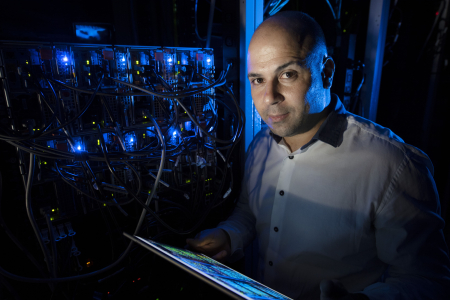
Artificial Intelligence (AI) gets bad press but can absolutely be a force for good according to Torrens University researcher Professor Seyedali Mirjalili who has been named in The Australian’s Research 2023 magazine as Australia’s, and the world’s, top AI researcher. 

This outstanding recognition is a fitting acknowledgment of both the work of Professor Mirjalili and the growing research community at Torrens University.  

As the Director of Centre for Artificial Intelligence Research and Optimisation at Torrens University, Professor Mirjalili’s research focuses on how AI is used to revolutionise many aspects of our lives and solve global crises in a wide range of sectors such as food, industry and health.  

Professor Mirjalili says that by using AI wisely, we can, for example, reduce the cost of food and services dramatically – and create new jobs. 

 “AI is a powerful force that is reshaping our daily lives, our personal and professional interactions and the environment we live in,” said Professor Mirjalili. 

 “Torrens University Australia is a certified B Corp and we are unwavering in our mission to be a force for good in business and education. Cutting edge AI research is one of our contributions to harnessing technology in a clever way for current and future generations. 

 “AI is already revolutionizing customer experience in many industries such as transport with self-driving cars, office buildings, toll collection, supermarkets, banking, and hospitals. The top industries where AI will have a massive impact are manufacturing, supply chain and logistics, food, agriculture, and education. 

 “Our experience of the last three years has proven that these are critical industries to our health, safety and wellbeing. We need to future proof these industries in a way that is clever, sustainable and adds value to the planet – and by using AI, we can do this.” 

Dr Kerry London, Pro Vice Chancellor Research, said as research income and outputs increase in the competitive field of AI, global competition between the United States, China and Europe is on the rise.  

 “As nations vie for leadership in AI research – the global output for AI research grew from just over 52,000 globally to 403,000 in 2019, representing an increase of more than 600%. The fact that a TUA researcher is leading the field is an extraordinary achievement,” said Professor London.  

“Torrens’ strategy is focussed on creating a suite of internationally competitive talented partnerships with innovators in industry, government, community, and academia to incubate the intellectual space for collaborative solutions applying AI across a range of our strengths such as health sciences and policy, law, agribusiness, and construction.  

“We work with market leaders; large and small in Canada, Germany, Spain, Ireland, Israel, UK, US and India and daily we are fielding approaches for Ali and my team of senior researchers to deliver innovative and integrated solutions. The University’s commercial structure enables quite a differentiated businesslike culture which our partners appreciate.” 

Students studying at Torrens University Australia benefit from world class researchers such as Professor Mirjalili who expose them to innovative research, brought directly into the curriculum where they work with data sets and gain hands-on experience.

“If you are a student in the 21st century, no matter whether you want to change the world or make money or both, you need to focus on emerging technologies – the global crises that we now face will be solved by these technologies,” said Professor Mirjalili. 

Professor Mirjalili, was born in Iran. He left in his early 20s to do a Masters degree in Malaysia and then came to Australia in 2012 and completed his PhD at Griffith University in 2015. In 2019, his papers were cited 600 times by other researchers. In 2020, that number grew to above 10,000 times. And for 2022, it already stands at more than 21,000 times. It is this stellar citation record that has propelled him to the top of his field. 

 “I choose to work at Torrens University Australia because as a young university with a culture of innovation – they recognize my contribution, empower and support me – which has a direct flow on effect to the students who learn here, to the industry and to society.” 

Advertisement

Nokia, du enable Zero-Touch Access with SDAN

Image credit: Nokia and du

Nokia announced the deployment of Software Defined Access Networks (SDAN) from Emirates Integrated Telecommunications Company (EITC) for du to provide zero-touch network operations.

In a statement, Nokia said the three-year project is based on the long-standing partnership between Nokia and du, which provides cutting-edge technologies to the UAE.

Du is speeding innovation and the rollout of new and innovative services on du’s current fibre broadband network as one of the first operators in the Middle East to use zero-touch networking. With the help of Nokia’s Altiplano cloud platform, du now has the network intelligence, automation, and control it needs to support rapidly developing new use cases like 5G backhaul, augmented reality (AR), virtual reality (VR), cloud gaming, and network slicing for enterprises.

Saleem AlBlooshi, Chief Technology Officer at du, said: “Adding SDANs to our infrastructure is an essential step in keeping up with the demands of our business as we move towards faster speeds and a more virtualized environment. A key component of du’s network strategy is the inclusion of SDAN in order to ensure that the company will be able to drive future value by integrating smart apps, artificial intelligence, and a higher level of automation. This will ensure that the user experience is as seamless as possible. As a result of these developments, we will be able to provide an enhanced customer experience which accelerates the company’s ability to meet the growing demand by utilizing fully automated operations and zero-touch services.”

“We’re excited to successfully extend our long-term partnership with du on SDAN technology. Nokia’s end-to-end SDAN solution is changing the game for how service providers operate their networks. Delivered from a single cloud-optimized platform, we provide du the tools to efficiently unlock new business opportunities and use cases,” Nokia MEA Vice President of Middle East Business Rima Manna stated.

Advertisement

UniSQ researchers attract $1.1 million in new funding

0
Image credit: University of Southern Queensland
Media Release by University of Southern Queensland

From extreme weather-resistant building materials to next-generation advanced composites and fine-tuning cybersecurity systems, innovative research projects have been given a boost at the University of Southern Queensland.

Australian Research Council (ARC) Chief Executive Officer Ms Judi Zielke PSM yesterday (November 24) announced more than $221 million under its Discovery Projects scheme.

The University’s successful initiatives included $420,000 for ‘developing a new cybersecurity system for web-based services and workflows’; $399,236 towards ‘carbon fibre thermoplastics as next-generation carbon fibre composites’; and $302,100 for ‘developing new highly durable structural composites that can withstand extreme weather’.

Ms Zielke said the scheme supported individual researchers or research teams to innovate and build the ‘new’ knowledge essential for a knowledge-based economy.

“Funding these cutting-edge research projects will expand the knowledge base and research capacity in Australia,” Ms Zielke said.

Computing research leader Professor Yan Li will create a prototype system to help organisations overhaul their business networks to embed cybersecurity protocols, thanks to $420,000 in funding.

“Due to continual changes in networking technologies and web services, almost all organisations need to develop new workflows to either replace existing procedures which are inadequate for current conditions or for new services,” Professor Li said.

“It is essential that these new or modified workflows have no security gaps.

“This project aims to develop an innovative cybersecurity system for workflows, which enables organisations to provide flexible and more secure web-based services and business communication.”

Materials engineering researchers Professor Hao Wang and Dr Venkata Chevali received $399,236 to develop novel carbon fibre composites using high-performance thermoplastic polymers.

Professor Wang said the project aimed to enable rapid production, reduce manufacturing costs, and explore the potential for these composites to be reprocessed and recycled.

“A key objective of this study is to produce sustainably manufactured composite materials that are also commercially relevant.”

Civil Engineering Professor Allan Manalo will lead a $302,100 project into understanding the degradation mechanisms of structural composites under extreme weather and using this knowledge to develop new, highly durable materials.

“The changing weather patterns and increasing solar radiation in Australia have greatly impacted the durability of construction materials and caused substantial damage to critical infrastructure,” Professor Manalo said.

“We’re looking into the synergistic effects of different environmental conditions on advanced polymer composites in order to develop new models on the materials’ long-term performance, crucial knowledge for the longevity of Australian infrastructure.”

University of Southern Queensland researchers will also contribute to externally-led projects such as Associate Professor Ingo Jahn in The University of Queensland’s ‘Expanding the scramjet operating envelope through oxygen enrichment’ and Dr Ana Stevenson in University of Wollongong’s ‘Archiving Social Movements and Building Historical Literacy for a Digital Age’.

Advertisement

CICERO: AI That Can Collaborate and Negotiate With You

0
Image credit: Meta
Media Release by Meta

Today, we’re announcing CICERO, the first artificial intelligence (AI) agent to achieve human-level performance in the popular strategy game Diplomacy. Diplomacy has been viewed as a nearly impossible challenge in AI because it requires players to understand people’s motivations and perspectives, make complex plans and adjust strategies, and use language to convince people to form alliances.

CICERO marks the beginning of a new era for AI that can collaborate with people in gameplay using strategic reasoning and natural language processing, and the learnings from technology like this could one day lead to intelligent assistants that can collaborate with people.

While CICERO is only capable of playing Diplomacy, the technology behind it is relevant to many other applications. For example, current AI assistants can complete simple question-answer tasks, like telling you the weather — but what if they could hold a long-term conversation with the goal of teaching you a new skill?

By open-sourcing the code and models we hope that AI researchers can continue to build off our work in a responsible manner. Additionally, to gain access to the data, interested researchers can submit a proposal to our RFP in the area of human-AI cooperation through natural language using Diplomacy as the foundational environment. We’re excited about the potential for future advances in human-AI collaboration and seeing how others build on our research.

Advertisement

Innodisk proves AI prowess with the launch of FPGA Machine Vision Platform

Image credit: Innodisk

Innodisk has announced the release of the EXMU-X261, an FPGA Machine Vision Platform, as its latest entry into the AI sector.

In a statement, Innodisk said its FPGA Machine Vision Platform is intended to pave the way for industrial system integrators wanting to develop machine vision applications, thanks to AMD‘s Xilinx Kria K26 SOM, which was developed to support smart city and smart factory applications.

Innodisk stated that a significant machine vision application, automated flaw inspection, is a critical technology in modern manufacturing. A visual inspection performed automatically ensures that the product operates as intended and satisfies requirements. In these instances, Innodisk said it is critical to employ a quick and highly precise inspection technique. According to Innodisk, operators must manually inspect each product without AI, which takes an average of three seconds per item. Product inspection in factories can now be automated with the help of AI solutions such as Innodisk’s FPGA Machine Vision Platform, resulting in a process that is not only faster and cheaper but also completely free of human error.

The FPGA Machine Vision Platform from Innodisk includes 1GbE LAN, 4 USB 3.1 Gen1 connections, 2 M.2 slots, and a variety of other expansion and connectivity options. EXMU-X261 is durable enough for the harshest industrial conditions, with the platform’s operational temperature support ranging from 0° to 70° C and optional industrial temperature support ranging from -40° to +85° C. Furthermore, the EXMU-X261 supports Innodisk’s InnoAgent out-of-band remote management module, allowing the platform to be operated remotely from anywhere, even after a system crash or an in-band network failure. According to Innodisk, this is critical for any automated system since it allows it to be entirely unmanned, lowering staff and maintenance expenses even further.

Innodisk added that customers could benefit from AMD’s Xilinx Kria K26 SOM’s ability to quickly get applications to market thanks to EXMU-full X261’s support for Innodisk’s AI Suite SDK, which includes an FPGA Model Zoo as well as Innodisk’s in-house software solutions such as iCAP (Innodisk Cloud Administration Platform) and iVIT (Innodisk Virtualization Technology) (Innodisk Vision Intelligence Toolkit). For instance, iVIT provides a deep learning environment for efficiently creating and deploying “no-code-operation” solutions.

Advertisement

Landmark report analyses the impact of AI on science

0
Wildcat SLAM, a state-of-the-art mapping software developed by CSIRO's Data61, creates a detailed map of Fish Lane in Brisbane. Image credit: CSIRO
Media Release by CSIRO

A world-first report from Australia’s national science agency, CSIRO, has analysed the impact of artificial intelligence (AI) on scientific discovery, finding scientists are adopting the technology at an unprecedented rate. 

‘Artificial intelligence for science’ draws insights from millions of scientific papers published over 60 years to form a picture of how AI is being used across scientific fields and identifies the key issues ahead for the innovation sector.

CSIRO Chief Scientist, Professor Bronwyn Fox, welcomed the launch of the report today as part of Science at the Shine Dome.

“AI is no longer just the domain of computer scientists or mathematicians; it is now a significant enabling force across all fields of science, which is something we live every day at CSIRO where digital technologies are accelerating the pace and scale of our research in fields ranging from agriculture to energy to manufacturing and beyond.”

The report found that in 1960, a decade after Alan Turing’s landmark paper posed the question ‘can machines think?’, only 14 per cent of the 333 research fields studied were publishing on AI. By 1972, ahead of the first ‘AI winter’, that number had reached more than half.

Today, there is evidence of AI adoption in 98 per cent of fields, with the steepest publishing increases recorded over the past five years. Mathematics, decision sciences, engineering, neuroscience and health professions are noted as among the most prolific adopters.

“Human curiosity will always be at the heart of science, but these technologies combined with deep domain understanding are increasingly helping to open-up new frontiers for knowledge discovery,” Professor Fox said.

“AI is also helping to deliver higher-impact, real-world solutions to Australia’s greatest challenges, like AI to help detect disease, predict bushfires and manage the enormous amount of data we are gathering about our universe.”

The rapid increase in AI uptake by scientists has been accompanied by a global rise in public and private sector R&D investment, with more than 700 AI policy and strategy initiatives developed across 60 international jurisdictions since 2017.

“To make the most of this technology for Australia, there are key issues we will need to tackle. CSIRO has one of the largest teams of digital experts in the country, but these are not issues that can be solved by one organisation alone,” Professor Fox said.

“The development of trusted, responsible and ethical AI solutions will be increasingly important globally, and because we have moved quickly to build deep expertise in the field, Australia has a unique opportunity to lead in this area.”

“An uplift in AI capabilities will also be needed across all scientific disciplines over the coming decades and it will be vital that we lift workforce diversity at the same time.”

‘Artificial intelligence for science’ lead author Stefan Hajkowicz said when thinking about the future of AI it’s not about just the technology itself.

“It’s about what happens when AI is mixed with other fields of science and research,” Dr Hajkowicz said. 

“That’s where many of the breakthroughs will happen,” he said. 

The report identifies key AI issues and trends, including:

  • Software and hardware upgrades. Purpose-built processors designed for machine learning are speeding up computations, while quantum computing could lead to transformative leaps in computational power.
  • The quest for better data. The era of “big data” may be transitioning into the era of better data. Recent breakthroughs have been achieved using smaller datasets that are well-curated, fit-for-purpose and provenance assured.
  • Education, training and capability uplift.  Between 2017-2020 alone the number of university courses teaching AI increased by 103%.
  • Toward human centric artificial intelligence. In the vast majority of cases AI will be augmenting not replacing the human scientist. Issues of trust, transparency and reliability will be important for scientists and reviewers working on AI systems.
  • Improving workforce diversity. Improving the gender, ethnic and cultural diversity of the AI research workforce will lead to better science outcomes.
  • Ethical AI. Research organisations will be challenged to develop capabilities, technologies and cultures that deliver increasingly ethical AI.
Advertisement

Dobot Launches Nova Collaborative Robots for Retail Automation

0
DOBOT Nova Series Collaborative Robots. Image provided.
Media Release by Dobot

Labor shortages and rising costs around the world are two major headwinds to the retail and service sectors, opening up new opportunities of automation transformation. To better capture this newfound demand, Dobot has developed the Nova Series of collaborative robots designed specifically for retail customers to handle tasks such as making coffee, cocktail, ice cream, noodles, fried chicken, and even physical therapy.

The Nova 2 and the Nova 5 are the first two models in the Nova Series with payloads of 2 kg and 5 kg for handling retail and physiotherapy tasks respectively. They can replace workers to help reduce operating expenses and decrease direct human contacts during pandemics.

To better meet the needs of retail branding, the Nova Series contrasts the rigid design philosophy of industrial robots and offers color customization to better fit into retail stores for better customer experiences. The Nova Series is also more compact than comparable industrial cobots and can fit into one meter square of space.

Taking into consideration that most retail stores do not have full time engineers on staff, the Nova Series is designed to be easy to use. With drag to teach and graphical user interface, anyone can easily program a Nova without coding knowledge. Setting up a Nova takes as little time as 10 minutes.

Retail sector robots can have frequent interaction with people, making safety a top priority. The Nova Series has multiple safety features to intelligently sense human movement, and stops operation in 0.01 second upon collision detection. In case of power outage, Nova automatically freezes in position to ensure safety of others.

Dobot’s Nova opens the door of automation for the retail and service sectors. Robot adoption will expand beyond production floors of factories and into our daily lives. Collaborations and interactions between humans and machines will only increase.

Advertisement

LG partners with Griffith Film School, supplying them with the new LG UltraFine™ OLED monitors

Image credit: LG

LG is set to refurbish Griffith Film School’s Brisbane campus with several LG UltraFine OLED Pro monitors to help students as they learn their craft.

Reviewing, editing, and manipulating video and sound is essential to any film project. These duties necessitate high-quality screens that can run many apps and data streams while providing the most accurate image reproduction. Using its self-lit display technology, LG has created the LG UltraFineTM OLED Pro series, a collection of professional-grade monitors with numerous features and capabilities required for media and film production.

In a statement, LG said the partnership is part of its effort to promote its first-rate exhibits and demonstrate its support for the cinematic arts. 

LG UltraFine OLED Pro monitors (models 32BP95E, 27BP95E, 32EP950, and 27EP950) are designed for film and media professionals and feature premium 4K OLED displays that produce natural, realistic colours with 99 per cent (typical) coverage of both the DCI-P3 and Adobe RGB colour spaces. This wide colour gamut enables the monitor to replicate colour areas of several standards and adequately depict the exact computed colour values used by filmmakers. With a high contrast ratio of 1,000,000:1, practically all colours and graphics intended by designers or editors can be displayed precisely. The displays bring the benefits of OLED’s self-lit pixels to the desktop while also providing excellent HDR and SDR performance.

Griffith Film School, founded in 2004, is one of Australia’s largest learning schools of its sort, LG said. Matthew Hanger, a multi-award-winning visual effects artist, and Peter Spierig, an award-winning feature film director, are two notable Griffith alumni. The school offers a variety of specialised degrees, including cinematography, post-production, visual effects, screen music, production design, documentary-making, computer animation, and game creation – all of which are creative undertakings that complement LG UltraFine OLED Pro displays.

Griffith Film School Herman Van Eyken said working with LG makes sense for the institution because LG understands the particular needs filmmakers have, which is evident in their monitors’ capabilities and feature sets.

“LG UltraFine OLED Pro monitors are state-of-the-art monitors that provide the faithful image reproduction that our students need to realize their artistic vision,” Ven Eyken stated.

As a result of the collaboration, Griffith Film School students and teachers will experience everything that LG UltraFine OLED Pro displays offer. LG UltraFine OLED Pro monitors are available for use in the school’s Grading Suite, while the Editing Suite has several units of the similarly remarkable LG UltraWide™  monitor (model 40WP95C).

Advertisement

Scientists add ‘invisible fibre’ to foods for a healthier diet

0
Image credit: RMIT University
Media Release by Royal Melbourne Institute of Technology University

Scientists have converted native starches, such as wheat, corn and cassava, to dietary fibre that can be added to food to make it healthier without changing its texture, colour or taste.

Researchers at RMIT University worked with Microtec Engineering Group, a technology-based engineering company that supplies starch processing equipment, to develop the starch-based product, called FiberX, which resists digestion in the human gut, just like fibre. 

Not only is FiberX smooth and tasteless, but it’s also suitable for fortifying low-calorie and low-GI foods and can be gluten-free, or for adding to low-fibre foods such as white bread, cakes, pasta, pizza and sauces to make them healthier.

Project lead from RMIT’s Food Research and Innovation Centre, Associate Professor Asgar Farahnaky, and his team used advanced starch modification technology with approved food-grade materials to create what they describe as ‘invisible fibre’. 

“We can now add extra fibre to foods like white bread and other staples without changing the taste or texture, which has been one of the main issues with many commercially-available fibre supplements to date,” he said. 

“Our product is not even noticeable once added. It’s just like a parent hiding vegetables in a child’s meal to make it more nutritious.” 

The importance of fibre

Fibre is a type of carbohydrate that is not digested in the human gut and can help improve the health and function of our digestive system. It can also help prevent obesity, type 2 diabetes and reduces the risk factors of some cardiovascular diseases. 

Increasing the fibre content of food products by 10 to 20% while also maintaining pleasant taste and texture is a challenge across the food industry. Current foods with added fibre can have a tough texture or different flavour to the original product.

As part of the research, Farahnaky’s team conducted taste tests and texture analysis on bread and cakes with varying amounts of added FiberX. They found they were able to add up to 20% fibre to food while maintaining the original taste and texture of the product.

“This new technology means we can increase the amount of fibre that goes into the food so we can receive our recommended daily intake, even while consuming less foods, which has potential to help with weight management and diabetes,” he said.

How does it work?

Co-researcher and Vice-Chancellor’s Senior Research Fellow, Dr Mahsa Majzoobi, said the structure of starch was modified on a molecular level and tested to see how it reacted with digestive enzymes. 

“Once the resistant starch goes through this process, it needs to have high levels of resistance to be counted as a successful conversion to dietary fibre,” she said.

Using this new technology, the team can convert more than 80% of starch into dietary fibre, Majzoobi said.

FiberX was tested using internationally approved methods at RMIT and the accredited Australian Export Grains Innovation Centre.

Farahnaky said his team are now looking at the next phase of FiberX technology, which will use green alternatives to convert starch to fibre.

Reducing food waste

Farahnaky said beyond the health benefits, FiberX technology also had the potential to improve supply-chain challenges, reduce food waste and increase local jobs. 

“Australia currently exports large amounts of grain for creating value-added products, such as plant-based meat. We then have to import these products back to Australia and wait for them if there are delays in the supply chain, as we saw with COVID,” Farahnaky said.  

“Instead of growing and exporting more grains, we should be using existing grains to create value-added products here in Australia.” 

To do this, Microtec and RMIT’s Food Research and Innovation Centre have also partnered with Fight Food Waste Cooperative Research Centre to stop starch and fibre-rich by-products of plant protein production from going to waste.  

Australia currently produces 5,000 tonnes of pulse protein a year, which generates 30,000 tonnes of waste. 

Farahnaky said by processing this waste into dry pulse starch, FiberX technology can convert the starch to fibre on a large scale.

“Not only will this partnership help reduce food waste on a massive scale, but it will lead to creating new premium food products that are high in dietary fibre,” he said.

Ready for expansion 

With the help of Microtec, FiberX technology is now ready for the food industry to take up and use for large-scale production of dietary fibre. 

“This new technology will enable the production of dietary fibre using a cost- and energy-effective process at a large scale,” Farahnaky said. 

“Scaling this technology will mean the food industry will have access to large quantities of invisible dietary fibre at an affordable price to provide high-fibre foods to consumers.” 

Advertisement

Making Our Network Clocks More Precise for the Metaverse

Image credit: Meta
Media Release by Meta

Everything you do online relies on multiple servers, sometimes spread across multiple locations, all keeping accurate and precise time with one another. If these servers are out of sync, it can lead to delays and errors, or even network failures. Improving synchronization can not only significantly improve performance, but also open up opportunities to create new products and services.

Today, we’re announcing that we’re deploying Precision Time Protocol (PTP) into our data center networks. PTP was introduced in 2002 and is a protocol for synchronizing the clocks on a computer. It offers a new level of timing accuracy and precision that will benefit all of our technologies — whether people are creating and watching Reels on Facebook and Instagram, sending and receiving messages and making audio/video calls on Messenger, playing and watching games on Facebook Gaming, or building and exploring Meta Horizon Worlds.

With PTP, the clocks within servers can be synchronized down to nanoseconds. We believe that PTP has the potential to enable synchronization of Graphics Processing Units (GPUs) across data centers, which could open up unprecedented AI capabilities that are  difficult to achieve today. This level of accuracy will help ensure synchronization of not only the computers on our networks today, but also the advanced systems that will be on our networks in the future. We believe PTP will become the standard for keeping time in computer networks and will be a foundational component of the technologies that will drive the metaverse.

PTP has already been heavily supported by the telecom industry as networks transition to 5G connectivity. Even though the telecom industry has been using PTP for more than  a decade, data centers with massive facilities have been slow to adopt PTP  — until now. To help support industry adoption of PTP, we’ve open-sourced all the hardware and software we’ve designed to support PTP.

Advertisement