Everything you do online relies on multiple servers, sometimes spread across multiple locations, all keeping accurate and precise time with one another. If these servers are out of sync, it can lead to delays and errors, or even network failures. Improving synchronization can not only significantly improve performance, but also open up opportunities to create new products and services.
Today, we’re announcing that we’re deploying Precision Time Protocol (PTP) into our data center networks. PTP was introduced in 2002 and is a protocol for synchronizing the clocks on a computer. It offers a new level of timing accuracy and precision that will benefit all of our technologies — whether people are creating and watching Reels on Facebook and Instagram, sending and receiving messages and making audio/video calls on Messenger, playing and watching games on Facebook Gaming, or building and exploring Meta Horizon Worlds.
With PTP, the clocks within servers can be synchronized down to nanoseconds. We believe that PTP has the potential to enable synchronization of Graphics Processing Units (GPUs) across data centers, which could open up unprecedented AI capabilities that are difficult to achieve today. This level of accuracy will help ensure synchronization of not only the computers on our networks today, but also the advanced systems that will be on our networks in the future. We believe PTP will become the standard for keeping time in computer networks and will be a foundational component of the technologies that will drive the metaverse.
PTP has already been heavily supported by the telecom industry as networks transition to 5G connectivity. Even though the telecom industry has been using PTP for more than a decade, data centers with massive facilities have been slow to adopt PTP — until now. To help support industry adoption of PTP, we’ve open-sourced all the hardware and software we’ve designed to support PTP.
Samsung Electronics announced its AI voice assistant, Bixby, now offers Latin American Spanish as a language option.
Since Brazilian Portuguese was the only Latin American language Bixby previously supported, Samsung Galaxy devices users who speak Latin American Spanish can now communicate with their devices in their own tongue.
Young Jip Kim, EVP and Head of the Artificial Intelligence Team at the Mobile eXperience Business, Samsung Electronics, said when Samsung introduced Bixby nearly five years ago, Samsung committed to keeping enhancing its platform with new technologies and significant partners that enable greater experiences.
“We are proud to bring Bixby to the millions of people who speak Latin American Spanish, joining the more than 200 million people already using Bixby from nearly 400 million devices worldwide,” Kim stated.
According to Samsung, Bixby is a robust and intelligent voice assistant that assists Samsung Galaxy users in navigating their devices and organising their lives. It can help users open apps and settings, remember appointments and tasks, and overall make life easier. Bixby can even interact with people by answering phone calls, sending messages, and more.
Users in South and Latin America had to utilise European Spanish with Bixby till recently. The new Latin American Spanish support will allow them to communicate with their smartphone more naturally by using local dialects, accents, and subtleties.
With the addition of Latin American Spanish support, even more Samsung Galaxy users will be able to rely on Bixby’s intelligence and convenience, particularly in the United States, the second-largest Spanish-speaking country and the region with the most Bixby users.
During the recent Samsung Developer Conference 2022 in San Francisco, Samsung announced other developments, including new Smart Home capabilities. Bixby’s voice control and seamless integration with gadgets will play an essential role in monitoring and managing every room of the home as consumers expand their connected ecosystems.
After a software update, Latin American Spanish for Bixby is now available for select Samsung Galaxy devices such as the Galaxy S22, Galaxy S21, Galaxy Z Flip4 and Galaxy Z Fold4. Support for new devices, including the Galaxy S20 and Z Flip3, will begin in December, with further expansion planned for early 2023.
Minerva CQ, a startup based in the San Francisco Bay Area, is making customer service calls quicker and more efficient for both agents and customers, with a focus on those in the energy sector.
The NVIDIA Inception member’s name is a mashup of the Roman goddess of wisdom and knowledge — and collaborative intelligence (CQ), or the combination of human and artificial intelligence.
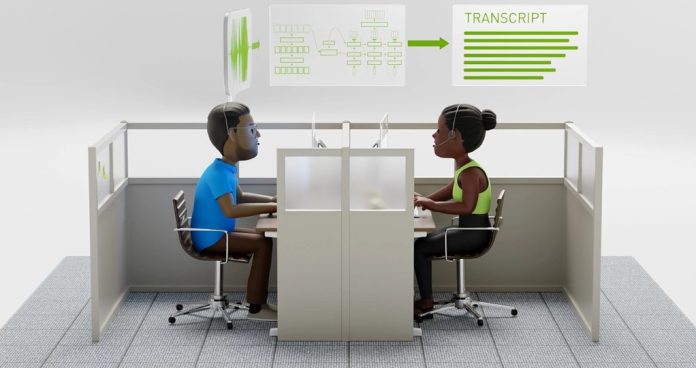
The Minerva CQ platform coaches contact-center agents to drive customer conversations — whether in voice or web-based chat — toward the most effective resolutions by offering real-time dialogue suggestions, sentiment analysis and optimal journey flows based on the customer’s intent. It also surfaces relevant context, articles, forms and more.
Powered by the NVIDIA Riva software development kit, Minerva CQ has best-in-class automatic speech recognition (ASR) capabilities in English, Spanish and Italian.
“Many contact-center solutions focus on automation through a chatbot, but our solution lets the AI augment humans to do a better job, because when humans and machines work together, they can accomplish more than what the human or machine alone could,” said Cosimo Spera, founder and CEO of Minerva CQ.
The platform first transcribes a conversation into text in real-time. That text is then fed into Minerva CQ’s AI models that analyze customer sentiment, intent, propensity and more.
Minerva CQ then offers agents the best path to help their customers, along with other optional resolution paths.
The speech AI platform can understand voice- and text-based conversations within both the context of a specific exchange and the customer’s broader relationship with the business, according to Jack Garrett, vision architect at Minerva CQ.
Speech AI Powered by NVIDIA Riva
Minerva CQ last month announced that it built what it says is the first and most accurate Italian ASR model for enterprises, adding to the platform’s existing English and Spanish capabilities. The Italian ASR model has a word error rate of under 7% and is expected to be deployed early next year at a global energy company and telecoms provider.
“When we were looking for the best combination of accuracy, speed and cost to help us build the ASR model, NVIDIA Riva was at the top of our list,” Spera said.
Riva enables Minerva CQ to offer real-time responses. This means the AI platform can stream, process and transcribe conversations — all in less than 300 milliseconds, or in a blink of an eye.
“Riva is also fully customizable to solve our customers’ unique problems and comes with industry-leading out-of-the-box accuracy,” said Daniel Hong, chief marketing officer at Minerva CQ. “We were able to quickly and efficiently fine-tune the pretrained language models with help from experts on the NVIDIA Riva team.”
Access to technical experts is one benefit of being part of NVIDIA Inception, a free, global program that nurtures cutting-edge startups. Spera listed AWS credits, support on experimental projects, and collaboration on go-to-market strategy among the ways Inception has bolstered Minerva CQ.
In addition to Riva, Minerva CQ uses the NVIDIA NeMo framework to build and train its conversational AI models, as well as the NVIDIA Triton Inference Server to deliver fast, scalable AI model deployment.
Complementing its focus on the customer, Minerva CQ is also dedicated to agent wellness and building capabilities to track agent satisfaction and experience. The platform enables employees to be experts at their jobs from day one — which greatly reduces stress on agents, instills confidence, and lowers attrition rates and operational costs.
Plus, Minerva CQ automatically provides summary reports of conversations, giving agents and supervisors helpful feedback, and analytics teams powerful business insights.
“All in all, Minerva CQ empowers agents with knowledge and allows them to be confident in the information they share with customers,” Hong said. “Easy customer inquiries can be tackled by automated self-service or AI chatbots, so when the agents are hit with complex questions, Minerva can help.”
Focus on Retail Energy, Electrification
Minerva CQ’s initial deployments are focused on retail energy and electrification.
For retail energy providers, the platform offers agents simple, consistent explanations of energy sources, tariff plans, billing changes and optimal spending choices.
It also assists agents to resolve complex problems for electric vehicle customers, and helps EV technicians troubleshoot infrastructure and logistics issues.
“Retail energy and electrification are inherently intertwined in the movement toward decarbonization, but they can still be relatively siloed in the market space,” Garrett said. “Minerva helps bring them together.”
Minerva CQ is deployed by a leading electric mobility company as well as one of the largest utilities in the world, according to Spera.
These clients’ contact centers across the U.S. and Mexico have seen a 40% decrease in average handle time for a customer service call thanks to Minerva CQ, Spera said. Deployment is planned to expand further into the Spanish-speaking market — as well as in countries where Italian is spoken.
“We all want to save the planet, but it’s important that change come from the bottom up by empowering end users to make steps toward decarbonization,” Spera said. “Our focus is on providing customers with information so they can best transition to clean-energy-source subscriptions.”
He added, “In the coming years, we’d like to see the brand Minerva CQ become synonymous with electrification and decarbonization.”
Media Release by Okinawa Institute of Science and Technology
The global race to develop quantum computers, quantum communication and other quantum technologies is becoming intense. Expectation for these technologies continues to rise due to many challenges our society faces, including the digital transformation accelerated by the COVID-19 pandemic and the need for a rapid shift to carbon neutrality. Against this backdrop, it is crucial to increase Japan’s international competitiveness in the research and development of quantum science and technology.
On April 22, 2022, the Integrated Innovation Strategy Promotion Council, formulated by the Japanese government, proposed the creation of a Quantum Technology International Collaboration Hub at OIST, as part of its “Vision for the Quantum Future Society.” The hub is now one of ten Quantum Technology Innovation Hubs that exist across Japan. In response, the Okinawa Institute of Science and Technology (OIST, President and CEO Peter Gruss) has launched the OIST Center for Quantum Technologies (OQT). The center, which was created on October 31, 2022, will drive research and innovation for the Quantum Technology International Collaboration Hub.
The OQT will act as a center for international exchange, helping to facilitate global research collaborations, while attracting and developing current and future leading scientists within the quantum field. The OQT will seek to make contributions to the wide range of quantum technologies, from quantum computers to quantum security, by promoting interdisciplinary research and innovation in quantum physics, computer science, information engineering and other related research fields.
Professor Kae Nemoto, who leads the Quantum Information Science and Technology Unit at OIST, has been appointed Director of the new center.
“Considering the potential impacts of quantum technologies, the international and interdisciplinary research environment at OIST is important for the future research of quantum science and technology,” Nemoto said. She describes the Center as playing a key role in fostering international collaborative research and global collaboration between industry and academia. “By working with existing programs at OIST and collaborating with other Hubs, we will focus on maintaining our international competitiveness, establishing our strong areas in quantum technology, and developing outstanding human resources.”
OIST President and CEO, Dr. Peter Gruss added, “OIST might be a newcomer in Japan’s quantum science and technology fields, but it can help Japan reach the frontiers of quantum technology research due to our ability to attract a wide range of globally recognized researchers. This is based on our strong reputation as a world-leading interdisciplinary institution and a graduate school with excellent and internationally diverse faculty and students. I am sure we can make a tangible and robust contribution in Japanese quantum technology research.”
OIST, as a member of The Quantum Technology Innovation Hubs, and the Cabinet Office of Japan will jointly host “Quantum Innovation 2022” on November 28-30, 2022. Anyone interested in quantum technology, including scientists, engineers, businesspeople, and students, is welcome to join at no cost.
Many firms are trying to meet rising customer demands in a continually changing business environment while dealing with skilled labour shortages, digital disruption, and increasingly complicated IT environments.
In a statement, IBM said companies lack the resources to maintain and develop these environments through traditional means as more individuals leave the workforce. Organisations are turning to new digital solutions like automation technologies to bridge this gap and better employ their existing expertise.
According to the IBM Global AI Adoption Index 2022, commissioned by IBM in collaboration with Morning Consult, 30 per cent of global IT professionals questioned had already used AI and automation tools, allowing their employees to save time. For example, organisations such as BBC Studios and ExaVault are embracing solutions such as AIOps and observability to better understand the data around their IT operations.
To help enterprises manage their IT resources more proactively and cost-effectively, IBM introduces significant enhancements to two of its main offerings: IBM Turbonomic Application Resource Management and IBM Instana Observability. These software offerings are part of IBM’s comprehensive range of intelligent automation solutions for business and IT, with many created by IBM Research.
IBM Turbonomic Increases Visibility into Sustainability of IT Resources
As COP27 concludes this week, enterprises are refocusing their efforts on using technology to integrate sustainability goals with business objectives — an area in which IBM has been investing across our whole portfolio. IBM is unveiling new tools to assist CIOs and IT teams in taking a more active role in assisting their enterprises in operationalising sustainability as part of this strategy.
The new IBM Turbonomic software improvements give enterprises near real-time visibility into the direct energy and emissions effect of data centre resources, allowing them to better control energy consumption. IBM Turbonomic is a top-down strategy to “stitch” together resources like memory, CPU, and storage so that applications only use what they require.
The newly announced IBM Turbonomic sustainable IT dashboard gives enterprises with visibility into both energy use and the predicted emissions of data centre operations. It also provides actionable insights into how IT decisions may impact these variables, allowing different options to be benchmarked and selected through an environmental sustainability lens. With this operational-level data at their fingertips, IT workers may significantly contribute to the organisation’s sustainability goals, promoting environmentally sustainable corporate success.
The new Turbonomic capabilities can help a company’s sustainability objectives by linking and feeding data to the IBM Envizi ESG Suite, providing insight into how IT decisions intersect with sustainability goals and reporting. Envizi automates the collection and consolidation of over 500 different data sources and is compatible with key sustainability reporting standards. These technologies are part of IBM’s broader sustainability portfolio, which is intended to assist enterprises in taking a data-driven approach to operationalising sustainability efforts across their organisation.
According to a Forrester Total Economic Impact Study, IBM Turbonomic can help minimise cloud spending by 33 per cent, data centre renewal costs by 75 per cent, and enable the capacity to reclaim 30 per cent of engineering time through improved resource management.
Help Application Run Optimally with IBM Instana Observability
Application mistakes frequently create more than just IT difficulties; software issues can easily damage customer experience and the business. Teams require a method for finding the root cause of problems and resolving them. Observability comes in and extends beyond just monitoring applications. Monitoring alerts you when something is wrong, whereas observability tells you what is wrong, why it is wrong, and how to remedy it.
IBM Instana is a robust observability solution that assists enterprises in tracking IT performance and promptly resolving incidents. Forrester illustrates how IBM Instana can help an organisation reduce mean time to resolution by 50 per cent and time spent debugging applications by 75 per cent in the Forrester Total Economic Impact Study commissioned by IBM. IBM is also adding new capabilities around OpenTelemetry, a vendor-neutral standard of tools and APIs for collecting, accessing, and transferring telemetry data, including outputs from logs, metrics, and traces (i.e., the “three pillars of observability DevOps experts can use OpenTelemetry to make informed code decisions and modify as their organisation changes and grows.
According to IBM, it is also expanding IBM Instana’s synthetic monitoring capabilities, essentially measuring your consumers’ perceived application performance. Synthetic monitoring will aid in detecting network issues between end users and backend services.
Organisations may now utilise IBM Instana to monitor SAP, Red Hat OpenShift, IBM System z, IBM Power, IBM MQ, IBM Db2, and other systems.
Organisations Globally Turn to IBM Software to Support Application Performance
IBM said globally, businesses of all sizes and industries are turning to IBM Instana and IBM Turbonomic to generate growth and cost savings in their digital transformations. BBC Studios, Carhartt, ExaVault, J.B. Hunt, Rabobank, and Roma Capitale are notable examples.
BBC Studios is utilising IBM Turbonomic to reduce costs while ensuring application performance in their on-premises environment of 1,000 virtual machines (VMs). The team started by manually running Turbonomic’s resizing recommendations, which reduced the number of end-user complaints and eliminated downtime. After seeing the outcomes of manual resizing, the team automated scheduled resizing on a limited set of mission-critical apps, ensuring application performance proactively and holistically.
“Because we are able to rely on IBM Turbonomic’s intelligent automation to assure application performance 24×7, our team can now focus their efforts on pursuing strategic initiatives rather than fighting fires,” said Porsche Waddell, Server and Storage Manager, BBC Studios.
ExaVault, whose products handle two billion file transfers yearly, uses IBM Instana to monitor API performance and error tracking, debugging, and alerting. Daily, the most essential parameter ExaVault considers is latency.
“We need to make sure that every customer is having a good experience,” said Tom Fite, Senior Backend Engineer at ExaVault. “If a customer is waiting more than a couple seconds, they might leave.”
Since implementing Instana, ExaVault’s mean time to resolution (MTTR) for customer-impacting bugs has decreased by 56.6 per cent. Furthermore, the platform’s slowdowns and downtime have been significantly reduced. It was previously at 99.51 per cent uptime and is now at 99.99 per cent.
“We’re accomplishing the goal that we set out to do,” said Fite. “The reason we were able to do that is we had better visibility into our problems.”
TeamViewer, a leading global provider of remote connectivity and workplace digitalization solutions, announced a new integration for Slack, the leading collaboration platform for work. It allows users to launch web-based TeamViewer remote access and augmented reality (AR) support sessions from within the Slack environment.
“Remote work has impacted the requirements for collaboration and support,” says Alfredo Patron, Executive Vice President Business Development at TeamViewer. “Slack has set a new standard in agile team collaboration over the past years and is used by major corporations as well as communities. Embedding TeamViewer remote access and AR support will give our customers even more options to interact and increase productivity regardless of location or device.”
Slack already contains a broad variety of tools and capabilities for remote teams to perform their tasks. Now users can seamlessly integrate TeamViewer into their Slack environment by downloading the TeamViewer app from Slack’s app directory. With the new integration users can share session invites for remote control or AR connections to mobile devices directly in the direct messages or group channels in Slack to collaborate and support each other more efficiently. The addition of AR connections is especially valuable when physical tasks are required. It enables employees to collaborate on a ‘See What I See’ basis with a shared video feed. In addition to an audio connection, remotely connected experts can ‘virtually’ point and draw in their colleagues’ field of view to demonstrate in detail what to do, as well as share files or use the chat function.
The integration builds on a device-agnostic web-first approach to further improve accessibility and seamless interaction. The remotely assisting expert does not need any installation and can provide remote access and AR-based support right away.
Media Release by Swinburne University of Technology
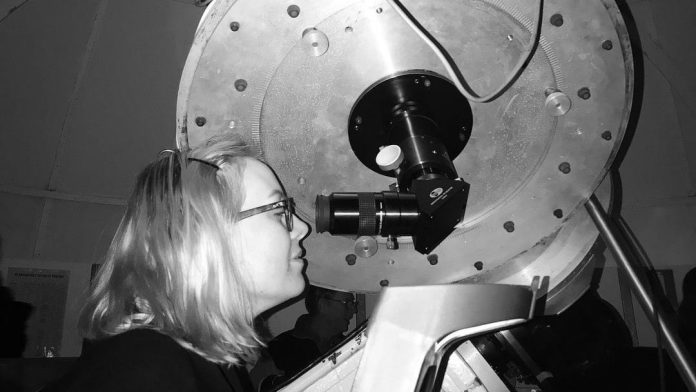
Swinburne astrophysicist and “cosmic detective” Dr Sara Webb is one of 60 scientists, technologists, engineers and mathematicians selected as a 2022 Superstar of STEM. The announcement will be officially made today by the Minister for Industry and Science, Ed Husic MP.
Swinburne’s Centre for Astrophysics and Supercomputing (CAS) is home to some of the world’s brightest astrophysicists, including Dr Sara Webb.
Dr Webb joined Swinburne as an Astrophysics PhD Candidate in 2018 and is now a Postdoctoral Research Fellow. When she’s not researching, she helps coordinate Swinburne’s two high school space programs: the Swinburne Haileybury International Space Station Experiment (SHINE) and the Swinburne Youth Space Innovation Challenge. This involves teaching Year 10–12 students about space technology, and the creation of actual experiments to send to the International Space Station (ISS). Last year’s winning team sent yoghurt to space!
She has a passion for science communication and creates out-of-this-world content at @sarawebbscience on TikTok, Instagram and Twitter.
Superstars of STEM is an initiative of Science & Technology Australia funded by the Australian Government’s Department of Industry, Science and Resources.
Through a highly competitive selection process, the program selects 60 women and non-binary STEM experts and gives them the training, confidence, networks and experience to become sought-after media commentators as experts in their fields.
Quote attributable to Swinburne University of Technology astrophysicist, Dr Sara Webb: “I always knew I wanted to be a scientist of some kind. From marine biology to archaeology, I was obsessed with trying to understand the world and universe we live within.
“In my teens, I started listening to online lectures about astronomy and fell in love. It led me to enrol in a Bachelor of Science where I could minor in astrophysics.
“Astronomy is one of those awe-inspiring fields that can get audiences of all ages interested in STEM. Astronomy was how I became a scientist, and now I’m thrilled to be able to take knowledge from Astronomy into other fields of research. Sharing the joy of Science has always been a passion, and I’m thrilled to do so via the Superstars of STEM program.
“No two days are ever the same for an astrophysicist. Some days I am doing user testing in our Cyber-Human Discovery Lab, programming or processing data. On other days I can be in the biology labs or running the SHINE program.
“Something that might surprise people is that computer programming is a large part of most astronomers’ jobs. There is so much data that if we dealt with it manually, it would take longer than most people’s working lives. That’s why we use supercomputing and machine learning to help us process data.”
Quote attributable to Swinburne’s Chief Scientist, Professor Virginia Kilborn: “I’m thrilled to see Sara join the Superstars of STEM program.
“Sara is an outstanding science communicator, and her new role as a Superstar of STEM will broaden her reach to inspire even more people to take an interest in STEM fields.”
Quote attributable to Minister for Industry and Science, Ed Husic MP: “The need to boost diversity in our science, technology, engineering and mathematics sector is urgent.
“There are huge skills shortages that can be addressed if we put our minds and collective effort to it – which means we have to draw deeply on our nation’s expertise from all corners of the community.
“By doing so, we can deliver a stellar boost to our national economy and enable Australia to meet the growing demand for STEM-trained workers.
“I’ve always been a fan of the way the Superstars of STEM program pushes to deliver a diverse STEM workforce and ensures the next generation of scientists and technologists have visible role models.
“I just know these talented experts and communicators will play their part inspiring Australia’s young people – from all backgrounds – into science and technology.”
Quote attributable to Science & Technology Australia Chief Executive Officer, Misha Schubert:
“We know it’s really hard to be what you can’t see. That’s why this game-changing program is helping to smash stereotypes of what a scientist, technologist, engineer or mathematician looks like.
“By becoming highly visible role models in the media, these Superstars of STEM are showing our diverse next generations of young people – especially our girls and non-binary kids – that STEM is for them.
“Superstars of STEM is powerfully shifting the dial on diversity in Australia’s science and technology sectors. The Australian Government’s investment in this world-leading program is bolstering diversity in a sector that will shape our future economy. We are so grateful for it.”
Abu Dhabi Global Market (ADGM) announced today a collaboration with Rackspace Technology® on several critical technology initiatives.
Rackspace Technology, a long-standing global leader in multi-cloud computing, technology consultancy, and managed services, will assist ADGM in harnessing cloud computing and establishing a complete corporate data platform. ADGM will be able to improve cost efficiency and agility in IT operations by migrating to the cloud, as well as provide a contemporary, secure technological footprint for the deployment of expanded business services. The ADGM unified data platform programme will create a centralised repository for all corporate data, allowing for increased business insight and decision-making while also laying the groundwork for advanced analytics and AI.
ADGM Director of Technology Services Abdullah Al Qubaisi said ADGM is devoted to encouraging innovation and transformational economic growth in Abu Dhabi, the UAE, and the broader region as a significant worldwide financial centre.
“We have seen exponential growth in the last seven years and believe that our journey to the cloud and data platform will not only help us maintain this but also help future-proof ADGM as an organization. We believe that Rackspace Technology, with its deep cloud expertise and relationships with major hyper-scale public clouds, is the right partner to support us on this journey,” Qubaisi stated.
George Pawlyszyn, General Manager, Middle East and Africa (MEA) at Rackspace Technology, commented, “We are incredibly proud to be supporting ADGM in their ambitious growth and transformation journey and in turn, contributing to the economic vitality of the region. It’s exciting to see future-focused organizations like ADGM leverage the power of the cloud and analytics to realise their wider business objectives and enhance their competitive advantage.”
By developing responsibly made AI tools built with Image credit: [link title]designers and marketers in mind, Shutterstock and LG lead the charge in streamlining the creative process for all Image credit: Shutterstock
Media Release by Shutterstock
Building on its promise to enable its users to produce their best work with incredible content and innovative tools, Shutterstock, Inc., today announced its long-term partnership to advance AI-powered technology with LG AI Research. By combining Shutterstock’s metadata and world-class content with LG AI Research’s R&D capabilities, the companies will bring EXAONE, LG’s AI image generation model, EXAONE Atelier, a creative AI toolkit, and AI-based image captioning to the global market. This is Shutterstock’s latest initiative to provide its partners, customers and contributors with ethically driven AI technology across all stages of the creative workflow, as it continues to collaborate with industry leaders to responsibly shape the future of generative AI.
“LG AI Research has been working closely with Shutterstock as its most trusted and strategic partner to develop EXAONE, a super-giant AI that can generate creative visual images and captions based on unique multi-modal architecture and a huge number of images and texts,” said Dr. Kyunghoon Bae, Chief of LG AI Research. “Together with Shutterstock, LG AI Research is building successful commercial cases of EXAONE and exploring brand new opportunities based on EXAONE Atelier, a creative AI toolkit that is designed to inspire designers and creators by leveraging generative AI. We are ready to collaborate with all businesses to make our world more creative — inspired by AI and designed by humans.”
“Since our inception almost 20 years ago, Shutterstock has been committed to supercharging creativity by providing its users with the ingredients to power a flawless artistic experience,” said Paul Hennessy, Chief Executive Officer at Shutterstock. “Our partnership with LG AI Research continues to deliver on that mission by bringing AI tools to our customers that automate the non-creative parts of the process through AI image captioning and actualize visions instantly through generative AI models. Whether it be for a CMO or a freelance Creative Director, the AI-powered tools we’re building eliminate key pain points of the creative process for all and open up more space for creativity to flow.”
Expanding Our Generative AI Footprint Shutterstock has chosen to partner with LG AI Research, a global pioneer in generative research that is equally invested in taking an ethical approach to create AI technology. LG AI Research’s sophisticated AI model, which will be integrated into Shutterstock’s platform, is being trained with millions of high-resolution images and metadata from Shutterstock and will convert text-based prompts into images. Contributors whose works were used to train the model will be compensated via Shutterstock’s Contributor Fund and will also be compensated whenever new generative content that uses their IP is created and licensed by customers.
AI Image Captioning: A Game-Changer for the Creative Workflow LG AI Research’s EXAONE technology can also convert images into high-quality descriptions and keywords to describe and label content, which can help customers find assets faster. By integrating this AI captioning capability, customers will be able to automatically add labels and descriptions to content that they upload and store with Shutterstock — making it easy to stay organized and find the assets users need, when they need them.
A Collaborative Approach Toward Industry Education According to a survey conducted by Shutterstock, two thirds of its customers and contributors are interested in learning about AI-generated content from the company. To meet this growing interest and share best practices and learnings with the industry, Shutterstock and LG AI Research will participate in industry presentations, including at the IEEE/CVF Conference on Computer Vision and Pattern Recognition in Vancouver in June 2023, and co-host events to lead the global discussion on new and ethical AI model development.
Customers and contributors can expect to see features like these integrated into Shutterstock’s platform in 2023.
NVIDIA today announced a multi-year collaboration with Microsoft to build one of the most powerful AI supercomputers in the world, powered by Microsoft Azure’s advanced supercomputing infrastructure combined with NVIDIA GPUs, networking and full stack of AI software to help enterprises train, deploy and scale AI, including large, state-of-the-art models.
Azure’s cloud-based AI supercomputer includes powerful and scalable ND- and NC-series virtual machines optimized for AI-distributed training and inference. It is the first public cloud to incorporate NVIDIA’s advanced AI stack, adding tens of thousands of NVIDIA A100 and H100 GPUs, NVIDIA Quantum-2 400Gb/s InfiniBand networking and the NVIDIA AI Enterprise software suite to its platform.
As part of the collaboration, NVIDIA will utilize Azure’s scalable virtual machine instances to research and further accelerate advances in generative AI, a rapidly emerging area of AI in which foundational models like Megatron Turing NLG 530B are the basis for unsupervised, self-learning algorithms to create new text, code, digital images, video or audio.
The companies will also collaborate to optimize Microsoft’s DeepSpeed deep learning optimization software. NVIDIA’s full stack of AI workflows and software development kits, optimized for Azure, will be made available to Azure enterprise customers.
“AI technology advances as well as industry adoption are accelerating. The breakthrough of foundation models has triggered a tidal wave of research, fostered new startups and enabled new enterprise applications,” said Manuvir Das, vice president of enterprise computing at NVIDIA. “Our collaboration with Microsoft will provide researchers and companies with state-of-the-art AI infrastructure and software to capitalize on the transformative power of AI.”
“AI is fueling the next wave of automation across enterprises and industrial computing, enabling organizations to do more with less as they navigate economic uncertainties,” said Scott Guthrie, executive vice president of the Cloud + AI Group at Microsoft. “Our collaboration with NVIDIA unlocks the world’s most scalable supercomputer platform, which delivers state-of-the-art AI capabilities for every enterprise on Microsoft Azure.”
Scalable Peak Performance With NVIDIA Compute and Quantum-2 InfiniBand on Azure Microsoft Azure’s AI-optimized virtual machine instances are architected with NVIDIA’s most advanced data center GPUs and are the first public cloud instances to incorporate NVIDIA Quantum-2 400Gb/s InfiniBand networking. Customers can deploy thousands of GPUs in a single cluster to train even the most massive large language models, build the most complex recommender systems at scale, and enable generative AI at scale.
The current Azure instances feature NVIDIA Quantum 200Gb/s InfiniBand networking with NVIDIA A100 GPUs. Future ones will be integrated with NVIDIA Quantum-2 400Gb/s InfiniBand networking and NVIDIA H100 GPUs. Combined with Azure’s advanced compute cloud infrastructure, networking and storage, these AI-optimized offerings will provide scalable peak performance for AI training and deep learning inference workloads of any size.
Accelerating AI Development and Deployment Additionally, the platform will support a broad range of AI applications and services, including Microsoft DeepSpeed and the NVIDIA AI Enterprise software suite.
Microsoft DeepSpeed will leverage the NVIDIA H100 Transformer Engine to accelerate transformer-based models used for large language models, generative AI and writing computer code, among other applications. This technology applies 8-bit floating point precision capabilities to DeepSpeed to dramatically accelerate AI calculations for transformers — at twice the throughput of 16-bit operations.
NVIDIA AI Enterprise — the globally adopted software of the NVIDIA AI platform — is certified and supported on Microsoft Azure instances with NVIDIA A100 GPUs. Support for Azure instances with NVIDIA H100 GPUs will be added in a future software release.
NVIDIA AI Enterprise, which includes the NVIDIA Riva for speech AI and NVIDIA Morpheus cybersecurity application frameworks, streamlines each step of the AI workflow, from data processing and AI model training to simulation and large-scale deployment.
Article by Bob Buttermore, Senior Vice President and Chief Supply Chain Officer, Rockwell Automation
For decades, decisions about manufacturing location were heavily influenced by labour...
Article by Steven Fong, Corporate Vice President, APJ Embedded Business AMD
Artificial intelligence is entering a new phase—one that extends beyond digital productivity into the...
Manufacturing teams could use expanded artificial intelligence (AI) capabilities to automate repetitive tasks and connect product data across the lifecycle, according to Autodesk.
The company...
Engineers Australia has called on the Federal Government to place engineering and technical expertise at the centre of Australia’s approach to artificial intelligence (AI),...
Wurth Australia is investing in automated order fulfilment at its Yatala, Queensland and Keysborough, Victoria distribution facilities through a new partnership with supply chain...