
Citizen, the mobile app that sends users location-based safety alerts in real time, announced that it’s introducing helicopter tracking to the app, which will explain to users why there are flying vehicles overhead.
The team told The Verge it employs a 24/7 group to review 911 communications, and now they’ll review data about police helicopters, too. Similar to all the info on Citizen, users can add their own comments and videos about the incident while Citizen verifies it on its end.
The helicopter tool is the latest in Citizen’s arsenal in its attempt to become the place where people get all their local crime info. During the COVID-19 pandemic, it introduced an in-app contact tracing tool, and the company says it’s seen over 7 million sign ups since its launch in 2017.
Citizen will tell you why helicopters are flying overhead

Facebook’s new app Bars will let you rap over pre-made beats

Facebook will be releasing an app that will let users post and share videos of them rapping over provided beats.
The app is called Bars. Its main selling point is it provides the beats and lets you create 60-second rap videos over them.The app promises “studio quality vocal effects,” including actual, honest-to-goodness AutoTune.
The “Bars” app also promises an auto-rhyme dictionary for those who mark themselves as “beginners” in the app’s sign-up. For those closer to the “Advanced” level, it also promises a Freestyle mode, which gives you eight random words to work into a 16-bar off-the-cuff rap.
The catch is the app seems to be currently in closed beta, but you can at least sign up to secure your username and get a place in line for when the app starts opening up.
Tour the Perseverance Mars Rover’s New Home
Experience a guided tour around the first high-definition 360-degree view of Jezero Crater provided by NASA’s Perseverance Mars Rover. Mission experts will walk us through the new Martian terrain, explain why it’s got scientists excited, and answer your questions.
Earthly Life Could Survive on Mars, New Studies Suggest
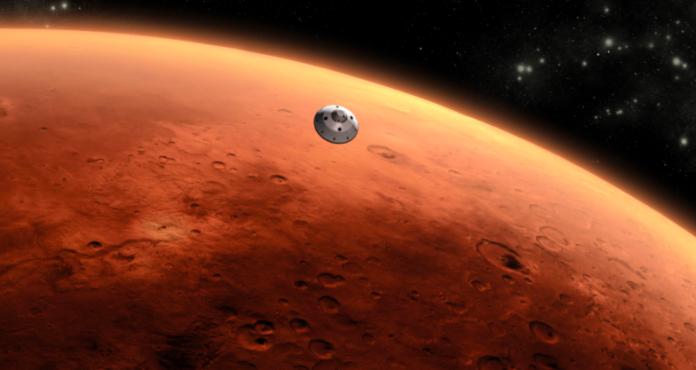
Two new independent studies show that we can’t discount the possibility that Earthly life can survive on the Red Planet
The first work was published in Frontiers in Microbiology. Researchers working on the study found that Earth life forms could temporarily survive on Mars. Fungi and Bacteria were sent to the stratosphere in a balloon, where they were kept in Martian atmosphere conditions and were exposed to UV radiation from the Sun.
The second study, published in Nature Communications Earth and Environment, is equally exciting, as the researchers grew microbes on soils sourced from a Martian meteorite. The team used meteorite Northwest Africa (NWA) 7034, a piece of Mars about 4.5 billion years old. A few grams of it were crushed and exposed to chemolithotrophs, rock-eating microorganisms. The question they were trying to answer was if such organisms existed on Mars, what traces might they have left behind?
The team found that these chemolithotrophs constructed mineral capsules made of iron, manganese, and aluminum phosphates. These were unique to the old Martian soil, and unlike what is done by these microbes on Earth – or even in lab experiments on non-martian carbon-rich meteorites. It could be possible in the future to look for these mineral structures directly on Mars.
India tightens rules for social media giants

India has announced new regulations for web services and social networks in the country, particularly ” significant social media” companies with large user bases like Twitter and Facebook.
India’s Ministry of Electronics and Information Technology (MEITY) announced the rules on Thursday. They require social media companies to establish a “grievance redressal mechanism” for users, including official “grievance officers” who acknowledge complaints within 24 hours and resolve them within 15 days. Services must also remove nudity and sexually explicit content within 24 hours of a user flagging it.
The framework also indicates that MEITY can regulate digital media services, including video streaming platforms, and require digital news services to follow the official “norms of journalistic conduct” observed by traditional media outlets.
This Incredible Map Shows 25,000 Supermassive Black Holes
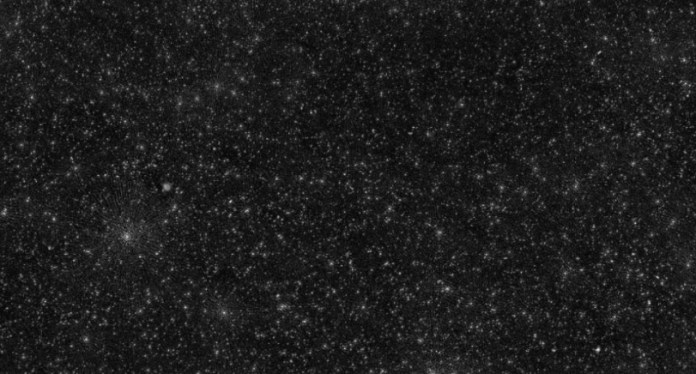
This incredible image does not show a starry sky, but every white dot is a supermassive black hole at the core of a different galaxy.This ensemble was created not by visible light but from radio waves emitted by matter orbiting these huge and distant black holes. This is the most detailed sky map in low radio frequencies yet.
The radio observations were collected by the Low-Frequency ARray (LOFAR), a system of 52 stations spread over nine European countries: Germany, The Netherlands, Poland, France, the UK, Sweden, Ireland, Latvia, and Italy. Together they are the largest combined radio telescope in the world.
The observations were conducted in low radio frequencies. Long radio wavelengths are greatly affected by the ionosphere, the layer of electrically charged particles that surround our planet. The free electrons that make that layer are not good for these radio observations as their motion affects the quality of what astronomers can observe.
“This is the result of many years of work on incredibly difficult data. We had to invent new methods to convert the radio signals into images of the sky,” said lead author Dr Francesco de Gasperin from the University of Hamburg.
Iceberger Website Shows You How Any Iceberg You Draw Would Float

Icebergs are a hot topic on our ever-warming planet whose climate crisis partially hangs on the survival of the Earth’s coolest climes.
Found at the polar regions of the planet, they can be seen bobbing in the Arctic, North Atlantic, and Southern Oceans. They are immensely heavy (which is why they don’t get on well with cruise ships) but amazingly float in saltwater because they are formed of freshwater
Now, a new app called Iceberger will show you how the iceberg of your wildest imagination would float.
The clever idea is not without limitations, as it can only imagine the two-dimensional configuration of your berg, whereas a three-dimensional distribution of mass might glean a different outcome. However, using approximations, the site can tackle even the wackiest of icebergs with decent accuracy – and above all else, it’s very addictive. The website was inspired by a detailed and brilliant thread from PhD student Megan Thompson-Munsen regarding stable orientations of icebergs.
Google’s massive undersea cables can detect earthquakes
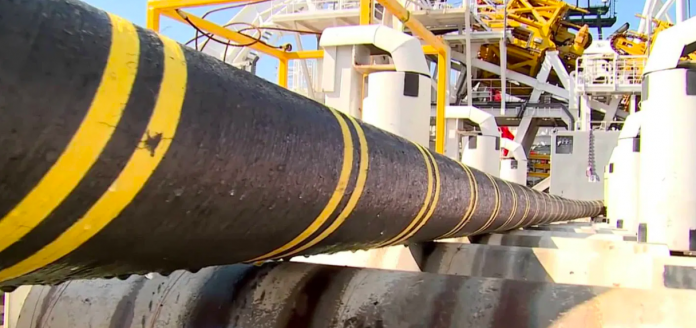
The web of undersea cables that transmit data all over the world can one day be used to track tsunamis and earthquakes, according to new research.One of Google’s fiber-optic cables was able to successfully pick up on earthquakes nearby through detecting distortions in light pulses along the cable.
“Can we find a less expensive way to cover the ocean with geophysical sensors? There’s already this telecommunication cable infrastructure out there. If you can turn them into sensors, that’s wonderful — and that’s what we’re doing now,” says Zhongwen Zhan,an assistant geophysics professor at the California Institute of Technology.
The new approach capitalises on what the cables are already designed to do. When a transmitter at one end of the cable sends out a light signal transmitting data, light waves are oriented in a particular direction. If an earthquake hits, it might shake, bend, or twist the cable — and that changes the orientation of the light waves. At the other end of the cable, Google notices distortions and corrects them. Now, it wants to share its data, changes to what’s called the “state of polarization” of light, with seismologists like Zhan so they can study the earthquakes that caused the distortions.
“We’re humbled and excited by the possibility of collaborating with the optical, subsea and seismic research communities to use all of our cable infrastructure for greater societal benefits,” Google said in a blog.
Latest News
UNSW research outlines responsible innovation approach for AI companies

Industrial robot installations rise 11% as global stock hits 5 million – report

The new economics of localised manufacturing

AI Is Moving From “Know” To “Do”