Meta will utilise mixed reality to express the next generation of art, culture, and social interaction.
In a statement, Meta is launching Meta House at Miami Art Week from 1 December to 3 December as part of our ongoing commitment to the creative community. It will feature mixed reality experiences, live performances by Doja Cat, first-time GRAMMY nominee GloRilla, and more, as well as installations by up-and-coming artists COVL, YONK, and others.
“I 100% believe the metaverse will become a space for artists because, as artists, we’re constantly having to think about the future and carrying the responsibility of telling the past, present, and future in that sense,” COVL said.
COVL, a young Puerto Rican multidisciplinary artist, worked with Meta on Nuevo Norte (New North), a virtual universe that pays homage to COVL’s background while including her organic, trippy artistic style. COVL will also include Nuevo Norte in an augmented reality (AR) mural that will be displayed in Meta House. COVL collaborated with Meta’s Spark AR team to add a layer of interactivity to the artwork, which can be viewed through Instagram and Facebook cameras. This was COVL’s first time experimenting with AR and VR as art media.
In the fifth episode of its Metaverse Culture Series, Meta gathered together COVL and other new artists and activists, just as Miami Art Week celebrates both conventional and creative forms of art. They address how the Latinx community can both preserve and enhance their rich culture in new ways, as well as achieve progress towards equity on various levels, in a small documentary called Tercera Cultura (third culture). The film includes COVL (D’ana Nunez), Jillian Mercado, Sara Mora, Tori Ortiz, and Juan Veloz.
Meta is also working with the Dutch artist duo “Are We There Yet?” ” guests, YONK, who will give an immersive VR workshop to demonstrate how VR may be used for creative expression to students and visitors.
Mastercard introduced The Belle Block™ in Latin America and the Caribbean (LAC), during the 11th edition of the Mastercard LAC Innovation Forum. The Belle Block™ is a community launched in June 2022 to educate and empower women and non-binary individuals to benefit from Web3 technology and crypto. This expansion to the region comes in partnership with WAGMI LatAm, an education initiative aimed at bringing 5 million Latin women into Web3 by 2030.
Mastercard believes in the power of technology and its ability to build a better future that includes everyone. This new group focuses on delivering on key building blocks: Business Growth, Education, Leadership, Legal & Regulatory Advocacy and Entrepreneurship.
Today’s crypto climate requires looking ahead, informing, and giving more people the choice to explore and engage in the crypto ecosystem to better understand the power of blockchain. Although women and men are using crypto for similar reasons – investing, buying, trading, and opening wallets – 77% of Latin American women who are familiar with crypto agree they would use it more if they understood it better.*
“Digital assets have the power to transform the way we pay, get paid, and invest. Together with the crypto community, we want to ensure we are bringing more women and underserved to the table in the Web3 and crypto world so they can have an active role in leading the future of payments”, says Janet Rivera-Hernandez, Vice President, Communications, Latin America and the Caribbean.
The Belle Block™ partners with the founders of groups fostering education and collaboration, including SheFi, HerHouse, Blu3 DAO, and Boys Club, to get more women involved and to develop products that empower women and other minorities. In Latin America and the Caribbean, the initiative is supported by WAGMI LatAm, a program that aims to increase the participation of Latin women in the United States and Latin America in the Web3 world.
“WAGMI LatAm brings together more than 30 organizations in the U.S. and Latin America to ensure Latin American women are co-creators and active participants in the evolution of the Web3 ecosystem by providing access to education, resources and conducting research,” said Laura Navarro Muñoz, Governor of H.E.R. DAO LATAM and one of the three founding member organizations of WAGMI LATAM. “Based on our experience, community-building and education will be key to achieve WAGMI LATAM’s goal of onboarding 5 million women into Web3 by 2030 and we are looking forward to working with Mastercard to achieve this goal.”
Last June, Mastercard launched its 2022 New Payments Index, a global survey among 35,000+ consumers in 40 countries, which found those already familiar with the crypto space, women especially, have a heightened interest in expanding their knowledge. 95% of Latin American women have heard of cryptocurrency, but their current understanding of crypto and digital asset terminology is less robust than men, including non-fungible tokens (NFTs) – 42% of women are aware vs. 56% of men, blockchain – 28% of women are aware vs. 44% of men, and central bank digital currencies (CBDC) – 43% of women are aware vs. 52% of men,.* There is a clear opportunity to engage women by initiating a platform to inform, exchange and educate to help bridge this gender gap.
Mastercard’s Commitment to Diversity, Equity & Inclusion (DEI):
Mastercard’s ongoing commitment to financial and social inclusion is at the intersection of innovation and technology. Recent work includes its LGBTQIA+ Pride Month Your True Self is Priceless campaign, new non-binary community research in 16 markets across Europe and North America, and the release of its refreshed Gender Balance initiative on the 50th anniversary of Title IX.
ASUS IoT, a global AIoT solution supplier, announced a collaboration with Media Broadcast, Germany’s largest full-service provider in the broadcasting and media industry and a provider of 5G campus networks.
In a statement, ASUS IoT said the collaboration demonstrates both companies’ commitment to data-driven innovation and will result in the implementation of smart city solutions across Germany.
The first project will be held in Technology and Innovation Park Nordheide and will serve as a testing ground for 5G and Internet of Things (IoT) technology. TIP Park is a 25-hectare (61-acre) industrial park in Buchholz, Germany, near Hamburg. Media Broadcast operates a cutting-edge 5G campus network within the park. Based on this infrastructure, the park aspires to be the preferred location for firms seeking an environment conducive to the development of cutting-edge innovations.
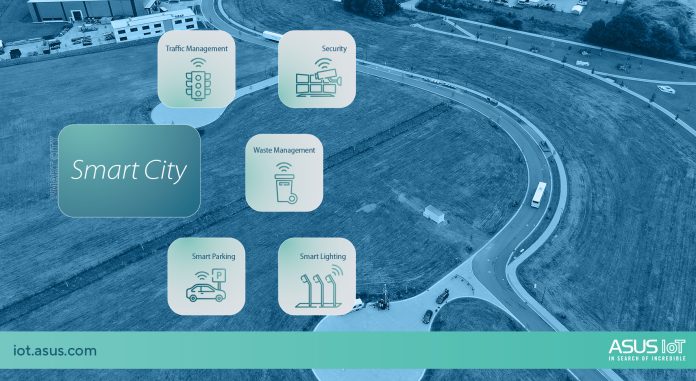
ASUS IoT and Media Broadcast will collaborate to deploy five IoT smart city solutions to improve parking, traffic management, security, trash management, and street lighting.
Media Broadcast GmbH Senior Solution and Bid Manager Nobert Krüger said the company is excited to work on additional projects with ASUS IoT to deliver innovation in diverse smart city solutions.
“We share a vision of advancing AIoT technology to solve future challenges. With the rapid development and reliable product quality that ASUS provides, together we can accelerate deployments to create modern cities,” Krüger stated.
Krüger added: “We are looking forward to creating innovative solutions with Media Broadcast,” said ASUS IoT Regional Sales Director Casper Lee. “The core concepts focus on how to make cities more resilient, sustainable and future-proof. And the main goal is to enable data-driven decisions.”
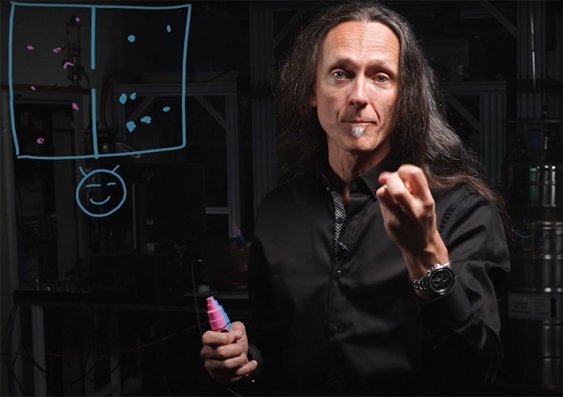
Professor Andrea Morello explains how the Maxwell's Demon thought experiment was analogous to his team's achievement by selecting only cool electrons for quantum computations. Image credit: University of New South Wales Sydney
Media Release by University of New South Wales Sydney
A team of quantum engineers at UNSW Sydney has developed a method to reset a quantum computer – that is, to prepare a quantum bit in the ‘0’ state – with very high confidence, as needed for reliable quantum computations. The method is surprisingly simple: it is related to the old concept of ‘Maxwell’s demon’, an omniscient being that can separate a gas into hot and cold by watching the speed of the individual molecules.
“Here we used a much more modern ‘demon’ – a fast digital voltmeter – to watch the temperature of an electron drawn at random from a warm pool of electrons. In doing so, we made it much colder than the pool it came from, and this corresponds to a high certainty of it being in the ‘0’ computational state,” says Professor Andrea Morello of UNSW, who led the team.
“Quantum computers are only useful if they can reach the final result with very low probability of errors. And one can have near-perfect quantum operations, but if the calculation started from the wrong code, the final result will be wrong too. Our digital ‘Maxwell’s demon’ gives us a 20x improvement in how accurately we can set the start of the computation.”
The research was published in Physical Review X, a journal published by the American Physical Society.
Watching an electron to make it colder
Prof. Morello’s team has pioneered the use of electron spins in silicon to encode and manipulate quantum information, and demonstrated record-high fidelity – that is, very low probability of errors – in performing quantum operations. The last remaining hurdle for efficient quantum computations with electrons was the fidelity of preparing the electron in a known state as the starting point of the calculation.
“The normal way to prepare the quantum state of an electron is go to extremely low temperatures, close to absolute zero, and hope that the electrons all relax to the low-energy ‘0’ state,” explains Dr Mark Johnson, the lead experimental author on the paper. “Unfortunately, even using the most powerful refrigerators, we still had a 20 per cent chance of preparing the electron in the ‘1’ state by mistake. That was not acceptable, we had to do better than that.”
Dr Johnson, a UNSW graduate in Electrical Engineering, decided to use a very fast digital measurement instrument to ‘watch’ the state of the electron, and use real-time decision-making processor within the instrument to decide whether to keep that electron and use it for further computations. The effect of this process was to reduce the probability of error from 20 per cent to 1 per cent.
A new spin on an old idea
“When we started writing up our results and thought about how best to explain them, we realized that what we had done was a modern twist on the old idea of the ‘Maxwell’s demon’,” Prof. Morello says.
The concept of ‘Maxwell’s demon’ dates back to 1867, when James Clerk Maxwell imagined a creature with the capacity to know the velocity of each individual molecule in a gas. He would take a box full of gas, with a dividing wall in the middle, and a door that can be opened and closed quickly. With his knowledge of each molecule’s speed, the demon can open the door to let the slow (cold) molecules pile up on one side, and the fast (hot) ones on the other.
“The demon was a thought experiment, to debate the possibility of violating the second law of thermodynamics, but of course no such demon ever existed,” Prof. Morello says.
“Now, using fast digital electronics, we have in some sense created one. We tasked him with the job of watching just one electron, and making sure it’s as cold as it can be. Here, ‘cold’ translates directly in it being in the ‘0’ state of the quantum computer we want to build and operate.”
The implications of this result are very important for the viability of quantum computers. Such a machine can be built with the ability to tolerate some errors, but only if they are sufficiently rare. The typical threshold for error tolerance is around 1 per cent. This applies to all errors, including preparation, operation, and readout of the final result.
This electronic version of a ‘Maxwell’s demon’ allowed the UNSW team to reduce the preparation errors twenty-fold, from 20 per cent to 1 per cent.
“Just by using a modern electronic instrument, with no additional complexity in the quantum hardware layer, we’ve been able to prepare our electron quantum bits within good enough accuracy to permit a reliable subsequent computation,” Dr Johnson says.
“This is an important result for the future of quantum computing. And it’s quite peculiar that it also represents the embodiment of an idea from 150 years ago!”
How Australia and the world can safely navigate and steer the profound impact new technologies, including artificial intelligence (AI), have on our lives is the focus of a first-of-its-kind school at The Australian National University (ANU).
Officially launched today, the ANU School of Cybernetics provides unrivalled teaching and research that pioneers a new approach to engineering and technology design.
School Director, ANU Distinguished Professor Genevieve Bell, said the School nurtures and trains a new generation of critical thinkers and practitioners who can navigate our increasingly complex world and who are committed to ensuring safe, sustainable and responsible technology futures.
“We are working hard, in everything we do, to help transform the way society engages with technology,” Distinguished Professor Bell said.
“We want to help ensure that everyone can participate in building our future. And we want to find new ways to think about and talk about the role of technology in our lives. Here at the ANU School of Cybernetics we are dedicated to helping lead and enrich this vital conversation.
“We are drawing on the rich history of cybernetics globally, and reimagining it for our 21st century challenges. We want to make sure we can successfully navigate major societal transformations.”
The ANU School of Cybernetics offers the Master of Applied Cybernetics, a PhD program that recruits students as a cohort, and a series of microlearning experiences for organisations, communities and individuals.
The School’s research program investigates how emerging cyber-physical, technological systems – such as robotics, digital voice assistants, and autonomous systems – operate across a range of settings and sectors including the creative industries, marine sciences, agriculture and climate change research.
Distinguished Professor Bell said another key focus of the School was examining who is building and managing our AI-enabled future.
“We need to develop the ability to respond quickly to changing situations and complex systems and many, diverse voices must be involved in making those decisions and building new knowledge,” she said.
“The last few years have demonstrated, very clearly, that we need to tell better stories about the future, stories that are more equitable, fair and just, and that equally we need to work actively in the present to make those stories not just possible but true.”
To help launch the School, an inaugural curated exhibition featuring more than 100 historical and contemporary pieces is on display until 2 December in the award-winning Birch Building on the ANU campus.
From the world’s first computer graphics, animations, special effects, and electronic music, Australian Cybernetic: a point through time explores 50 years of technology and creativity in computing that have influenced the technology, cinema, gaming and television we know today.
The collection of interactive, immersive and provocative creations also includes an Emmy Award-winning virtual reality film; an acclaimed installation examining the resources, human labour, and algorithmic processing of a virtual assistant technology system; and a kinetic sculpture named ‘Albert’ that has been delighting audiences for 54 years, among many other displays.
Andrew Meares, cybernetic futures lead at the School, said the exhibition speaks firmly to the School’s approach of observing the past to help shape a course for the role of technologies in today’s world.
“For the first time, historic, contemporary, and conceptual cybernetic works are being brought together in a unique exhibition,” Mr Meares said.
“We’re inviting people to take a tour through time and learn about the history of technology and art and how this contributed to cybernetics and the multimedia, tech and music we enjoy today.”
NAB has inked a multimillion-dollar, long-term agreement with Amazon Web Services (AWS) to further its cloud-first technology strategy.
In a statement, NAB said a key component of its ambitious multi-cloud strategy, which has helped the company establish itself as a market leader in the move to the cloud, is the extended and expanded collaboration.
The current agreement between the two companies could allow NAB to speed up the shift of essential workloads to AWS. The renewed relationship also includes NAB embracing the most recent AWS innovations, such as AWS Graviton processors, which are designed to provide the best price-to-performance for cloud workloads, assisting NAB in improving efficiency and sustainability in the cloud.
Patrick Wright, NAB Group Executive Technology and Enterprise Operations, stated that NAB’s significant investment in the cloud and collaboration with AWS allows it to be more innovative, nimble, and cost-effective in delivering outstanding customer experiences.
“The cloud is now ingrained at NAB. Our Simple Home Loans, internet banking, NAB Connect online business platform, and recently launched NAB Now Pay Later product are just some of our customer services being enabled by the cloud,” Wright said.
According to Wright, the cloud enables NAB to bring new and better services to market faster and with greater reliability for its clients. He added that AWS’s efforts in highly secure and robust global infrastructure benefit NAB as well. In conjunction with NAB’s security efforts, Wright stated that NAB provides a highly secure environment to protect our customers and the bank.
In 2018, NAB began pushing its cloud plan and has now migrated 70 per cent of its apps to the cloud. NAB recently became the first major Australian bank to migrate its business banking online platform to the cloud, as well as transition its Global FX & Trading Platform (Murex) to the cloud and start the Global Open Finance Challenge with AWS and three other global banks.
“We’ve had a long and proud relationship with AWS dating back to 2013 and we are excited to extend this collaboration,” Wright said.
Wright stated that AWS is important to NAB’s technological strategy, allowing it to provide new and unique client experiences. He added that NAB would soon finish the rollout of Amazon Connect, AWS’s cloud contact centre product, across all of NAB Group’s call centres.
Amazon Connect is a user-friendly omnichannel cloud contact centre that enables organisations to provide better customer service at a cheaper cost. This AWS service employs artificial intelligence (AI) to pair NAB customers with the most relevant, highly skilled contact centre staff member headquartered in Australia. Amazon Connect is integrated into NAB’s digital internet banking experience, allowing users to call using a button within the Internet Banking app and be fully authorised without having to go through a series of personal questions over the phone.
According to Wright, NAB is benefiting from Amazon Connect’s stronger automation and AI capabilities, which allow the bank to run customer contact centres more effectively and create a more personalised experience for consumers.
“We want to deliver more personalised experiences for customers, aligned to their preferences in how they want to interact with us,” Wright said.
NAB has just reduced the cost of its cloud-based infrastructure. NAB established a program to save approximately $1 million per month in cloud costs by utilising AWS services and products, including AWS Graviton, establishing a company culture centred on efficiency and innovation for customers.
Rianne Van Veldhuizen, AWS Managing Director in Australia and New Zealand, stated that AWS was thrilled to play a significant part in helping NAB’s mission to create innovative and intuitive digital experiences for consumers.
“Cloud is one of the defining technologies of the financial services industry and AWS is helping banking leaders like NAB drive innovation and business growth. One of the key benefits of NAB’s transformation is the ability for the bank to become data-driven, which allows their data scientists, engineers, marketers, and other roles to make better-informed decisions, faster,” Van Veldhuizen said.
Van Veldhuizen further added: “We’re proud to help NAB continue to leverage the scale, resilience, and security of AWS to accelerate product development, operate more efficiently and more cost-effectively while exceeding customer expectations and meeting the necessary compliance requirements.”
NAB said it is one of the largest employers of technological professionals in the southern hemisphere. Since 2018, the bank has trained thousands of employees in cloud skills through its Cloud Guild program, resulting in over 4500 industry-recognized certificates.
Two NVIDIA Research papers — one exploring diffusion-based generative AI models and another on training generalist AI agents — have been honored with NeurIPS 2022 Awards for their contributions to the field of AI and machine learning.
These are among more than 60+ talks, posters and workshops with NVIDIA authors being presented at the NeurIPs conference, taking place this week in New Orleans and next week online.
Synthetic data generation — for images, text or video — is a key theme across several of the NVIDIA-authored papers. Other topics include reinforcement learning, data collection and augmentation, weather models and federated learning.
“AI is an incredibly important technology, and NVIDIA is making fast progress across the gamut — from generative AI to autonomous AI agents,” said Jan Kautz, vice president of learning and perception research at NVIDIA. “In generative AI, we are not only advancing our theoretical understanding of the underlying models, but are also making practical contributions that will reduce the effort of creating realistic virtual worlds and simulations.”
Reimagining the Design of Diffusion-Based Generative Models
Diffusion-based models have emerged as a groundbreaking technique for generative AI. NVIDIA researchers won an Outstanding Main Track Paper award for work that analyzes the design of diffusion models, proposing improvements that can dramatically improve the efficiency and quality of these models.
The paper breaks down the components of a diffusion model into a modular design, helping developers identify processes that can be adjusted to improve the performance of the entire model. The researchers show that their modifications enable record scores on a metric that assesses the quality of AI-generated images.
Training Generalist AI Agents in a Minecraft-Based Simulation Suite
While researchers have long trained autonomous AI agents in video-game environments such as Starcraft, Dota and Go, these agents are usually specialists in only a few tasks. So NVIDIA researchers turned to Minecraft, the world’s most popular game, to develop a scalable training framework for a generalist agent — one that can successfully execute a wide variety of open-ended tasks.
Dubbed MineDojo, the framework enables an AI agent to learn Minecraft’s flexible gameplay using a massive online database of more than 7,000 wiki pages, millions of Reddit threads and 300,000 hours of recorded gameplay (shown in image at top). The project won an Outstanding Datasets and Benchmarks Paper Award from the NeurIPS committee.
As a proof of concept, the researchers behind MineDojo created a large-scale foundation model, called MineCLIP, that learned to associate YouTube footage of Minecraft gameplay with the video’s transcript, in which the player typically narrates the onscreen action. Using MineCLIP, the team was able to train a reinforcement learning agent capable of performing several tasks in Minecraft without human intervention.
Creating Complex 3D Shapes to Populate Virtual Worlds
Also at NeurIPS is GET3D, a generative AI model that instantly synthesizes 3D shapes based on the category of 2D images it’s trained on, such as buildings, cars or animals. The AI-generated objects have high-fidelity textures and complex geometric details — and are created in a triangle mesh format used in popular graphics software applications. This makes it easy for users to import the shapes into 3D renderers and game engines for further editing.
Named for its ability to Generate Explicit Textured 3D meshes, GET3D was trained on NVIDIA A100 Tensor Core GPUs using around 1 million 2D images of 3D shapes captured from different camera angles. The model can generate around 20 objects a second when running inference on a single NVIDIA GPU.
The AI-generated objects could be used to populate 3D representations of buildings, outdoor spaces or entire cities — digital spaces designed for industries such as gaming, robotics, architecture and social media.
Improving Inverse Rendering Pipelines With Control Over Materials, Lighting
At the most recent CVPR conference, held in New Orleans in June, NVIDIA Research introduced 3D MoMa, an inverse rendering method that enables developers to create 3D objects composed of three distinct parts: a 3D mesh model, materials overlaid on the model, and lighting.
The team has since achieved significant advancements in untangling materials and lighting from the 3D objects — which in turn improves creators’ abilities to edit the AI-generated shapes by swapping materials or adjusting lighting as the object moves around a scene.
The work, which relies on a more realistic shading model that leverages NVIDIA RTX GPU-accelerated ray tracing, is being presented as a poster at NeurIPS.
Enhancing Factual Accuracy of Language Models’ Generated Text
Another accepted paper at NeurIPS examines a key challenge with pretrained language models: the factual accuracy of AI-generated text.
Language models trained for open-ended text generation often come up with text that includes nonfactual information, since the AI is simply making correlations between words to predict what comes next in a sentence. In the paper, NVIDIA researchers propose techniques to address this limitation, which is necessary before such models can be deployed for real-world applications.
The researchers built the first automatic benchmark to measure the factual accuracy of language models for open-ended text generation, and found that bigger language models with billions of parameters were more factual than smaller ones. The team proposed a new technique, factuality-enhanced training, along with a novel sampling algorithm that together help train language models to generate accurate text — and demonstrated a reduction in the rate of factual errors from 33% to around 15%.
There are more than 300 NVIDIA researchers around the globe, with teams focused on topics including AI, computer graphics, computer vision, self-driving cars and robotics.
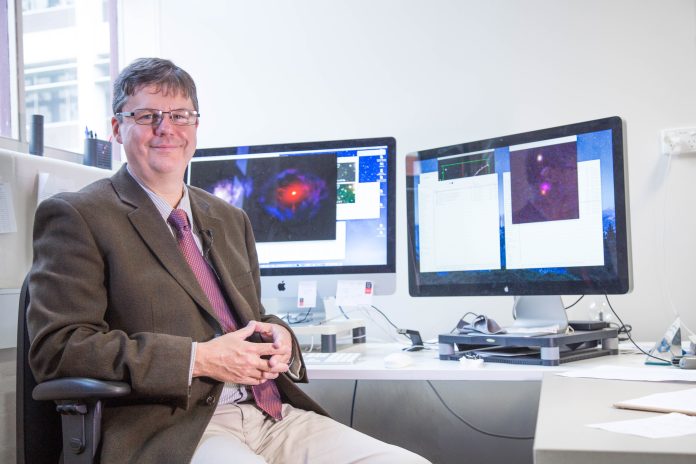
Professor Karl Glazebrook will lead one of the six funded ARC Discovery Projects, using the James Webb Space Telescope to reveal galaxies previously obscured by dust. Image credit: Swinburne University of Technology
Media Release by Swinburne University of Technology
More than $221 million of funding for 2023 Australian Research Council (ARC) Discovery Projects has been announced by ARC Chief Executive Officer, Ms Judi Zielke PSM.
Six Swinburne projects were among the individuals and research teams supported to innovate and build new knowledge.
The scheme provides funding of between $30,000 and $500,000 each year for up to five years.
Swinburne’s Deputy Vice-Chancellor, Research, Professor Karen Hapgood, was among the first to celebrate the success.
“Congratulations to the talented Swinburne researchers who have been funded for ARC Discovery Projects to commence in 2023,” said Professor Hapgood.
“I have no doubt that these important Swinburne projects will deliver significant outcomes in space, Internet of things, cybersecurity, health technology and – all in all – people and technology working together to build a better world.
“I look forward to seeing what they can achieve.”
Unveiling the “dead and dusty” universe
Researchers from Swinburne – led by astrophysicist Associate Professor Ivo Labbe – will join researchers from leading institutes in the USA, Europe and Israel to discover the first mature galaxies formed after the Big Bang by revealing galaxies previously obscured by dust. Decades in the making, the James Webb Space Telescope marks a watershed moment in astronomy discovery. One of the few research projects granted access to the revolutionary space telescope, the team is aiming to discover the first dead galaxies and unveil the previously hidden “dusty” galaxies and shed light on their suspected evolutionary link.
Australia’s 5G transition to get a boost
Almost half a million dollars will go to the world’s first attempt to systematically tackle the challenges of enabling cost-effective last-mile service of 5G mobile edge computing. Led by software engineering and cloud computing expert Associate Professor Qiang He, the project will drive Australia’s 5G transition and innovations and promote national post-COVID economic recovery. We’ll see an improvement to real-time mobile and Internet of Things applications, such as telehealth, remote learning/working, industry 4.0, and ensure Australia’s pioneering position in the global 5G research.
Revealing the unseen universe
The Hubble Space Telescope has captured a larger and more advanced data set than ever before, promising the possibility for new scientific breakthroughs. Swinburne astronomer Distinguished Professor Karl Glazebrook and his team is developing advanced physical models and statistical techniques to observe how light is bent around massive galaxies by gravity. Their analysis will give us highly magnified views of early galaxy evolution, revealing physical details otherwise impossible to see. It will also allow us to better understand invisible dark matter and probe the expansion of the universe, testing whether the unseen dark energy is evolving in time.
Stopping extremist violence before it starts
Despite intense interest in extremist violence, we don’t yet understand it or how to respond to it. Expert in violence risk assessment, Associate Professor Stephane Shepherd, has received almost one million dollars to uncover the factors that lead to violence, the needs of people who might commit such acts and the effectiveness of intervention. Once we know how to identify risk factors and how to prevent people from becoming extremists, these findings can inform health, national security, social welfare and justice agencies.
Australian data to be made safer on the cloud
Data auditing is a promising way to prevent information being modified or lost on the cloud. It could give us timely warnings, meaning we could take precautions and avoid potential data loss. But current auditing approaches are lacking in efficiency and security. Swinburne’s Deputy Director of the Swinburne Data Science Research Institute, Professor Jinjun Chen, will undertake innovative research into the challenges of data auditing and aim to establish solutions for enabling efficient and secure data integrity auditing on the cloud. The project will help safeguard Australians in a fast-growing cyber connected world.
The future of high-tech aged care
Technology isn’t just for the young. Older adults would benefit from more and better technology in aged care. Lead of the Swinburne living Lab, Professor Sonja Pedell, is shepherding a project on meaningful experiences and tech skill development of people in aged care. It’s important to introduce technologies that support agency and confidence – instead of making older Australians frustrated, confused or dependent on the help of others. This project takes the interests, abilities and everyday experiences of people in aged care and uses their wants and needs to inform how to boost technology uptake in residential settings.
Players can explore the St Kilda area with new eyes in an adventure that combines art, augmented reality, music and storytelling. Image credit: Royal Melbourne of Technology University
Players may visit areas throughout the City of Port Phillip through new eyes in an urban experience that mixes art, augmented reality, music, and narration.
As part of the 64 Ways of Being App, gamers can go on a self-guided trip through streets, walking trails, and beachside to explore digital artworks and the neighbourhood’s rich Indigenous histories.
The Indigenous-led cross-cultural walking and listening experience is part of the Yulendj Kummargi (Rising Knowledge Project), which integrates Boon Wurrung knowledge about caring for Country with western tools for regenerative living and working.
N’arweet Carolyn, a trailblazing cultural ambassador who is both an Indigenous custodian and an urban citizen, contributed her extensive knowledge of location to the project.
“I’ve become interested in urban play as a way of connecting knowledge to place again. Augmented reality is a tool to give a voice to living country, healing country. It’s about memory, language, and waterways and connecting people back to these. To bring people back to the lived experience, connection with place. Land is a living entity. Water is the lifeblood,” Briggs said.
N’arweet’s stories, wisdom, and views on the Yalukit Willam clan of the Boon Wurrung are interlaced with artworks created in partnership with artist Jarra Karalinar and musician Allara Briggs-Pattison.
“I developed traditional Kulin patterns through the lens of Blak Futurism, exploring my lived experiences growing up in Melbourne and living on country surrounded by culture with knowledge passed down through my family and Elders,” Steel stated.
Steel added that using augmented reality to embed modern cultural visual language directly into the urban landscape is a powerful approach to reclaiming space and belonging through visual narrative.
Dr Troy Innocent, the experience’s primary game designer, stated that the project allowed him to get a deeper grasp of relating information to place.
“This collaboration has allowed me to share my knowledge and experience in game design and to work more intensively with N’arweet and learn from her expertise and experience in connecting knowledge to place – her way of being in the world is always contextual, situated and locative,” Innocent said.
Innocent stated that he saw a learning opportunity and a chance for knowledge translation, a method to share Boon Wurrung knowledge through a place-based experience.
The journey has begun and starts at the Ngargee Tree in St Kilda.
Fujitsu Limited today revealed plans to open a new center for research and development in Tel Aviv, accelerating the recruitment of world-class talent to advance innovation in the field of Data and Security, an urgent priority for businesses and society in an era of increasing connectivity and uncertainty.
From April 2023, the newly established location in Tel Aviv will allow Fujitsu to further enhance its presence in Israel with a team composed of experts recruited from Israel alongside researchers from Japan and Europe. This team will be dedicated to strengthening security technology for communications networks as part of Fujitsu’s global strategy for Data and Security, one of 5 key technology areas under the company’s global R&D strategy.
With the establishment of the “Fujitsu Cybersecurity Center of Excellence in Israel” at Ben-Gurion University of the Negev (Ben-Gurion University) in 2021, Fujitsu took its first steps to tapping into the innovative potential of Israeli tech talent to embark on research to make AI technology more secure.
Visiting Israel to oversee the establishment of the new center, Fujitsu Limited CTO Vivek Mahajan commented “As one of the world’s most technologically advanced countries, Israel offers Fujitsu a concentration of talent and an environment to sustain innovation like few other places. I look forward to recruiting more local researchers to join our team in Tel Aviv and contribute to our mission of delivering security and trust for network technologies, as well as further deepening collaboration with Ben Gurion University. I anticipate that our newly established teams in Israel will work with our global research network to play a central role in leading the development of Fujitsu’s future security and AI technologies.”
During his stay in Israel, Fujitsu CTO Vivek Mahajan will be the guest of the Foreign Trade Administration at the Ministry of Economy and the Israel Export Institute, participating as a speaker at the HLS&CYBER conference and exhibition 2022. He is expected to speak in a panel centered on the theme: Shaping the Future: AI & Robotics in Law Enforcement.
Overview
Location: Tel Aviv, Israel
Staff: Approximately 10 researchers
General Manager: Dr. Adel Rouz (Fujitsu Research of Europe Ltd. CEO)
Research Overview : In a borderless world in which the real and digital increasingly converge with developments like Web 3.0 and the Metaverse, ensuring trust for all connected people, data, and systems represents a key priority for technology companies. Fujitsu is currently developing IDYX technology (1), CDL technology (2), and transparent trust technology (3) to help realize this kind of trust on a global scale in the data and security space.
The new research center will initially focus on R&D on the following two themes :
As the borderless world evolves, the complexity of society will further increase. To build relationships with new, diverse stakeholders across the globe, it will be important to ensure reliable information that serves as a basis for trust in the digital space. To this end, Fujitsu is working to develop new technologies that can secure trust based on physical information in real space, such as data sources. By combining the expertise of Ben-Gurion University and other institutions in cyber and network security with our company’s trust technology and know-how, we will conduct research on realizing trust for new network security that combines real-world and digital technologies and deploy the results globally.
Fujitsu will contribute to solving societal issues by globally implementing technologies that are expected to be used in a wide range of situations, including autonomous driving, self-checkout, as well as public safety, including anti-attack technologies for object detection AI, which recognizes information such as the position and type of a specific object from video data, while promoting synergies between local experts and researchers from Europe and Japan.
Article by Bob Buttermore, Senior Vice President and Chief Supply Chain Officer, Rockwell Automation
For decades, decisions about manufacturing location were heavily influenced by labour...
Article by Steven Fong, Corporate Vice President, APJ Embedded Business AMD
Artificial intelligence is entering a new phase—one that extends beyond digital productivity into the...
Manufacturing teams could use expanded artificial intelligence (AI) capabilities to automate repetitive tasks and connect product data across the lifecycle, according to Autodesk.
The company...
Engineers Australia has called on the Federal Government to place engineering and technical expertise at the centre of Australia’s approach to artificial intelligence (AI),...
Wurth Australia is investing in automated order fulfilment at its Yatala, Queensland and Keysborough, Victoria distribution facilities through a new partnership with supply chain...