

University of Bristol-led consortium to receive nearly £12 million to unlock 6G technology potential

0
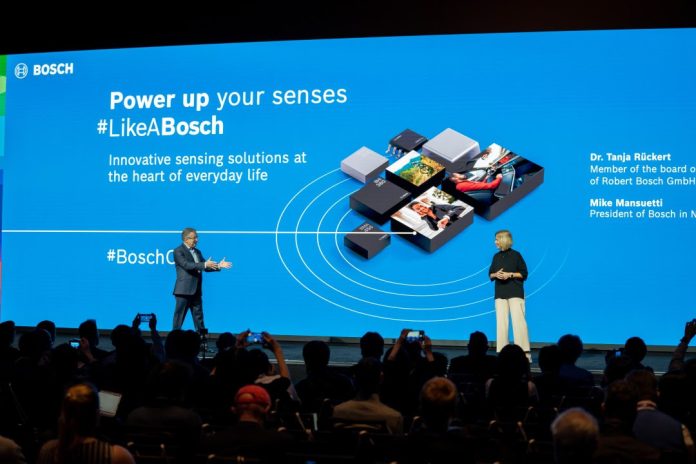
Digital Secretary Michelle Donelan with members of the RESEARCH team. Image credit: University of Bristol
Media Release by University of Bristol

The University of Bristol and partners have been granted nearly £12 million from the Department for Digital, Culture, Media and Sport, to develop and industrialise technologies and solutions for future 6G mobile networks.

The project, Realising Enabling Architectures and Solutions for Open Networks (REASON) brings together an ecosystem representing the entire telecommunication R&D supply chain, including three major mobile network equipment vendors, Ericsson, Samsung and Nokia.

REASON will develop a roadmap for open 6G networks, which will set the framework for new developments across the entire technology stack. The project will provide novel solutions to effectively integrate multi-technology access networks and to advance their performance in line with the emerging 6G KPIs. New concepts will be proposed to support unprecedented network densification. Smart technologies will be developed that aim to use multi-technology access networks to extract sensing information and support 6G use cases.  

In addition, advanced solutions for network-edge and network-wide automation will be developed leveraging state-of-the art artificial intelligence (AI) techniques. REASON aims to provide end-to-end service optimisation through cognitive orchestration tools to enable edge-to-edge and domain-domain functionalities for a wide range of use cases. 

Project Lead Professor Dimitra Simeonidou of Bristol’s Department of Electrical and Electronic Engineering said: “University of Bristol is delighted to lead this partnership and drive the development of future open 6G network solutions in the UK. 

“Our project, REASON, is engaging a consortium of partners representing the entire telecoms R&D ecosystem, including leading UK Universities, large equipment vendors, service and content providers and innovative SMEs. REASON will address key technological challenges of delivering End-to-End Open Network solutions, considering all segments of the network. The project will pursue breakthroughs on elevating bottlenecks of current systems, such as interoperability, agility, sustainability, resilience, security, and will position UK-born technologies as candidates for delivering future solutions.”

The grant is part of the government’s strategy to reduce the UK’s reliance on a small number of suppliers to build and maintain telecoms networks, and the funding will support the roll out of lightning-fast mobile connectivity by making it easier for more firms to enter the market.

Digital Secretary Michelle Donelan visited the University’s Smart Internet Lab ahead of the announcement last week. She said: “The technology powering our phone and internet networks is evolving rapidly and with 6G on the horizon we must stay ahead of the curve.

“This government investment will see top UK universities join forces with industry to develop the nuts and bolts underpinning new networks, create skilled jobs testing the security of the latest telecoms tech, and ensure our plan for a more diverse and innovative 5G market is sustained in the future.

“The funding will also turbocharge our work to strengthen telecoms supply chains so we are no longer reliant on a handful of companies to develop and maintain our 5G networks.”

Dan Warren, Director of Advanced Network Research at SRUK commented: “Samsung has wanted to engage in UK government backed research for many years, and the opportunity that the REASON consortium offered was too good to pass up.  We are delighted to be working with the other project partners to advance the application of AI to network technologies, and look forward to progressing the path to a larger ecosystem of vendors in the UK through the adoption of the UK Government open network principles.”

Magnus Frodigh, VP & Head of Ericsson Research, said: “Ericsson is looking forward to working in close partnership with the winners of the Future Open Networks Research Challenge in the UK. Through this government funded program and our own recently announced multi-million pound 6G research investment, the country is ready to begin the journey of developing future network technologies, architectures, and global standards as well as leading the way to an efficient and sustainable society powered by limitless connectivity for a cyber-physical continuum.”

The move will bolster the UK’s status as a global leader in telecoms research and follows Ericsson and Samsung’s recent decision to set up cutting-edge 6G research centres in the UK.

Advertisement

New, world-leading quantum network launched at the University of Technology Sydney

0
Image credit: Australian Quantum Software Network
Media Release by University of Technology Sydney

The Australian Quantum Software Network (AQSN) aims to bring together vast expertise across Australia in quantum software and information theory research and development.

Professor Michael Bremner, Director of the UTS Centre for Quantum Software and Information, comments on Australia’s role in the quantum industry. 

“Australian researchers have been at the forefront of building the theoretical and software foundations for quantum computing, and the AQSN is designed to accelerate this further by building partnerships, both domestically and internationally, to keep Australia a major component of the global quantum industry far into the future.”

The AQSN launches with more than 110 members at nine universities and two Australian-based quantum software start-ups, representing the world’s most extensive collection of quantum software and information theory expertise.

The AQSN has also teamed up with six initial partners to foster collaborations and partnerships between quantum hardware and software:

  • Google Quantum AI
  • Okinawa Institute of Science and Technology (OIST), Japan
  • Aalto University, Finland
  • Australian venture capital-based quantum hardware companies Silicon Quantum Computing, Quantum Brilliance and Diraq Pty Ltd

The AQSN members cover all aspects of quantum software and information theory research. This involves understanding foundational principles of quantum computation and communications to building software tools. These tools include software to control quantum hardware and software to assess the utility of quantum computing to solve some of the world’s most challenging computational problems.

Professor Kae Nemoto, unit leader at the Okinawa Institute of Science and Technology (OIST) and recent recipient of the French national order of merit for her work in quantum technology development, commented on the impact of the network. 

“Many of the most important results in our field were pioneered by Australian researchers, and the AQSN forms arguably the world’s best cooperation of top-tier quantum software and theory talent. I expect extraordinary advances to come out of this initiative.”

The AQSN’s mission in the coming years is to further the growth of software R&D talent and expertise within Australia, integrating Australian innovation into the rapidly expanding global ecosystem.

Advertisement

New advanced chip paving the way for an ultrafast tech future

Image credit: Monash University

A research collaboration between Monash University, RMIT, and the University of Adelaide has developed a precise method of regulating optical circuits on fingernail-sized photonic integrated circuits.

The breakthrough, which was published in the journal Optica, builds on the work of the same team that built the world’s first self-calibrated photonic chip.

Photonics, or the use of light particles to store and transfer information, is a growing field that supports our demand for quicker, better, more efficient, and sustainable technology.

PICs (programmable photonic integrated circuits) provide different signal processing functions on a single chip and represent viable solutions for applications ranging from optical communications to artificial intelligence (AI).

Whether it’s downloading movies or keeping a satellite on the course, photonics is drastically transforming the way we live, revolutionising the processing capabilities of large-scale equipment onto a chip the size of a human fingernail.

Earlier this year, researchers at Monash University, RMIT and the University of Adelaide developed an advanced photonic circuit that could alter the speed and scale of photonics technology. However, as the volume and complexity of PIC’s grows, the characterisation, and thus calibration, of them becomes increasingly hard.

According to Monash research fellow Professor Mike Xu, the team have introduced a common reference path to the chip, which permits steady and precise measurements of the lengths and losses of the ‘workhouse’ paths.

“By investing a new method, the fractional delay method, we have been able to separate out the wanted information from the unwanted making for more precise application,” Professor Xu said.

Previously, chips were measured/calibrated by connecting to complex and expensive external equipment (called a vector network analyser); however, the connections introduce phase errors due to vibrations and temperature fluctuations. By placing the reference on the actual chip, the measurement is immune to phase errors.

“In our earlier work we used the “Kramers Kronig” method to remove unwanted errors from desired measurements, but the fractional method requires far less optical power for calibration for a given accuracy,” Monash University ARC Laureate Fellow from the Department of Electrical and Computer Systems Engineering Professor Arthur Lowery said.

Professor Lowery stated that this implies they may obtain reliable measurements of the chip’s status and hence correctly program it for a desired purpose, such as pattern recognition in an optical computer or squeezing additional capacity from an optical communications network.

According to the team, the research builds on work that began in 2020 with the invention of a new optical microcomb chip capable of transferring 30 terabits per second, three times the record data for the whole National Broadband Network.

The team will investigate how photonic circuits might combine many wavelengths to accomplish rapid information processing and machine intelligence in the next stage of development, under the recently announced ARC Centre of Excellence for Optical Microcombs and Breakthrough Science (COMBS).

University of Adelaide Dr Andy Boes said: “The complexity of photonic integrated circuits is rapidly increasing, requiring a breakthrough to be able to calibrate and control them. The technique we developed overcomes this challenge, ensuring that the circuits can robustly be used for applications such as pattern recognition.”

Advertisement

EY announces the opening of an APAC Tech Lab to strengthen Asia-Pacific innovation portfolio

0
Image credit: EY
Media Release by EY

EY announces today the official opening of the EY APAC Tech Lab (“Lab”), a new, state-of-the-art incubator and engineering lab in Shenzhen, China, to meet the unique needs of the growing Asia-Pacific market through rapid innovation. As an agile, Asia-Pacific-focused unit, the Lab will play a pivotal role in strengthening the EY technology portfolio in the geographic area, strategically acting as a hub for technological development, experimentation, and application.

The Lab is the newest addition to the global EY network of innovation centers designed to cultivate leading-edge technological incubation and research and development in key technology markets throughout the world. In synergy with EY innovation platforms and products, the EY APAC Tech Lab was created with the vision of addressing clients’ diverse needs in today’s complex geopolitical landscape.

Strategically located in Shenzhen, China, the Lab will focus on rapid prototyping and product development, offering a wide range of engineering capabilities catering to the unique needs and opportunities of the Asia-Pacific market. According to Forrester, the Asia-Pacific technology market is expected to grow by 6.2% this year to reach US$675b. The Lab aims to harness the power of emerging technologies including artificial intelligence (AI), augmented reality (AR), virtual reality (VR), blockchain, 5G, and Web3 to elevate the innovative potential of EY businesses and clients.

Now in full operational swing with more than 30 AI engineers, data scientists, UX/UI designers, blockchain cryptographers, and 5G and internet of things (IoT) professionals, the Lab is already working on several leading-edge projects with various EY teams across the globe to address real world business problems. These initiatives include:

  • An advanced data analytics platform co-innovated with a leading telecoms operator in Asia-Pacific that employs clustering, supervised machine learning, and deep automation methods to generate rich and precise customer insights from telecoms data, allowing customers to receive a more personalized and improved experience.
  • A prototype to automate the data integration and estimation of Scope 3 carbon emissions reporting, completed with science-based targeting data models and an AI-powered predictive sandbox. This will allow enterprises to progress their net-zero ambitions by embedding forecasting, target-setting and sensitivity analysis capabilities into their carbon calculations.
  • A Web3-based health care data analytics model that is supported by Distributed Identity (DID) specifications to help run compliant, authenticated, and ethical medical data analyses in collaboration with major pharmaceutical companies.

Patrick Winter, EY Asia-Pacific Area Managing Partner, says:

“I am thrilled about the immense potential that the APAC Tech Lab brings to EY teams’ ability to leverage the strategic value of this diverse technological frontier with promising avenues for innovation. This Lab will bolster the global tech profile of the EY organization so it can compete in today’s complex market landscape. Continuing to introduce emerging technologies and build robust innovation pipelines as a digital-first and future-forward organization will help address clients’ most pressing challenges.”

Jeff Wong, EY Global Chief Innovation Officer, says:

“The APAC Tech Lab is an exciting frontier for global innovation capabilities across the EY organization. In addition to the EY Advanced Tech Lab in Palo Alto, California, this strategic expansion to Shenzhen helps to further advance another of the world’s bustling innovation centers, where leading-edge technologies are being developed, refined and applied. Under the leadership of Steve Lo, EY Asia-Pacific Area Innovation Leader, we look forward to seeing the APAC Tech Lab develop and become an epicenter of creative ideas and technological ingenuity that will support EY teams and help deliver impactful solutions for clients throughout the region.”

The EY organization will continue to invest in technology initiatives with a commitment of US$10b over three years, including the ongoing build-out of additional regional technology hubs to help clients drive long-term business value and power tech-supported transformation.

Advertisement

Tencent Cloud presents Cloud-AI solutions at “Digital Night 2022”, a gathering event by leading Thai digital associations

Image credit: Tencent Cloud
Media Release by Tencent Cloud

Tencent Cloud reaffirms its vision to be a ‘Digital Enabler’, aiming to empower Thai organizations and businesses to accelerate digital transformation with its efficient, stable, and secure cloud-AI solutions. Recently, Tencent Cloud participated in Digital Night 2022, organized by seven digital associations that play significant roles in the implementation of digital technology in Thailand. The associations include the Association of Thai Software Industry (ATSI), Thai IoT Association, Thai Startup Association, Thai Programmer Association (TPA), Digital Technology Entrepreneur Trade Association (DTEA), Thai E-Commerce Association, and Metaverse Association of Thailand (Thai Metaverse).

At the event, Tencent Cloud set up a booth showcasing products and services that are able to meet a wide range of company needs, and was supported by a team of Tencent cloud and AI specialists to provide insight into the following cloud solutions:

· Tencent Cloud EdgeOne: a platform that provides security protection and acceleration services for networks which can be tailored based on different business requirements.

· Tencent Real-Time Communication: a product that allows developers to build solutions for audio calls, video calls, interactive live, and on-cloud recording which ensures stability, fast data transmission, and seamless communication.

· Tencent Cloud solutions for Web3 & Metaverse: a suite of easy-to-use and secure tools and infrastructure that enables users to create and scale Web3 as a way of growing their businesses and acquiring new consumers. It also provides one-stop technical services that support enterprises to build their metaverse projects.

Tencent Cloud aims to escalate efficiency and agility for organizations in various industries with a secure network and high efficiency combined with expertise and an in-depth understanding of large-scale platforms. Leveraging on strong infrastructure, Tencent Cloud operates in 70 availability areas in 26 regions across the world and has 2 data centers in Thailand that ensure fast transmission, and stable and secure data transfer for all enterprises.

Advertisement

Cyber security experts identify new threat to blockchain technology

0
A joint study between CDU and the University of Tehran identified a new vulnerability in blockchain technology that threatens its use in Industry 4.0. Image credit: Charles Darwin University
Media Release by Charles Darwin University

A study from Charles Darwin University (CDU) and the University of Tehran in Iran has identified a new cyber threat that brings into doubt blockchain security for use in critical infrastructure.

The joint study has called the new cyberthreat a misleading attack because of its intention of deceiving miners.

Miners make computations to validate transactions on a blockchain to keep it up to date and are given cryptocurrency as payment. This system is under attack with this new strategy to mislead miners. 

CDU Professor Mamoun Alazab said the attack misleads blockchain miners by stealing some of their computational power and redirecting it to a different chain or fork.

Miners receive compensation for using their computational power to verify transactions on a specific cryptocurrency’s blockchain.

“The misleading attack is orchestrated by someone who redirects some miners computational power to a different chain, so that it (the attacker) can outrun the main chain and thus make its fork the dominant one,” Professor Alazab said. 

“The chain, that miners are being misdirected to, is engineered to lose in the competition, and so is the main chain. All is for the attacker’s chain to win and become dominant. This vulnerability can also boost the success of other types of blockchain attacks.”

Professor Alazab said this new attack method on blockchain was concerning because its rates of success were high and blockchain technology was being used in critical infrastructures.

“There is this perception that blockchain, such as Bitcoin, is safe and secure from attack,” he said.

“But this new misleading attack, along with some high-profile attacks that have cost millions of dollars, has shown that blockchain technology, particularly Bitcoin, is not as secure as we think, or as it needs to be for use in critical infrastructure.”   

University of Tehran’s Dr Ghader Ebrahimpour and Dr Mohammad Sayad Haghighi were also involved in the research that uncovered the details of the new malicious attack on Bitcoin.

“If preventive or compensative measures are not taken, this attack can undermine the trust to a blockchain security and lower its value,” Dr Ebrahimpour said.

“If such a blockchain is ever used in critical infrastructure or financial systems, huge impacts can be expected,” Dr Sayad Haghighi said.

The study into misleading attacks, “Can Blockchain be Trusted in Industry 4.0? Study of a Novel Misleading Attack on Bitcoin,” was published recently in the IEEE Transactions on Industrial Informatics.

Professor Alazab said that Bitcoin’s blockchain technology was vulnerable, but that misleading attack was not possible on Ethereum’s blockchain technology because of the tracking system.

Professor Alazab said there may be different solutions to the threat.

“One is to change the design and remove the block reward. The miners then have to be rewarded out of transactions commissions,” he said.

“The concept of uncle block reward, similar to that of Ethereum, can also help in mitigating the problem.”

Professor Alazab said there were other solutions to make block parallel blockchains.  

Advertisement

OpenAI unveils conversational AI chatbot ChatGPT

Image credit: ChatGPT

OpenAI has released a new conversational AI chatbot called ChatGPT that responds to user input in a conversational fashion.

ChatGPT, short for chat-based generative pre-trained transformer, employs natural language processing (NLP).  According to OpenAI, ChatGPT may respond to follow-up questions, admit mistakes, dispute faulty premises, and reject unsuitable requests thanks to the conversational style.

ChatGPT is a sibling model of InstructGPT, which is trained to respond to a prompt with a thorough response.

This model was trained by OpenAI using Reinforcement Learning from Human Feedback (RLHF), utilising the same approaches as InstructGPT but with minor modifications in the data gathering arrangement. OpenAI used supervised fine-tuning to train an initial model: human AI trainers offered interactions in which they played both sides—the user and an AI assistant. They provided the trainers with model-written ideas to assist them in composing their responses.

During its research preview phase, OpenAI introduced the new technology for free. Users can try it at https://chat.openai.com/. ChatGPT is easy to use as users just have to type their queries, and it will provide an answer. 

When officially launched, it is said that ChatGPT can be used for various industries such as customer service, virtual assistant, and language translation. 

As a beginner, here are some tips on how to use ChatGPT or other conversational AI technology:

  • Start with simple queries. It is preferable to begin with short, easy queries while utilising ChatGPT for the first time. This will help ChatGPT understand your intentions and respond appropriately. Users may, for example, ask ChatGPT for information on a specific topic or to do a simple job like creating a reminder or delivering a weather prediction.
  • Be clear and concise. It is critical to use clear and concise language when communicating with ChatGPT. Use simple, everyday words and phrases such as what you would use in a simple conversation with a human instead of complex sentences or jargon. This will make it easier for ChatGPT to understand your input and offer a more accurate response.
  • Be patient. ChatGPT, like all AI technology, is not without flaws. It may not always understand or respond to your questions, and it may take some time to learn and adapt to your preferences. As a result, when using ChatGPT, it is critical to be patient and understanding and to provide feedback and corrections as needed.
  • Use available resources. Suppose this is your first time using ChatGPT, you should take advantage of any available resources, such as user guides or tutorials, to learn more about the technology and how to use it effectively. This will assist you in making the most of ChatGPT and its capabilities.

As it is still in the research preview stage, OpenAI has listed some of ChatGPT’s limitations. They are as follows:

  • ChatGPT occasionally writes plausible-sounding but incorrect or illogical responses. Fixing this problem is difficult because: (1) there is currently no source of truth during RL training; (2) training the model to be more cautious causes it to decline questions that it can correctly answer; and (3) supervised training misleads the model because the ideal answer depends on what the model knows rather than what the human demonstrator knows.
  • ChatGPT is sensitive to changes in input phrasing or multiple attempts at the same prompt. For example, given one phrasing of a question, the model can claim ignorance, but given a slight rephrasing, it can accurately answer.
  • The model is frequently overly verbose and overuses specific phrases, such as repeating that it is an OpenAI-trained language model. These problems arise due to biases in the training data (trainers prefer lengthier answers that appear more thorough) and well-known over-optimisation concerns.
  • When a user submits an uncertain query, the model should ask clarifying questions. Instead, our current models frequently infer what the user meant.
  • While OpenAI has made efforts to prevent the model from responding to inappropriate requests, it will occasionally respond to harmful instructions or exhibit biased behaviour. According to OpenAI, it is utilising the Moderation API to warn or ban specific sorts of hazardous content, although they expect it to have some false negatives and positives for now. The company said they’re eager to collect user feedback to aid its ongoing work to improve this system.
Advertisement

Future-proofing cybersecurity in the Indo-Pacific region

0
Image credit: Monash University
Media Release by Monash University

A new project, led by Monash University researchers in collaboration with Oceania Cyber Security Centre (OCSC), aims to train organisations across the Indo-Pacific region to help safeguard against emerging cybersecurity threats.

The researchers are looking for cybersecurity and information technology (IT) focussed participants from 11 Indo-Pacific nations to receive free training in advanced cryptography that can help protect against threats from quantum computers.

Over the next three years, the Post-Quantum Cryptography in the Indo-Pacific Program (PQCIP) aims to work with organisations and government bodies across Malaysia, Indonesia, Samoa, Tonga, Vanuatu, Papua New Guinea (PNG), Kiribati, Federated States of Micronesia (FSM), Tuvalu, the Cook Islands and Nauru.

Project Director Associate Professor Ron Steinfeld from Monash University’s Faculty of Information Technology said encryption is one of the key safeguards against data breaches.

“However, most currently deployed cryptography is not strong enough against attacks from large scale quantum computers, which can rapidly decrypt most of today’s encrypted data, and we expect such computers to become a reality over the coming years,” Associate Professor Steinfeld said.

“Recently, we have seen a huge increase in cyberattacks and data leaks. It is critically important now to help neighbouring countries strengthen their capabilities to withstand existing cyber threats while also preparing for the next generation of attacks.”

Through the PQCIP, cybersecurity experts from Monash and OCSC will take participating organisations and government entities through a cycle of detailed assessment of their current post-quantum cybersecurity capabilities, tailored education, planning and cyber threat evaluation.

OCSC Head of Research and Capacity Building Dr James Boorman said the program aims to leave participants with an advanced understanding of post-quantum cryptography, comprehensive knowledge of related tools, and develop their own transition plan to secure their organisations from quantum computing threats.

“The training will be adapted to fit the local needs, be available online for reference after the course and free for anyone managing or working in IT or cybersecurity within most government entities (excluding military, intelligence, or law-enforcement) or organisations in any of the 11 countries,” Dr Boorman said.

“We are keen to hear from anyone interested in building these capabilities. Collaboratively standardising and enhancing cybersecurity within these countries will result in stronger relationships and data protection across the entire region.”

The PQCIP is funded by the United States Department of State and all components of the program will be available to identified participants free of charge.

Advertisement

Express Yourself With Avatars on WhatsApp

0
Image credit: Meta
Media Release by Meta

Today, we’re introducing avatars to WhatsApp as a new and personalized way to express yourself.

Your avatar is a digital version of you that can be created from billions of combinations of diverse hair styles, facial features and outfits. On WhatsApp, you can now use your personalized avatar as your profile photo or choose from 36 custom stickers reflecting many different emotions and actions.

Image showing different sticker packs on WhatsApp.
Image showing avatar options in a WhatsApp chat.

Sending an avatar is a fast and fun way to share feelings with friends and family. It can also be a great way to represent yourself without using your real photo so it feels more private.

For many people, this will be the first time creating an avatar and we’ll continue to deliver style enhancements including lighting, shading, hair style textures and more that will make avatars even better over time.

Advertisement

IBM to Acquire Octo

0
Image credit: IBM
Media Release by IBM

IBM today announced an agreement to acquire Octo, a U.S.-based IT modernization and digital transformation services provider exclusively serving the U.S. federal government, including defense, health, and civilian agencies. IBM’s acquisition of Octo establishes one of the largest digital transformation partners to the federal government. Upon the close of the acquisition, Octo’s approximately 1,500 employees will join IBM Consulting’s U.S. public and federal market organization.

Octo will be IBM’s eighth acquisition of 2022. Since Arvind Krishna became CEO of IBM in April 2020, IBM has acquired more than 25 companies, bolstering its hybrid cloud and artificial intelligence (AI) capabilities. Today’s news builds on prior IBM Consulting acquisitions, including Dialexa, Neudesic, and Taos.  

Federal government agencies face significant challenges including technology skills shortages, rebuilding of U.S. domestic supply chains and more demand for citizen services. To address these complex challenges, agencies need an industry partner to help them navigate a scalable path to IT modernization with the power to leverage emerging technologies and applications, optimize costs and operational efficiencies, and improve security. The convergence of new hybrid cloud and AI technologies enables government to deliver rapid improvements and adapt to unprecedented challenges.

The acquisition of Reston, Va.-based Octo will complement IBM’s existing strengths in IT modernization and digital transformation, enhancing its ability to support federal agencies with a flexible, modern approach to digital transformation and growing IBM Consulting’s public and federal market organization to 4,200 highly-skilled employees. With a proven track record of enabling rapid IT modernization and seamless citizen engagement, Octo also brings deep federal mission experience, as well as certifications in the technologies most used across the federal government.

“Governments require agility and resiliency to meet the evolving needs of citizens directly and in real time,” said John Granger, Senior Vice President of IBM Consulting. “The combination of Octo’s highly qualified and respected team with IBM’s consulting expertise, technical capabilities and strategic partner ecosystem will enable federal clients to transform faster and better serve citizens.”

Building on a shared commitment to co-creation, oLabs, Octo’s 14,000 square foot innovation center with in-house computing capability, expands IBM’s ability to work collaboratively with federal agencies to rapidly prototype emerging technology solutions – enabling greater impact for federal agencies and the people they serve.

“Octo was founded on the belief that digital transformation could be delivered at scale to modernize the federal government’s approach to today’s most pressing challenges – from public healthcare to national security, to defense and intelligence,” said Mehul Sanghani, Chief Executive Officer of Octo. “Today, we are excited to join forces with IBM to continue to deliver these digital transformation capabilities with greater reach and scale.”

IBM’s acquisition of Octo from Arlington Capital Partners is expected to close in the fourth quarter of this year and is subject to customary closing conditions and regulatory clearances. Financial details of the deal were not disclosed.

Advertisement