A new report released by ResearchAndMarkets.com forecasts continued expansion in Australia’s digital advertising market, driven by growth in retail media, connected television and increased use of automation and artificial intelligence, while noting rising regulatory and compliance pressures.
According to the report, Australia’s digital ad spend market is expected to grow by 12.7% year-on-year to reach US$16.88 billion in 2026, following a compound annual growth rate of 10.7% between 2020 and 2025.
Growth is forecast to accelerate further from 2026 to 2029, with spending projected to rise to about US$25.38 billion by the end of the period, representing a CAGR of 14.6%.
The analysis describes the market as entering a phase of structural change, shaped by tighter regulation, expanding retail media networks and evolving platform capabilities.
While global technology companies continue to account for a large share of spending, the report notes that local retailers, broadcasters and marketing technology providers are strengthening their position by offering data-driven and accountable advertising environments.
Global platforms including Google, Meta, Amazon and YouTube are identified as continuing to anchor much of Australia’s digital ad spend, particularly in search, social and video formats.
However, the report highlights increasing scrutiny linked to the review of Australia’s Privacy Act and the Australian Competition and Consumer Commission’s digital platform inquiries, which are prompting adjustments to data use and consent practices.
Retail media is identified as a key growth area, with networks operated by Woolworths Group and Coles becoming more central to omnichannel campaigns, particularly for fast-moving consumer goods and electronics advertisers. The shift is attributed to demand for first-party data and measurable outcomes as third-party cookies are phased out.
The report also points to growing investment in connected TV and broadcaster video-on-demand services, including platforms operated by Nine, Seven West Media, Paramount and Foxtel, as advertisers follow audiences shifting away from linear television.
While these environments are positioned as premium and brand-safe, the report notes ongoing challenges around measurement and frequency control.
Across the market, advertisers are increasingly prioritising privacy-compliant targeting, first-party data strategies and AI-enabled campaign execution. Sustainability considerations are also beginning to feature more prominently in media planning, although the report characterises this as an emerging rather than fully mature trend.
Overall, ResearchAndMarkets.com concludes that competition in Australia’s digital advertising market is likely to intensify over the next several years, with success increasingly linked to integrated offerings, regulatory alignment and transparent measurement as expectations for accountability continue to rise.
One of sponsors at the Australian Open 2026. Image supplied by Digital Media News.
As the Australian Open (AO) draws to a close for another year, the tournament has once again attracted the world’s greatest tennis players to Melbourne – while reinforcing its position as a major global commercial platform that extends far beyond sport.
Today, the Australian Open is a global commercial platform where major brands compete for visibility, audience engagement, and strategic partnerships across physical experiences, digital touchpoints, and data-driven campaigns.
From tournament to business platform
Over the years, the Australian Open has continued to evolve from a traditional sporting event into a technology-enabled media and sponsorship ecosystem – and the financials reflect that shift. The tournament operated as a multi-layered commercial platform that continues to attract a growing mix of brands each year, from beverages to premium fashion to automotive partners, underscoring the Australian Open’s expanding commercial appeal.
That commercial impact extends beyond Tennis Australia and its partners into the broader Melbourne economy. Analysis from National Australia Bank (NAB) forecast the 2026 Australian Open would inject more than AUD 600 million into the city’s economy, driven by visitor spending across hospitality, retail and accommodation. NAB merchant terminal data from the 2025 tournament highlighted the scale of that effect, with accommodation turnover surging 90 per cent in Richmond and more than 50 per cent in South Yarra during the first two weeks of the event, alongside strong increases in restaurant and retail spending.
NAB Executive Business Metro & Specialised Julie Rynski said the Australian Open had evolved well beyond world-class tennis. “The Australian Open has truly become the ‘Happy Slam’ and is no longer just purely a tennis tournament – it’s a full-blown summer festival,” she said, pointing to expanded entertainment programming, live music, family-friendly precincts and food and beverage activations as key drivers of broader audience appeal.
The economics of sponsorship: Who’s there and why
Sponsorship at the Australian Open involved long-term partnerships across a range of sectors, including automotive, financial services, consumer tech, and lifestyle. In 2025, Kia Motors was reportedto have held the highest-value deal among the tournament’s 35 sponsors.
Other brands, including Red Bull, M&M’s, Waterdrop, EZZ Life Science, Grey Goose, and Pirelli, either joined or expanded their sponsorships that year. Luxury brands such as Rolex received the most online sponsor mentions during the tournament.
According to the Australian Marketing Institute (AMI), Ralph Lauren’s partnership achieved a 96.3 per cent share of voice in brand mentions, supported by pop culture crossovers, including collaborations with K-pop artists.
AMI noted that Nike’s sponsorships linked to major players during the tournament also contributed to increased brand visibility among key audiences. In particular, Nike’s sponsorship of Carlos Alcaraz – who captured the 2026 Australian Open men’s singles title and completed a career Grand Slam at just 22 years old – was highlightedthrough post-match brand activations after the final.
Nike released a dedicated tribute video celebrating Alcaraz’s achievement, emphasising his rise from world No. 1 to a seven-major champion and leveraging that narrative across social media and digital channels to extend audience engagement beyond the matches themselves.
In 2025, Lacoste also launcheda limited‑edition “From a Crocodile to the GOAT” capsule collection tied to Novak Djokovic’s ongoing legacy in tennis, symbolically transforming its iconic crocodile logo into a GOAT motif to honour his status as one of the sport’s greatest players.
At the 2026 Australian Open, Lacoste’s activation continued through on‑court visibility of its sponsored players’ apparel – including Djokovic’s kit – and through social channels and fashion coverage highlighting player looks and performance‑driven design.
Industry reporting suggested that sponsorship revenue growth has accelerated in recent years. According to B&T, the Australian Open was on track to double its sponsorship income over a five-year period, with close to 50 official partners involved in the current tournament cycle. New partners cited include Nexo, Bupa, Realestate.com.au, Altos, A2 Milk, YoPRO, DiDi and Lipton, alongside new regional partners such as Stella Artois in South America, Tsingtao in China and De Cecco in Europe (B&T). Several existing partners, including ANZ, Red Bull, Chemist Warehouse and Luckin Coffee, have also expanded or renewed their agreements with Tennis Australia.
Appliance and smart home brands also used the Australian Open as a platform for long-term brand positioning. In late 2024, Haier announcedit had been named the official TV and appliance partner of the Australian Open and Summer of Tennis events for the 2025-2027 period. During the 2026 tournament, Haier showcased its smart home technologies through on-site and digital fan experiences, integrating connected kitchen, laundry, and climate systems into the tournament environment.
Haier Senior Vice President and Chairman and CEO of Haier Smart Home Li Huagang said the partnership aligned with the company’s global expansion strategy and focus on innovation, noting the Australian Open’s status as one of the world’s premier sporting events.
Tennis Australia CEO Craig Tiley said the partnership would introduce new technology-driven experiences for fans while reinforcing the tournament’s focus on innovation and quality. “This collaboration will not only elevate the fan experience but also introduce cutting-edge technology that adds a fresh and dynamic dimension to the summer of tennis,” Tiley stated. Haier is also supporting grassroots tennis clubs across Australia as part of the agreement.
Extending brand presence beyond live attendance
Australian Open sponsors increasingly extended their presence beyond the stadium through branded content, immersive experiences, and out-of-home advertising. Media companies and outdoor networks provided additional channels to expand audience reach.
For example,oOh!media’s partnership with Tennis Australia supported brand visibility through live score and highlights screens, as well as advertising across airports, streets, metro networks, and retail environments, with tailored campaign placements for partners including Jacob’s Creek, Qantas Frequent Flyer, Adobe, and Airtasker. These formats allowed brands to engage audiences across Australia beyond live attendance and broadcast viewership.
The growth of the tournament’s footprint was also linked to changes in scheduling and event structure. Reporting by Yahoo Sportsnoted that the introduction and expanded promotion of the Australian Open’s expanded “Opening Week” has driven record early attendance, with more than 29,000 fans attending the first day of qualifying, well above previous levels.
Broadcast partnerships and media rights
Broadcast partnerships and media rights continued to play a central role in the Australian Open’s commercial profile. While digital subscription figures were generally reported by broadcasters rather than tournament organisers, post-event data indicate strong media engagement.
According to thePost Event Analysis – Australian Open 2025report by ResearchAndMarkets.com, in 2025, the men’s singles final attracted 4.2 million viewers in Australia and an estimated 35 million viewers in Italy, highlighting the scale of global exposure available to sponsors. Domestic media revenue from broadcast rights for the tournament was estimated at USD 55.16 million.
While official global broadcast reports for 2026 are still forthcoming, available post-event data indicate that the tournament delivered significant audience growth on domestic television and streaming platforms, underscoring the scale of exposure available to sponsors.
Nine Network’s exclusive coverageof the 2026 Australian Open reached over 14.31 million Australians across the two-week broadcast – a year-on-year increase of about 9.3 per cent. The men’s singles final, featuring Carlos Alcaraz’s victory over Novak Djokovic, drew a Total TV Reach of approximately 6.302 million viewers and a National Total TV audience of 3.448 million, up around 67 per cent on the previous year, while streaming audiences reached 905,000 — the highest-ever for an Australian Open men’s final session on BVOD.
Data also showed that the women’s singles final reached 3.816 million viewers nationally, with an average audience of 2.135 million, representing an increase of around 30 per cent year-on-year, alongside 500,000 streaming viewers.
This level of international broadcast reach positioned the Australian Open as a platform not only for on-site sponsorship but also for integrated brand campaigns across television, streaming services, and broadcast-related advertising.
The extended tournament format also contributed to revenue growth.According to The Guardian, Tennis Australia’s annual revenue had increased by more than USD 500 million since the event expanded to a 21-day schedule, incorporating Opening Week, live concerts, exhibitions and fan attractions.
Tennis Australia CEO Craig Tiley said the strategy was designed to “own January” by blending sport, entertainment and community engagement across three weeks.
UX, digital platforms, and fan engagement
Beyond physical stadium activation, the Australian Open’s digital platforms – including its website, mobile scoring apps, and streaming tools – served as primary engagement channels for fans worldwide.
While official design metrics weren’t routinely published, Tennis Australia highlighted an emphasis on digital innovation through longstanding tech partnerships.
Notably, Infosys, the AO’s official digital innovation partner, powered advanced match analytics, AI-driven engagement tools, and enhanced digital experiences that benefit fans, partners, and broadcasters alike.
That technology roadmap expanded further at the 2026 tournament. Infosys and Tennis Australia announceda suite of AI-first innovations for AO 2026, powered by Infosys Topaz™, aimed at enhancing fan engagement, accessibility and on-court insight. New experiences included “MatchFeel,” a pilot tactile court system that allows blind and visually impaired fans to follow live matches through haptic feedback, and “Rally,” a generative AI-powered humanoid mascot designed to interact with fans at the Infosys Fan Zone.
Additional AI-driven features included “Keys to the Match,” which distilled complex player data into three simple pre-match insights, as well as enhancements to the Infosys Match Centre, AI-generated highlight videos and advanced analytics for players and coaches. Infosys said these initiatives demonstrated AI at scale while making the tournament more inclusive and immersive.
These capabilities reflected how the tournament leveraged technology and UX design not just for convenience, but as part of its commercial strategy.
Global brand strategy and market expansion
The Australian Open’s commercial appeal was also linked to its global positioning, particularly within the Asia-Pacific market. According to industry analysispublished by Notice Sports, several international brands, including companies based in China, used the tournament as an entry point into new markets, supported by cross-regional exposure and localised digital campaigns.
Notice Sports cited examples such as Luzhou Laojiao, which signed a multi-year agreement as the Australian Open’s official baijiu partner to strengthen its brand presence across Asia, and Luckin Coffee, which became an official coffee partner and used virtual signage during the tournament to target audiences in China and Southeast Asia.
These cases, as reported, indicated that the Australian Open functions not only as a national sporting event but also as a platform for multi-market brand expansion strategies.
Overall, the Australian Open demonstrated how a major sporting event operated as an integrated commercial ecosystem, where sponsorship, media, and digital platforms converge to extend brand reach.
Its structure and strategies reflected the evolving interplay between sport, technology, and marketing in creating measurable value for both organisers, partners and the wider host city economy.
Manufacturing has been placed at the centre of Queensland’s economic agenda, with the state government releasing a five-year plan to strengthen local industries, lift productivity and expand exports.
The plan identifies innovation, stronger supply chains, workforce development and export growth as key priorities, while committing new funding to industry support programs.
According to the Queensland Government, manufacturing contributes around $29 billion annually to the state’s economy and supports nearly 175,000 jobs, almost half of which are located outside Greater Brisbane.
The strategy includes $79.1 million in new grants over three years to help manufacturers adopt advanced technologies, and $10 million for expanded Manufacturing Hubs in Toowoomba and the Sunshine Coast.
The government noted these measures build on existing programs such as the $180.6 million Sovereign Industry Development Fund, which supports defence, biomedical and biofuels industries.
In a statement, Minister for Manufacturing Dale Last said the strategy was designed to sharpen Queensland’s competitive edge at a time of global uncertainty and rapid technological change.
“The strategy is our roadmap to making Queensland the most attractive place in the nation for businesses to invest, build and grow,” he said.
The government said the plan was developed in consultation with the Queensland Manufacturing Advisory Council and aims to address challenges such as supply chain risks, energy costs, skills shortages and the integration of artificial intelligence.
It noted that it also positions the state to take advantage of emerging opportunities in critical minerals, medical technology, modern construction methods and defence manufacturing.
According to the Queensland government, the strategy emphasises the role of manufacturing in regional growth, noting its close links to mining, agriculture and energy industries.
It also highlights opportunities for local firms to benefit from major projects, including preparations for the Brisbane 2032 Olympic and Paralympic Games.
The government noted industry performance will be monitored through annual reporting, with progress to be assessed in partnership with the Queensland Manufacturing Advisory Council.
As traditional manufacturing wrestles with global supply chain disruptions, soon to be enforced tariffs, shifting consumer demands, and relentless calls for customisation, London-based subcontract 3D printing bureau 3D People is claiming that low-volume production on-demand is no longer a limitation — it’s a strategic advantage.
Today, 3D People announces plans to redouble its efforts to cater for low-volume production demands for its customers, a demand that is by no means new, but which reflects the increased orders for fast, flexible, and functional AM parts in batches that traditional manufacturing simply can’t handle efficiently.
With additive manufacturing (AM) increasingly proving its mettle beyond prototyping, 3D People is helping customers break away from costly tooling, rigid MOQs, and sluggish production cycles.
“Companies are waking up to the fact that tooling costs, minimum order quantities, and inflexible design cycles are killing their ability to adapt,” says Sasha Bruml, Co-Founder of 3D People. “That’s where AM shines. Low-volume production on-demand is no longer a compromise — it’s a competitive edge.”
Across a variety of industries and application areas, demand is rising for high-quality, functional end-use parts in small batches — with short lead times and the freedom to iterate. For many, the ability to produce 50 or 500 precision parts without tooling is reshaping how they launch products and serve customers.
“We’ve been running hundreds of low-volume projects across SLS and MJF for years,” says Felix Manley, Co-Founder of 3D People. “Today, however, the demand is becoming unprecedented. It’s not just about cost — it’s about speed, flexibility, and cutting out waste. Customers are rethinking manufacturing from the ground up, and additive is giving them a whole new playbook.”
Far from a fallback option, 3D People positions AM as the go-to solution for fast-moving, design-led production where performance, aesthetics, and agility matter more than volume.
With shorter product cycles and tighter feedback loops becoming the norm, the companies thriving in 2025 are the ones that can make parts on-demand, pivot without penalties, and go to market faster than ever.
“This isn’t about hype — it’s about hard truths,” adds Bruml. “The old rules don’t apply anymore. Agile, low-volume manufacturing is here, and it’s levelling the playing field for innovators everywhere.”
3D People’s continued focus on streamlining its low-volume production service is a direct response to this industry shift — a bold, practical step that redefines what smart manufacturing can look like today.
Apple says it has reached a major manufacturing milestone, announcing that all Apple Watch Ultra 3 and titanium Apple Watch Series 11 cases produced this year are made using 3D-printed enclosures created from 100 per cent recycled aerospace-grade titanium powder.
In a news release, the company said the shift marks the first time this approach has been achieved at scale for its products.
“It wasn’t just an idea — it was an idea that wanted to become a reality,” said Kate Bergeron, Apple’s vice president of Product Design. “We had to prove, with continuous prototyping, process optimisation, and a tremendous amount of data gathering, that this technology was capable of meeting the high standard of quality we demand.”
Apple said the new additive manufacturing process allows the watches to be produced with roughly half the raw material previously required. According to Sarah Chandler, Apple’s vice president of Environment and Supply Chain Innovation, the reduction represents a significant step toward the company’s Apple 2030 goal to eliminate carbon emissions across its entire footprint.
“A 50 per cent drop is a massive achievement — you’re getting two watches out of the same amount of material used for one,” Chandler said. “When you start mapping that back, the savings to the planet are tremendous.”
The company estimates that more than 400 metric tons of raw titanium will be saved in 2025 through the new process.
Apple said the technology also enables improvements in durability, performance and component design, including new textures that were not possible with traditional forging.
Dr J Manjunathaiah, senior director of Manufacturing Design for Apple Watch and Vision, said the transition reflects long-running work to test 3D-printed metal for cosmetic parts.
“Using less material to make our products has always been the intention,” he said. “Previously, we hadn’t been able to make cosmetic parts at scale with 3D printing.”
Apple’s environmental and design teams said the project required advances in materials science, reliability testing and precision manufacturing, including tightly controlled powder composition and laser-based printing conducted over hundreds of layers. “This was cutting-edge materials science,” Bergeron said.
Chandler said the adoption of 3D printing is intended to create permanent, system-wide improvements. “We’re never doing something just to do it once — we’re doing it so it becomes the way the whole system then works,” she said. “When we come together to innovate without compromise across design, manufacturing, and our environmental goals, the benefits are exponentially greater.”
Apple added that the breakthrough has also enabled new manufacturing possibilities beyond Apple Watch, including the titanium USB-C port enclosure on the new iPhone Air, which uses the same recycled titanium powder and 3D-printing process.
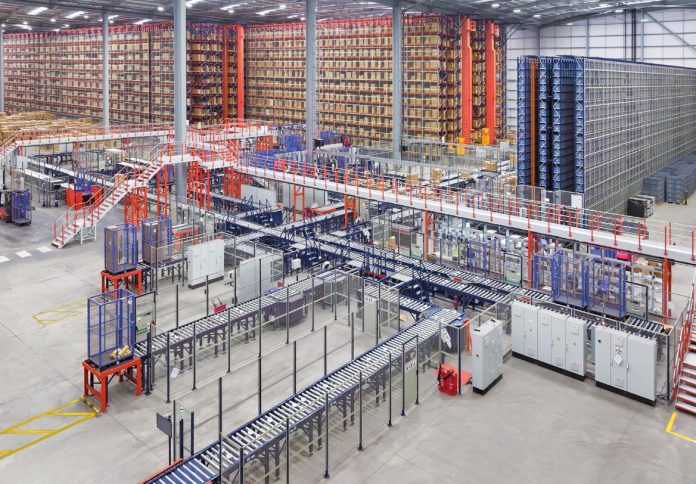
A new study from Mecalux and the MIT Intelligent Logistics Systems Lab at the MIT Center for Transportation and Logistics reports that artificial intelligence is now embedded in a majority of warehouses worldwide, signalling a rapid shift toward intelligent logistics operations.
The study, conducted by Mecaluxin partnership with the MIT Intelligent Logistics Systems Lab, draws on responses from more than 2,000 supply chain and warehousing professionals across 21 countries.
According to the report, more than nine in 10 warehouses now use some form of AI or advanced automation.
Over half of surveyed organisations reported operating at advanced or fully automated maturity levels, with larger businesses leading adoption.
The findings state that AI is now supporting a wide range of day-to-day warehouse functions, including order picking, inventory optimisation, labour planning, equipment maintenance and safety monitoring.
Mecalux CEO Javier Carrillo said the research shows clear performance benefits linked to intelligent systems.
“The data show that intelligent warehouses outperform not only in volume and accuracy, but in adaptability,” Carrillo said in the release.
He noted that companies with AI-enabled operations were demonstrating stronger resilience and predictability ahead of peak-season demand.
The report states that AI investments are delivering quicker returns than expected, with most organisations allocating between 11 and 30 per cent of their warehouse technology budgets to AI and machine-learning initiatives.
The study reports typical payback periods of two to three years, driven by gains in labour efficiency, inventory accuracy, throughput and error reduction. Motivations for AI adoption include cost savings, customer expectations, sustainability goals, labour shortages and competitive pressures.
However, the release notes that businesses continue to face challenges when scaling AI across their operations.
Dr Matthias Winkenbach, Director of the MIT ILS Lab, said the “last mile” of integration remains difficult as companies work to align people, data and analytics with existing systems.
Barriers identified in the study include limited technical expertise, system-integration issues, data-quality constraints and implementation costs. Even so, organisations reported strong foundations in data and project management and pointed to clearer roadmaps, expanded budgets and improved tools as key enablers for continued adoption.
The joint release also addresses ongoing concerns about automation replacing human workers, reporting that AI is contributing to workforce expansion rather than reduction.
More than three-quarters of respondents saw increases in employee productivity and satisfaction after implementing AI tools, and over half reported growing their workforce.
Emerging roles cited in the study include AI and machine-learning engineers, automation specialists, data scientists and process-improvement experts.
Looking ahead, the release states that nearly all surveyed companies plan to expand their use of AI within the next two to three years.
Eighty-seven per cent expect to increase their AI budgets, and 92 per cent are implementing or planning new AI projects.
Generative AI is identified as the next major area of value, supporting tasks such as automated documentation, warehouse-layout optimisation and code generation for automation systems.
Dr Winkenbach said generative AI is increasingly helping companies design solutions rather than simply predict problems.
As industries strive for peak efficiency and reliability, intelligent motor starting solutions are becoming the go-to choice for safeguarding critical machinery and ensuring flawless performance.
From processing plants to general manufacturing, these technologies are revolutionising motor control, bridging the gap between Information Technology (IT) and Operational Technology (OT), and driving digital transformation.
APS Industrial, in collaboration with Siemens, has launched state-of-the-art intelligent motor starting solutions designed specifically for fixed-speed applications in Australian industries.
With three offerings—SIMOCODE, SIRIUS 3RC7, and SIRIUS eStarter—businesses can choose the ideal technology to optimise productivity, reduce downtime, and enhance operational safety, according to a media release from APS Industrial.
The SIMOCODE motor management system is a comprehensive solution for processing applications requiring robust performance and advanced functionality.
Suitable for all motor sizes, it provides intelligent motor protection, in-depth diagnostics, and seamless programming via Siemens’ TIA Portal.
These features enable predictive maintenance and reduce operational risks, making SIMOCODE an indispensable choice for continuous, high-stakes operations.
For original equipment manufacturers in industries such as food, beverage, and general manufacturing, the SIRIUS 3RC7 Intelligent Link Module offers a tailored motor starting option for motors up to 15kW.
This solution integrates seamlessly with Siemens Contactors and Circuit Breakers, forming a complete Intelligent Load Feeder while providing reliable motor protection, straightforward automation system connectivity, and enhanced operational transparency.
For those seeking a fully electronic, future-ready option, the SIRIUS eStarter could be an ideal choice for motors up to 3kW.
Using advanced semiconductor technology, it offers wear-free operation and ultra-fast short-circuit protection, responding up to 1,000 times faster than traditional methods.
Designed for high-frequency start-stop cycles, APS Industrial said it minimises stress on electrical systems with Smart Start technology, aligning with Siemens’ EcoTech standards for sustainable performance.
By offering these intelligent motor starting solutions, APS Industrial and Siemens aim to provide Australian businesses with the flexibility to address diverse operational needs, ensuring enhanced efficiency, reliability, and sustainability.
For further details on these solutions, visit APS Industrial’s website.
The content of this article is based on information supplied by APS Industrial. Please consult a licence and/or registered professional in this area before making any decisions based on the content of this article.
As digital transformation reshapes industries worldwide, manufacturers in Australia and beyond are finding themselves at the forefront of an evolution. This shift presents opportunities for companies looking to improve efficiency, drive innovation, and boost growth. However, while the potential benefits are substantial, many manufacturers are finding digital adoption more complex than anticipated.
According to a recent paper by The Futurum Group’s research director, Keith Kirkpatrick, in partnership with SAP, industrial manufacturers in the past often focused on specific technologies and certain areas instead of approaching digital transformation in a holistic fashion. This approach has led to inefficiencies and limited scalability that hinder organisations’ ability to adapt and evolve.
Kirkpatrick emphasised that now is the time for a “full-on mental shift” on how the industry gets things done — starting with identifying and addressing the challenges in industrial manufacturing’sdigital transformation.
Key transformational trials
As industrial manufacturers navigate the digital transformation landscape, they encounter a series of complex challenges that require strategic foresight and adaptability. These challenges impact various facets of the manufacturing process and business operations. These include:
Shifting customer demands: Modern consumers seek personalised solutions and flexible purchasing options, pushing manufacturers to innovate their business models and offer tailored solutions.
Need for new revenue streams: With shortening product lifecycles, manufacturers must pivot to operational expenditures over capital expenditures, aligning with trends towards subscription-based services.
Global market differentiation: As geographical boundaries blur, manufacturers must distinguish themselves through innovation and service excellence, focusing on delivering outcomes rather than just products.
Rapid technological evolution: The integration of automation, AI, and machine learning enhances productivity but demands significant resources and a cultural shift within organizations.
Supply chain disruptions: Global events and geopolitical tensions exacerbate material shortages, transportation delays, and labour shortages, requiring manufacturers to be agile and responsive.
Sustainability focus: Regulatory pressures and consumer expectations drive manufacturers to implement sustainability initiatives, addressing emissions, waste management, and circular economy practices.
By tackling these issues head-on, manufacturers can position themselves for sustained growth and success in an increasingly competitive landscape.
From survival to growth
For industrial manufacturing leaders, embracing digital transformation is no longer optional; it is a necessity for survival and growth in an ever-changing landscape. With this in mind, Futurum says organisations must begin developing comprehensive strategies that align with their business and leverage advanced technologies to stay competitive.
SAP offers a robust Digital Manufacturing solution, which is underpinned by SAP Cloud ERP, providing a scalable and secure foundation for innovation. This platform supports core processes and enables manufacturers to become intelligent, sustainable enterprises.
To explore how SAP can help drive your organisation’s digital transformation, visit sap.com.
To further explore how AI and smart ERP systems are reshaping the manufacturing landscape, SAP, in partnership with Australian Manufacturing, recently hosted a webinar titled “Unleashing the Power of Smart ERP: How AI is Redefining Manufacturing in Australia.”
The session explored how AI and ERP technologies are helping manufacturers drive growth and remain competitive. Access the full webinar recordinghere.
Enterprise Resource Planning (ERP) systems have long been essential for managing critical business functions—finance, inventory, procurement, human resources, and manufacturing. With rapid advancements in technology, artificial intelligence (AI) is reimagining what’s possible.
ERP systems are much more than repositories of data and business processes. With AI in the picture, ERP evolves into a smart assistant—proactively guiding your team, identifying patterns, flagging issues, and helping you stay two steps ahead of the competition, reducing supply chain issues and optimising customer service.
If you’re still running on a traditional ERP solution, it’s time to explore how AI can take your business to the next level.
What we’ll cover:
How is AI impacting ERP systems?
The role of AI in data and business intelligence
Current use cases for AI in manufacturing
AI-enhanced user experience in ERP
Leading AI-enabled ERP solution
How to get started
How is AI impacting ERP systems?
AI-enabled ERP solutions allow team members to make smarter decisions faster by using AI learnings from real-time and historical data. ERP solutions hold enormous data libraries across customer, supplier, inventory and order management. Using AI learnings will lead to better outcomes across multiple functions of a business—from finance and procurement to manufacturing and supply chain management.
Automates repetitive tasks: AI and machine learning automate labour-intensive work like sales order creation, invoice matching, order processing, bank reconciliations and compliance checks, freeing your team for strategic, value add work. As an example, businesses with high volumes of sales orders that are manually captured from a customer order might consider Robotic Process Automation to create the order automatically in the ERP system. Once the order is automatically created, the AI bot can review the order and learn from previous orders/decision-making. For example, the AI Bot might run several checks to suggest next steps:
Customer credit check
Stock availability check
Available to promise overview to see when stock will be available to ship to the customer
Suggested email output to notify the customer of the order scheduled delivery
Improves data quality and integration: AI continuously scans for anomalies, missing fields, or inconsistencies, validating and correcting data automatically to ensure clean, reliable inputs across all departments. It also integrates data from emails, PDFs, spreadsheets, and third-party systems—eliminating manual data input and reducing errors.
Provides predictive insights: AI analyses trends from historical and real-time data to forecast demand, plan inventory, and anticipate maintenance needs—helping you prepare proactively. Use natural language to write reports, use AI to make recommendations about data analytics and recommendations for further data insight to business trends.
Enables conversational interaction: Natural Language Processing (NLP) lets users query the ERP systems in plain language, making reporting and insights instantly accessible.
Delivers contextual, actionable reporting: Beyond numbers, AI highlights drivers of profitability, emerging risks, and supplier performance to support informed decisions.
AI’s impact on data handling and business intelligence
AI enhances ERP systems by transforming how data is processed, analysed, and acted upon. Rather than simply reporting on past performance, AI uncovers patterns, identifies root causes, and delivers predictive insights that support faster, smarter decisions. It adds depth to business intelligence—connecting the dots between data points to show not just what happened, but why it happened and what’s likely to happen next. This frees up team members’ time for customer interaction and value add processes.
AI automatically cleans, prepares, and integrates data for you—reducing time spent wrangling spreadsheets.
Pattern recognition and anomaly detection highlight unexpected shifts in performance.
Proactive alerts let you know when action is needed, before problems escalate.
With AI-driven BI, companies move from reactive to proactive—shifting from hindsight to foresight.
Current use cases for AI in manufacturing
AI is transforming manufacturingacross multiple areas by automating routine tasks, improving decision-making, and boosting productivity. Key use cases include:
Enterprise Search & Data Access: Natural Language Processing (NLP) enables users to ask plain-language questions like “What are my open sales orders?” and instantly retrieve answers from across ERP systems, documents, and databases. The AI understands context, not just keywords, to return the most relevant results—reducing search time by up to 50% and accelerating decisions.
Demand and Inventory Planning: Advanced machine learning models analyse historical sales, seasonal trends, supplier data, and external factors like weather or market shifts to generate dynamic demand forecasts. The AI also detects and corrects anomalies in data automatically, resulting in more reliable planning and significantly less manual intervention.
Inventory Management: AI simplifies inventory setup and data cleansing by extracting, organising, and validating data from sources such as spreadsheets, PDFs, product spec sheets, and diagrams. By automating classification and reducing duplication, it shortens onboarding time by up to 75% and cuts inventory creation effort by 80%.
Sales and Order Automation: AI uses historical patterns to auto-complete missing fields in sales orders—like pricing, delivery terms, or product codes—ensuring accuracy even with incomplete customer input. Intelligent recommendation engines analyse past buying behaviour and unstructured customer requests to suggest optimal product configurations, reducing quoting costs by 20% and speeding up sales cycles.
Invoice Processing: AI-powered Optical Character Recognition (OCR) extracts data from invoices—whether scanned, PDF, or digital—and validates it against purchase orders and goods receipts. By automating capture, matching, and approvals, it minimises manual data entry, reduces errors, and accelerates accounts payable workflows.
Production Engineering & Maintenance: AI analyses equipment logs, past error patterns, and sensor data to help engineers troubleshoot faults faster. It generates automated task lists and recommends solutions based on similar historical issues, improving engineering productivity by 25%, helping maintenance teams plan better, and reducing unplanned downtime by 1%.
Financial Operations: AI transforms natural language inputs—such as “Upload journal entries for Q4 accruals”—into validated journal entries using embedded business rules. It automates generation, validation, and posting processes, cutting up to 85% of the manual effort involved in period-end closing and improving data accuracy.
Customer Service & Support: AI extracts critical information—like case details, product names, and issue types—from unstructured communications such as emails and chat messages. It structures this data for faster case handling, suggests next best actions, and drafts responses for agents, increasing service productivity by 50% and reducing repeat issues by 30%.
These examples represent only a fraction of AI’s capabilities within ERP systems for manufacturing—an area that continues to rapidly evolve and unlock new efficiencies.
How AI makes ERP more user-friendly? AI tools create intelligent interfaces, personalised dashboards, and built-in assistance so that ERP solutions offer a more personalised user experience.
Virtual agents AI-powered ERP systems offer bots that can answer questions, automate repetitive tasks, and assist users without waiting on IT support.
Adaptive interfaces AI can learn how different users work—offering shortcuts, insights, and data that match their roles and preferences.
Document summarisation & report generation Need to send a financial update or executive summary? AI can generate a polished report in seconds, tailored to the audience, with an email overview and summary that helps the audience focus on key data.
Embedded co-pilots AI can sit beside your team, suggesting the next steps, flagging unusual transactions, or even writing draft emails or reports.
Coding AI will enable coding – creating apps, reports, user specific training and user manuals. With limited technical experience, users will be able to achieve technical tasks that would previously have required IT skillset.
AI in SAP S/4HANA Public Cloud
SAP S/4HANA Public Cloud is leading the evolution of ERP systems with embedded artificial intelligence and machine learning capabilities. These smart technologies enable automation across core business functions—streamlining processes like demand forecasting, invoice matching, and detecting anomalies in financial data. By minimising manual tasks and enabling faster, more informed decision-making, SAP S/4HANA Public Cloud empowers manufacturers to operate more efficiently and proactively.
Time to act on AI ERP solutions
AI ERP systems are no longer a future vision—it’s here, and it’s rapidly becoming the standard.
Combining the structured power of ERP and the data sets available within ERP with the intelligence of AI enables faster decisions, fewer errors, greater efficiency, and a better user experience.
To stay competitive, businesses should consider:
Review their current ERP setup to assess compatibility with AI technologies
Engage with ERP providers that support AI-enabled tools and capabilities
Equip teams with the skills to interpret AI-driven insights and work alongside intelligent systems
Done right, AI ERP systems don’t just help you run your business. It helps you transform it.
Unlock the power of AI in ERP with Leverage Technologies
AtLeverage Technologies, we help Australian manufacturers harness the full potential of Artificial Intelligence within ERP systems. From intelligent automation to predictive analytics and conversational interfaces, we guide you through real-world applications of AI that drive efficiency, accuracy, and smarter decision-making.
Want to explore how AI can elevate your ERP and transform your operations? Speak to an expert at Leverage Technologies today.
The content of this article is based on information supplied by Leverage Technologies. This information is general in nature and has been prepared without taking your personal/ professional/business objectives, circumstances and needs into account. You should consider the appropriateness of the information to your own circumstances and, if necessary, seek appropriate professional advice. Consider the terms and conditions for the product before making any decision.
La Trobe University, in partnership with Cisco and Optus, has opened its Digital Innovation Hub to boost R&D in sectors such as healthcare, education, advanced manufacturing, and smart urban infrastructure, fostering greater collaboration among students, researchers, businesses, and industry.
The hub, which leverages Optus’ 5G connectivity, is the first of its kind in Australia to host Cisco’s Webex Hologram technology, providing a platform for enterprises, students, start-ups, and Victorian businesses to collaborate, innovate, and transform.
Victorian Minister for Skills and TAFE Gayle Tierney said Victoria is an innovation powerhouse, and its universities, as international leaders in research and development, play a critical role in the State’s success.
“Facilities like La Trobe University’s Digital Innovation Hub give students a chance to test and improve their skills while helping businesses to tackle real-world challenges – this means everyone involved is transforming and growing”, Minister Tierney stated.
La Trobe Vice-Chancellor John Dewar AO said the purpose-built centre confirms the University’s leadership in tech innovations relevant to global industries.
“The Digital Innovation Hub builds on the University’s deep connection to business, creating a catalyst for new research and commercial developments that could transform sectors like healthcare, education, and telecommunications. It offers real-time opportunities for our students, academics and business to collaborate and innovate,” Professor Dewar added.
Cisco’s vice president for Australia & New Zealand Ben Dawson commented, “The Digital Innovation Hub in Melbourne brings together a range of partners, projects and precincts to offer students with access to the industry right at their doorstep. That’s why we’ve chosen it as the home of Innovation Central Melbourne – a facility that brings tech leaders together with industry and academia to address the skills gap and solve real world challenges. The Digital Innovation Hub offers the next wave of technologists with the latest tech and connections at their fingertips to turbocharge innovation.”
According to Optus Head of Government, Enterprise and Business Kavin Arnasalon, Optus is investing in Australia’s universities to become leading research institutions, utilising its fast and reliable 5G connectivity to enable students and researchers to explore the potential of AI, virtual and augmented reality, and ultra-reliable low latency.
“Through our strategic partnership with La Trobe University and Cisco, Optus looks forward to supporting students, researchers and the next generation of business leaders to have hands on experience in integrating technology into the workplace to drive business transformation,” Arnasalon added.
Meanwhile, Cisco Innovation Central Melbourne Director Jeffrey Jones emphasises the importance of social interaction in fostering innovation. He believes that innovation occurs when people are in the same place simultaneously, and the new Digital Innovation Hub will facilitate these interactions.
The hub’s other functions include:
Augmented reality experiences, including through Cisco’s Webex hologram: Various smart glasses are being tested for various healthcare, education, and agriculture applications.
Interactive touch wall: a cutting-edge presentation where guests can interact with interactive multimedia displays to learn about various research projects.
Optus 5G co-design showcase: experimentation and prototyping in fields such as IoT (Internet of Things), augmented reality (AR), and virtual reality (VR).
National Industry Innovation Network showcase: Featuring interactive maps, case studies, success stories, and a database of member organisations from Cisco’s ‘National Industry Innovation Network,’ highlighting their creative projects, technology, and contributions to their respective industries across Australia.
The Digital Innovation Hub houses three top digital labs: Cisco & La Trobe’s AI and IoT Centre, Innovation Central Melbourne, and Optus 5G Lab.
Article by Bob Buttermore, Senior Vice President and Chief Supply Chain Officer, Rockwell Automation
For decades, decisions about manufacturing location were heavily influenced by labour...
Article by Steven Fong, Corporate Vice President, APJ Embedded Business AMD
Artificial intelligence is entering a new phase—one that extends beyond digital productivity into the...
Manufacturing teams could use expanded artificial intelligence (AI) capabilities to automate repetitive tasks and connect product data across the lifecycle, according to Autodesk.
The company...
Engineers Australia has called on the Federal Government to place engineering and technical expertise at the centre of Australia’s approach to artificial intelligence (AI),...
Wurth Australia is investing in automated order fulfilment at its Yatala, Queensland and Keysborough, Victoria distribution facilities through a new partnership with supply chain...