

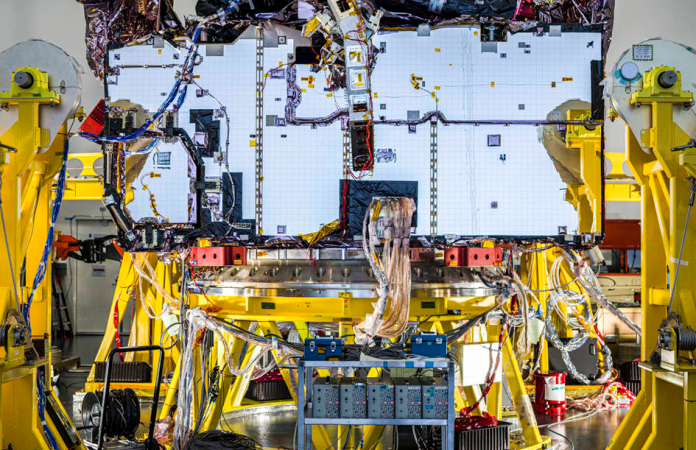
Things are looking well for the James Webb Space Telescope (JWST). The project was first thought of back in 1996 as the Next Generation Space Telescope and this ambitious project had a very long and difficult road to travel.
NASA announced that the telescope completed the final functional performance tests. Internal electronics are all functions and its four instruments are receiving and sending data as they should.
The observatory will be far beyond the orbit of the Moon. So once it is up there, it will be on its own. So everything has to be working right from the get-go.The testing ran for 17 days making sure that everything was running smoothly. Each electrical box on the telescope has two sides, a crucial redundancy to prepare for the unexpected.
“It’s been amazing to witness the level of expertise, commitment, and collaboration across the team during this important milestone,” Jennifer Love-Pruitt, Northrop Grumman’s electrical vehicle engineering lead on the Webb observatory, said in a statement. “It’s definitely a proud moment because we demonstrated Webb’s electrical readiness. The successful completion of this test also means we are ready to move forward toward launch and on-orbit operations.”
If everything runs according to plan, JWST will launch on October 31, 2021.
NASA’s Next Generation Space Telescope Passes Final Functional Test Before Launch
Bitcoin rises 5% to $50,942.58
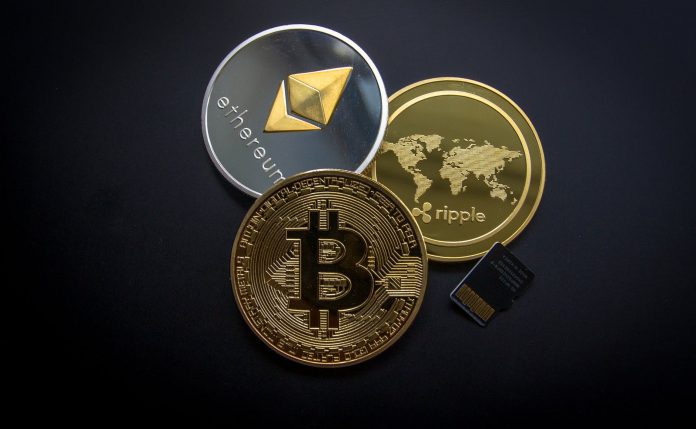
Bitcoin rises to 5% to $50,942.58 on Wednesday. This adds $2,426.23 to its previous close. Bitcoin, the world’s best-known and biggest cryptocurrency, has risen 83.7% from the year’s low of $27,734 on Jan. 4.
Bitcoin has fallen 12.7% from the year’s high of $58,354.14 on Feb. 21. Bitcoin’s price soared this year as major firms, such as BNY Mellon, asset manager BlackRock Inc, credit card giant Mastercard Inc, backed cryptocurrencies, while those such as Tesla Inc Square Inc and MicroStrategy Inc invested in bitcoin.
An AI-written Stage Play Was Performed For the First Time
An AI written stage play has debuted on the stage for the first time. This was what followed when a brief intervention from humans to let the algorithm know the basic setup. The 60-minute play was performed by Prague’s Švanda Theatre in collaboration with The Czech Centre London.The play was described as “telling a story of joy and sorrow of everyday life from a robot’s point of view”.
The GPT-2, the AI used for the project, was created by the company OpenAI, which was co-founded by Elon Musk. The algorithm generates text based on prompts from a computer and has been put to tasks such as writing fake articles and generating poetry.
This had mixed results, generating stories that are written in the style of real articles, but with a few hints that all is not right. For example,when we typed in the headline Earth’s Polar Regions face Space Hurricanes, the generator (which you should try for yourself)came back with the following story:
The American Meteor Society tracks thousands of reports of space weather worldwide each year, and after the recent hurricanes there have been over 350 reports. When these storms impact our planet it can have serious consequences, even for the relatively minor losses seen in the aftermath of Hurricanes Harvey, Irma, and Maria.
Turning its algorithm equivalent of a quill to writing a play, the AI showed that it’s not quite prepared to take over that task from humans.
The dialogue from the play had a strange quality and became a bit risqué. In some scenes the robot goes to chat up women with lines like “I wish my binary self had a body like that”.
“The difference between a living author and artificial intelligence is that artificial intelligence does not contradict and is obedient,” the director stated “While authors sometimes have hard times giving up their ideas, AI starts writing again after it gets a signal and it just does it with no complaints.”
Netflix is launching a new mobile feature that lets people scroll through funny clips
Netflix is launching a new mobile feature called Fast Laughs which looks and feels like Instagram or Tiktok Reels.
The new feature’s aim is to give subscribers the opportunity to get their fill of laughs in for the night without having to watch a whole movie or tv show.Different short clips taken from stand-up specials or animated shows play directly within the Fast Laughs.
“We’re always looking for new ways to entertain and make discovery easier for members,” Patrick Flemming, director of product innovation at Netflix, said, adding that Fast Laughs is a “new full-screen feed of funny clips from a wide variety of Netflix titles, ranging from films and series to our deep bench of stand-up specials.”
The new feature also helps Netflix highlight how much content is on the platform. Netflix has invested heavily in stand-up comedy with multipicture deals with comedians like Kevin Hart and Adam Sandler. And that is its difference from Instagram and Tik Tok: Netflix is not trying to launch a new platform but instead is using a new feature to provide entertainment.
You can access Fast Laughs by using the bottom navigation menu to clock on the Fast Laughs tab. The company will begin testing Fast Laughs on Android soon.
Google promises it won’t use web-tracking tools after phasing out cookies

Google is gradually phasing out cookies. In a blog post, Google explicitly stated that it “will not build alternate identifiers to track individuals as they browse across the web” after the third-party cookies are phased out.
“Instead, our web products will be powered by privacy-preserving APIs which prevent individual tracking while still delivering results for advertisers and publishers,” Google says.
“Advances in aggregation, on-device processing and other privacy-preserving technologies offer a clear path to replacing individual identifiers.”
Third party cookies allows advertisers to track you as you move between websites, giving advertisers a better idea of what your interests are. These hyper-targeted ads are very valuable, resulting in the creation of an ad industry whereby individual user data is proliferated across “thousands of companies,” according to Google.
“We realise this means other providers may offer a level of user identity for ad tracking across the web that we will not — like PII graphs based on people’s email addresses.”says Google.
Google also states this practice has led to users not trusting advertisers or the internet. Advertising is still the primary way many companies on the internet make money which is why Google states it is moving away from third-party cookies and more to a ” more privacy-first web”.
Facebook will end ban on political ads in the US

Facebook Inc will lift its temporary ban on political advertising in the United States on Thursday, the company stated in a blog post on Wednesday.
The social media giant had a months-long freeze on social, electoral and political ads, which was introduced as part of an effort to track down abuses and misinformation around the Nov.3 elections.
Republican and Democratic strategists have argued that such bans were overly broad and failed to combat the issue of organic misinformation on the platform.
Facebook noted in its blog post that its systems do not distinguish between electoral and political ads and “social issue” ads, saying it would look in the coming months at what other changes to its ads might be needed.
Microsoft’s Newest Garage App Is For Recording Group Transcriptions
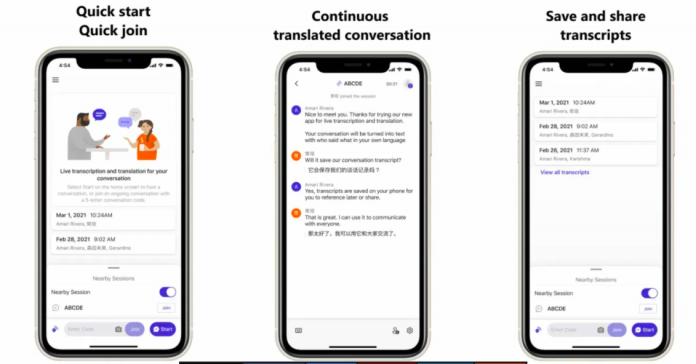
Microsoft’s newest Garage App is Group Transcribe, which lets groups of people capture real-time collective meeting transcriptions using their phones. It is now available on iOS.
“This app uses a multi-device approach to provide real-time, high quality transcription and translation, so users can be more present and productive during in-person meetings and conversations,” Microsoft’s Lainie Huston stated in a blog post.
Here is how it works: Everyone who wants to participate in the group transcription needs to install the Group Transcribe app. Then, one person will kick off the transcription, then they can invite others to join by sharing a five-letter conversation code, a QR code or by joining the group transcription with nearby sharing over Bluetooth.
Once that’s done the app will begin transcribing the group conversation, noting who stated what. Group Transcribe can even auto-translate things people say and show translations in portions of the transcription. Transcriptions are saved in the app so you can share or review them after a meeting.
Microsoft says , but it notes that the app works most efficiently for “in-person meetings with up to four people”.
You can read more about Group Transcribe and its privacy features in Microsoft’s FAQ.
World is “Nowhere Close” to curbing the climate emergency, says UN Climate Report
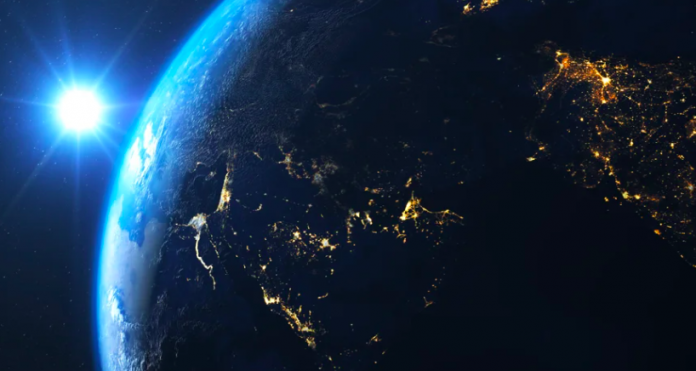
The United Nations released a new report which measured the progress of national action plans against the effect of the unfolding climate emergency. The report revealed that while some countries are increasing efforts to reduce their greenhouse gas contribution, the overall impact falls short of what the planet needs.
The interim report was produced by the (UNFCCC) UN Framework Convention on Climate Change to look at the progress on national climate action plans of 75 countries that represent 30% of the global emission.
Many countries did not submit their revised plans and among these are the world’s top three carbon polluters: the United States,China and India.
Patricia Espinosa, UNFCCC Executive Secretary, consider this report a snapshot rather than the full picture of the road ahead and urges all remaining countries to submit their Nationally Determined Contributions so that a new and more detailed report can be released ahead of the 26th session of Conference of its Parties (COP26) which will take place this November in Glasgow.
Microsoft Teams gets end-to-end encryption

Microsoft is adding end-to-end encryption support to Microsoft Teams later this year. This will be highly useful for confidential conversations between employees or for scenarios like an IT admin providing an employee their password over a call.
The initial preview will be available for 1:1 unscheduled Team calls within the first half of this year for commercial customers.
Presently, Microsoft Teams does not support end-to-end encryption for meetings.
Data is encrypted in transit and at rest, and this allows authorized services to decrypt content for data retention record purchases. Microsoft currently uses SharePoint encryption to secure at-rest files. All chat content in Teams is also encrypted in transit and at rest.
Microsoft Teams’ competitor, Slack, doesn’t use end-to-end encryption. Zoom began to implement the technology in October and is slowly adding more features to its preview.
Earth’s Polar Regions face Space Hurricanes
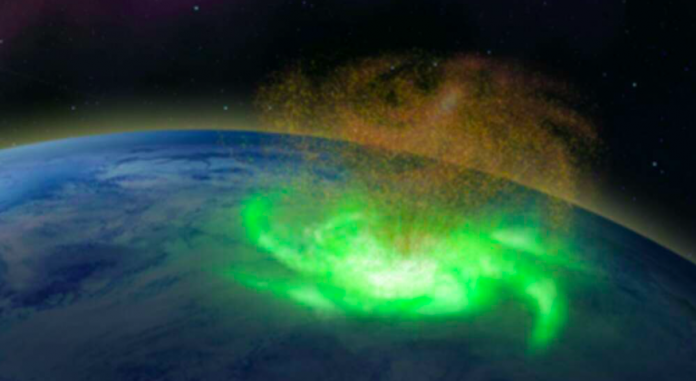
An international team of researchers has reported the discovery of a new type of space weather phenomenon.High above the polar regions of Earth plasma moves about, looking like a hurricane or typhoon. The discovery of these space hurricanes is published in Nature Communications.
Hurricanes are common features on the planets of the solar system. As particles fall or rise, a zone of low pressure can form, resulting in hurricanes. Tropical storms in the Earth’s lower atmosphere happen this way.It turns out that the electrically charged particles in the ionosphere can actually behave in the same manner.
Co-author ProfessorMike Lockwood, a space scientist at the University of Reading, said in a statement:
“Tropical storms are associated with huge amounts of energy, and these space hurricanes must be created by unusually large and rapid transfer of solar wind energy and charged particles into the Earth’s upper atmosphere. Plasma and magnetic fields in the atmosphere of planets exist throughout the universe, so the findings suggest space hurricanes should be a widespread phenomena.”
Data from multiple satellites suggest that silent periods around the Earth’s magnetosphere can lead to these events. When the magnetic field lines of our planet are not disturbed, they create a funneling structure above the magnetic pole, funneling electric particles from the solar wind right into the middle and upper atmosphere.
This is an important insight because our telecommunication network is affected by space weather in two ways:Events such as major solar storms can disrupt satellites and the like. At the other end of the scale, we have the continuous flux of particles from the Sun that slowly but surely wears down our technology. The findings show that we should not underestimate space weather, even during calmer periods.
Latest News

The new economics of localised manufacturing
AI Is Moving From “Know” To “Do”
Autodesk expands AI capabilities across manufacturing workflows
Engineers Australia calls for engineering expertise in Australia’s AI strategy